Month: May 2019

Tin Label

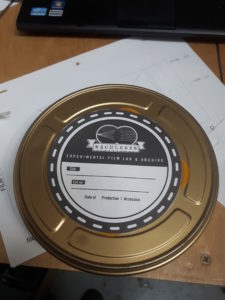
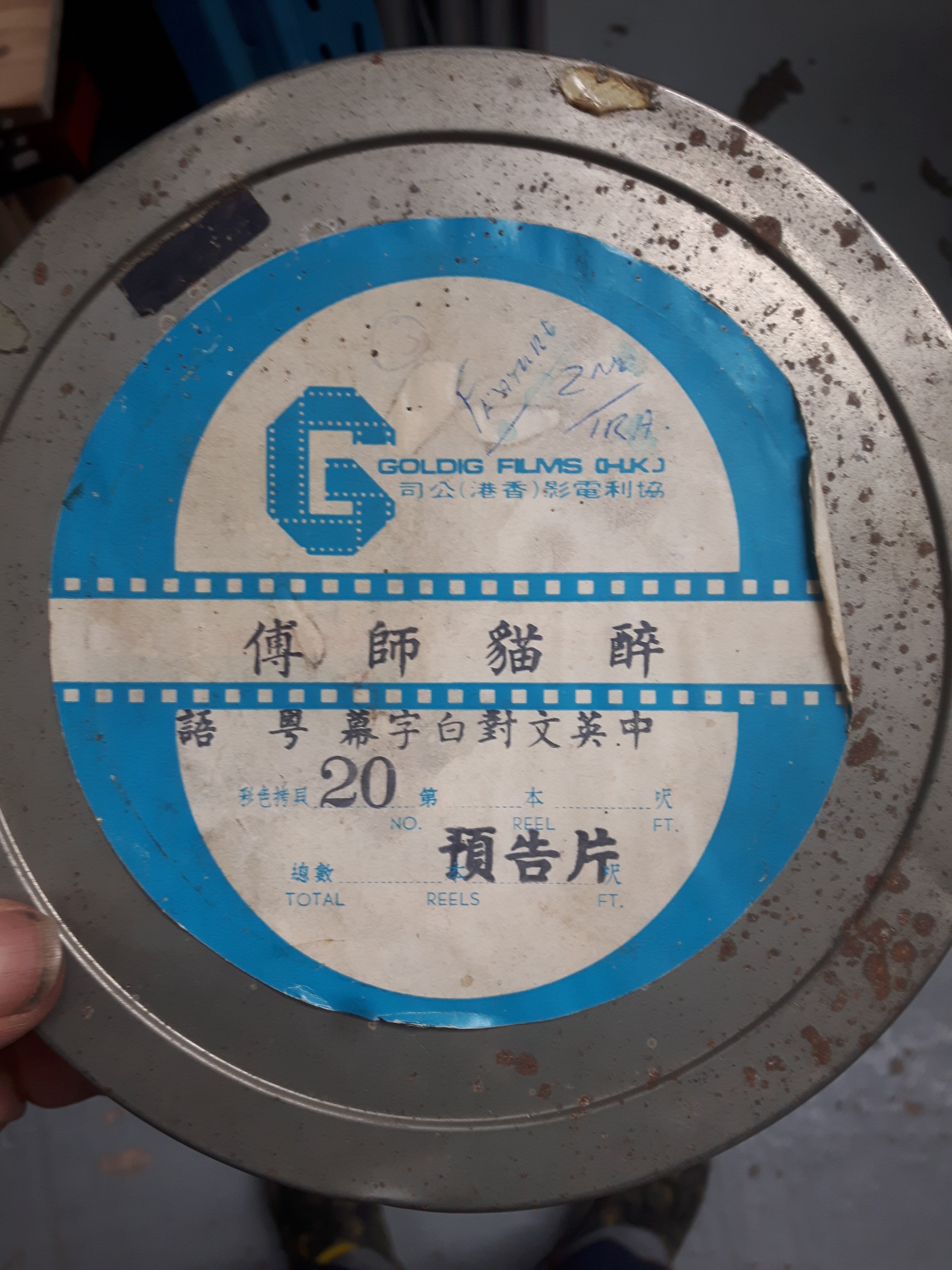
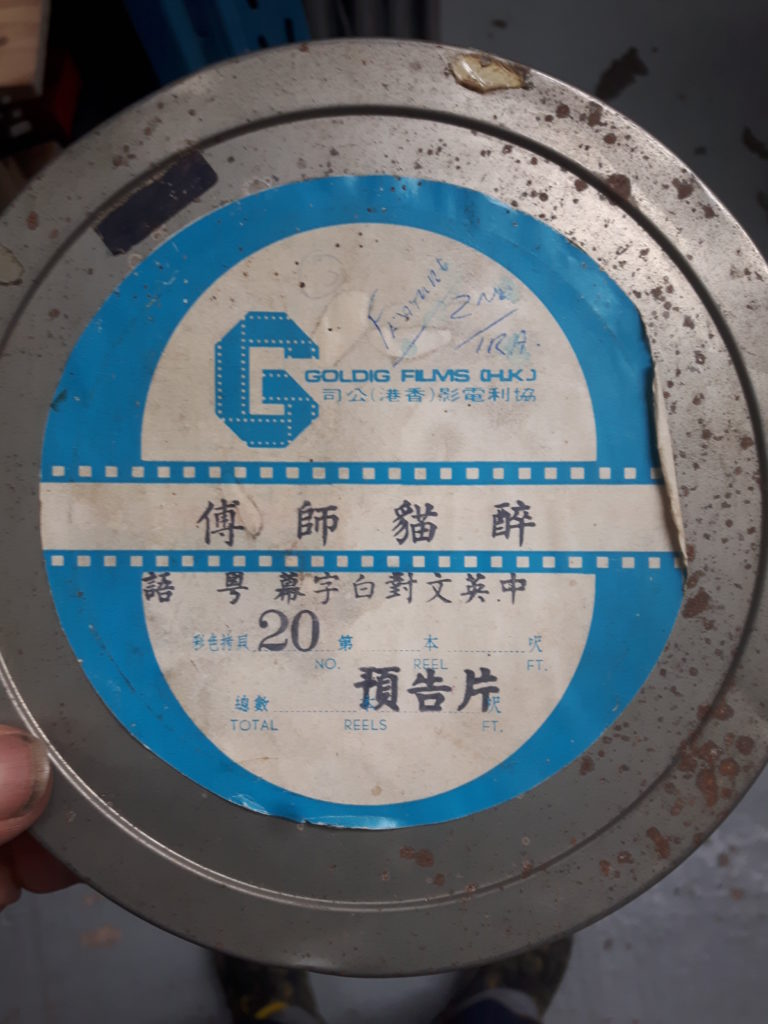
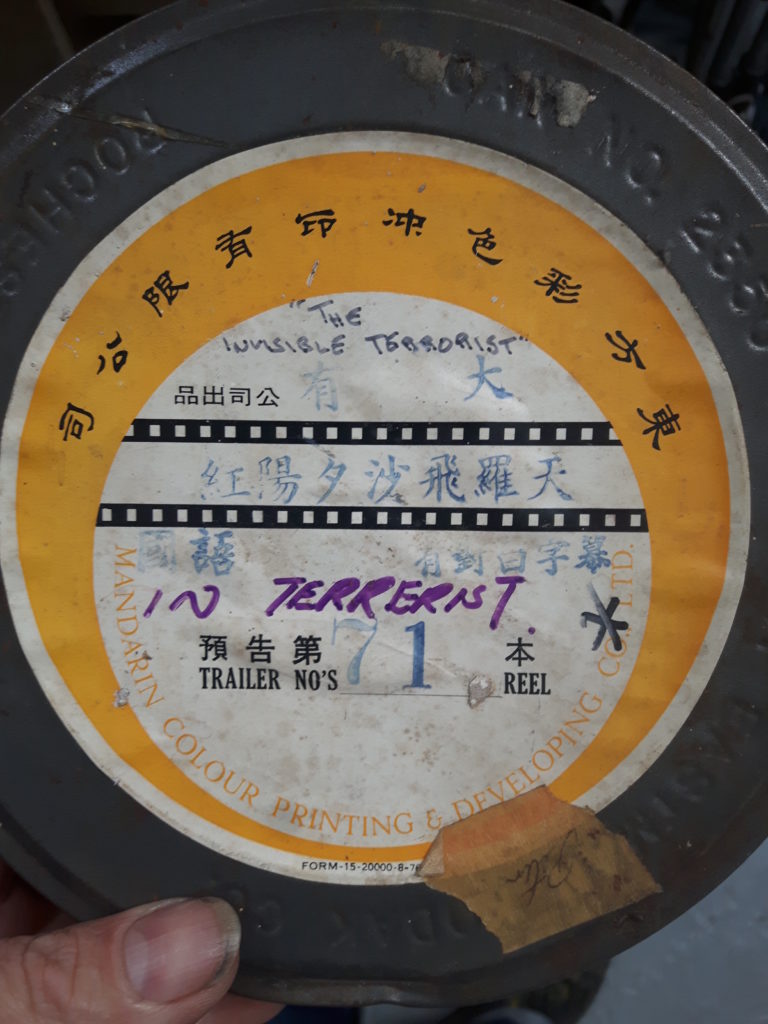
It may seem a trivial or superfluous thing but here is a tin design (V1) for film cans that I am making for the Archive of films I am collecting / making / ?

The lower label allows both an extant record to have its accession date registered OR if it is a work that has been produced then its production date is recorded and you can cross out appropriately.

Of course a important code is a object reference number and this will go in the Cat no’ line although it remains to be decided how these codes will be generated.

Title is self explanatory and might get swapped for Type | Name for apparati that I hold.

There is plenty of scope for the whole label to change character for large subject units like Nitrate material, collections, historical/discontinued’ stocks, etc.

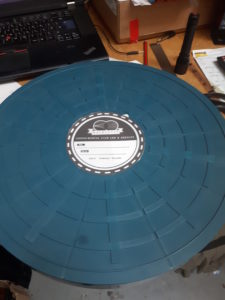
And here they are on some film cans. Ready for action.


Eiki/Elf blade angles in action animated gif

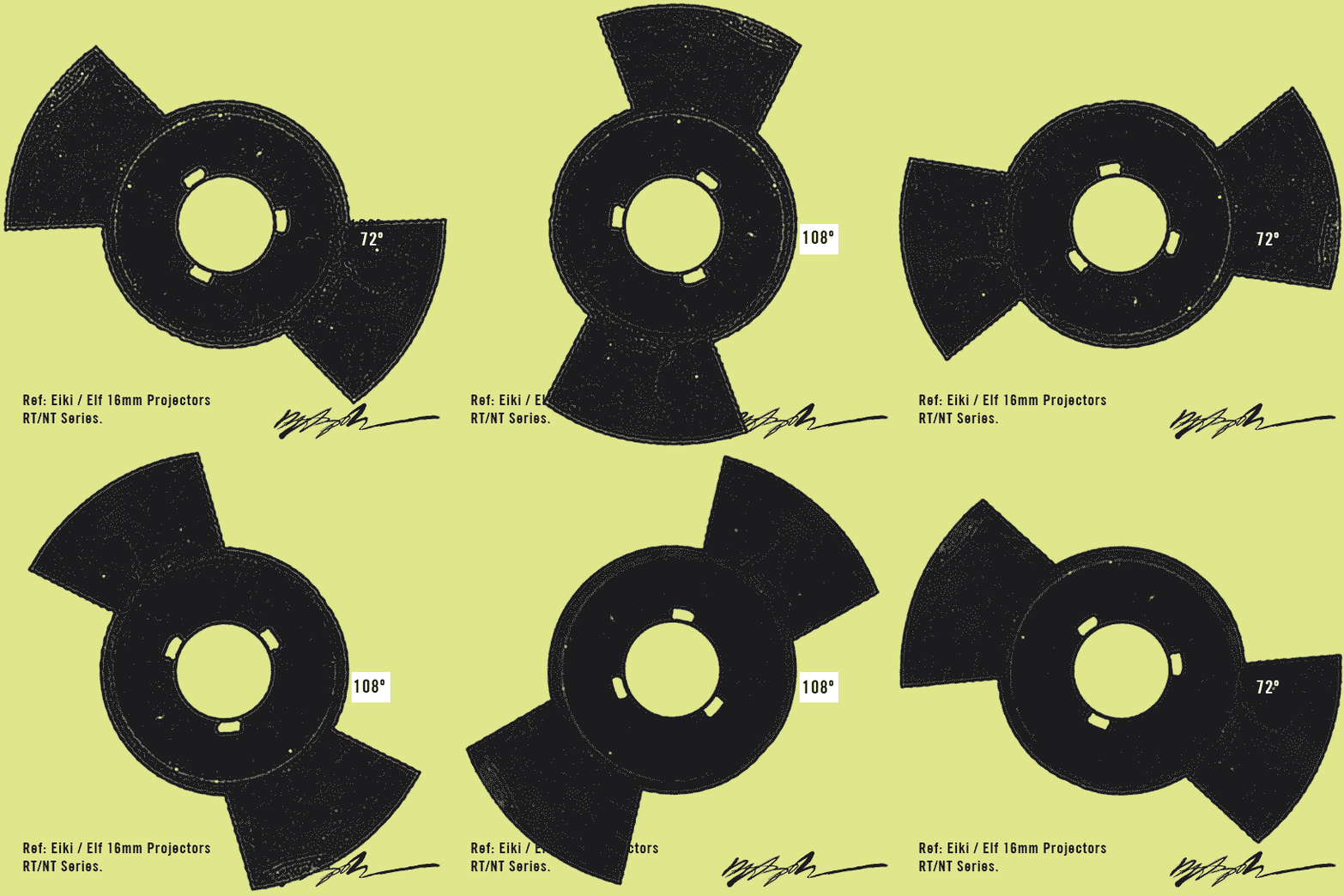
Here are those  numbers again in their roles as light and dark. Both 108 and 72 have interesting cultural meanings which you can look up for yourself, my only advice being to tread carefully but open yourself to all kinds of wonder.

So, the magic number building block for the experiment to reinstate a virtual blade into digital versions of films shot on film is

3:2

The ratio of light to dark, as also proven by our filmed 35mm tests is 3 to 2.

60% to 40%. There is 40 per cent more image on screen in a digital version of a silent film.


More rotoscoping

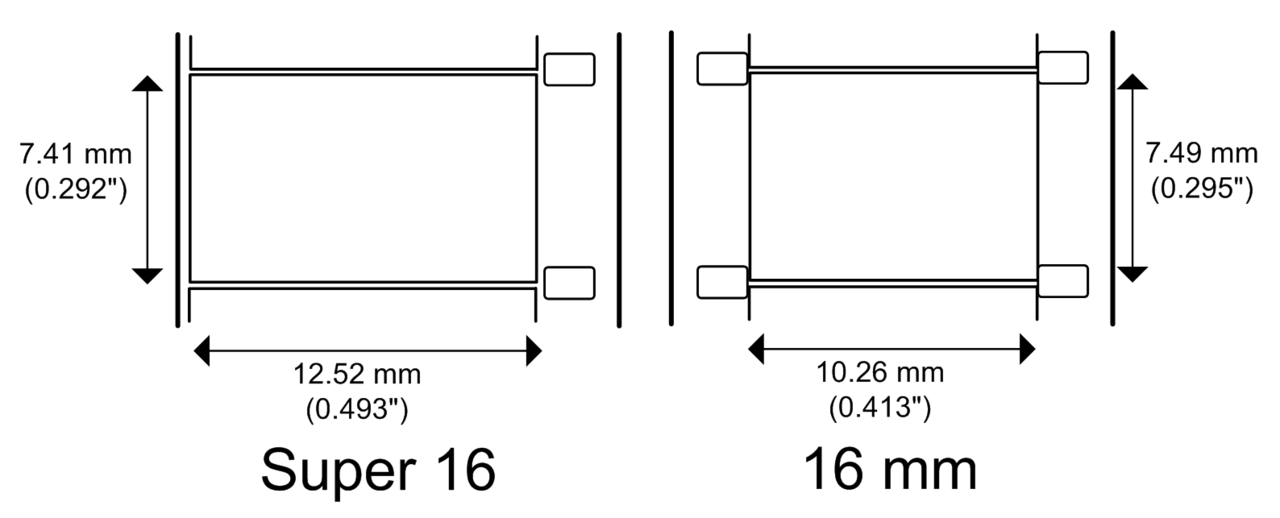
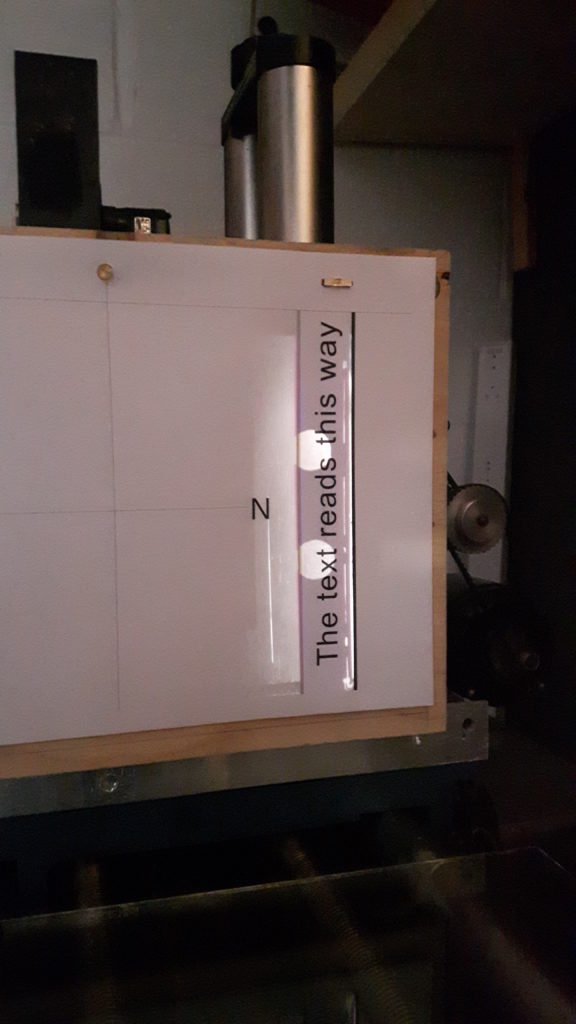
Getting set up to shoot titles, graphics and other things to 16. Some films will employ content in the VA sound track area but for ones that don’t I must remember to mask off this area with black foil clipped to the glass.

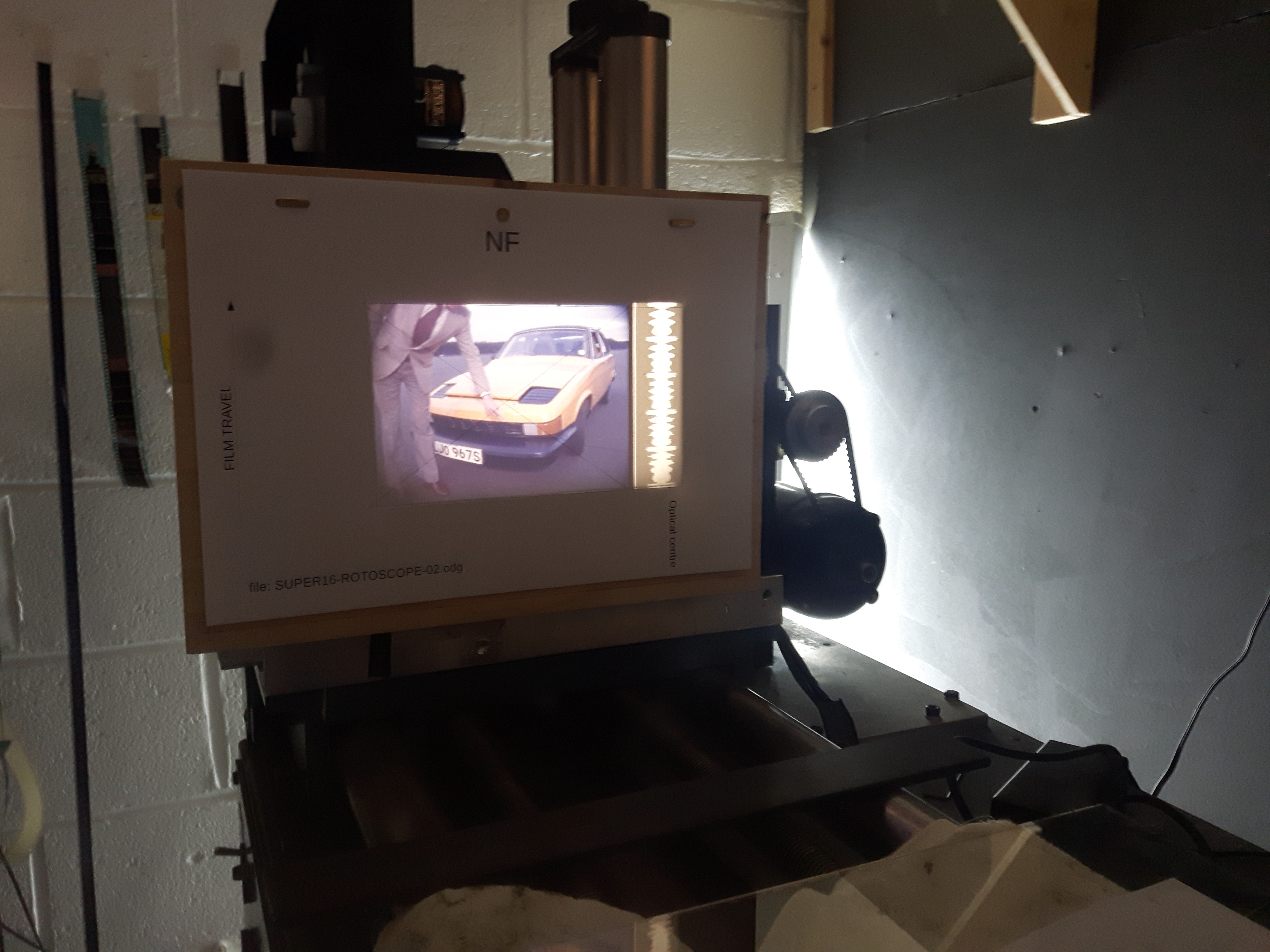
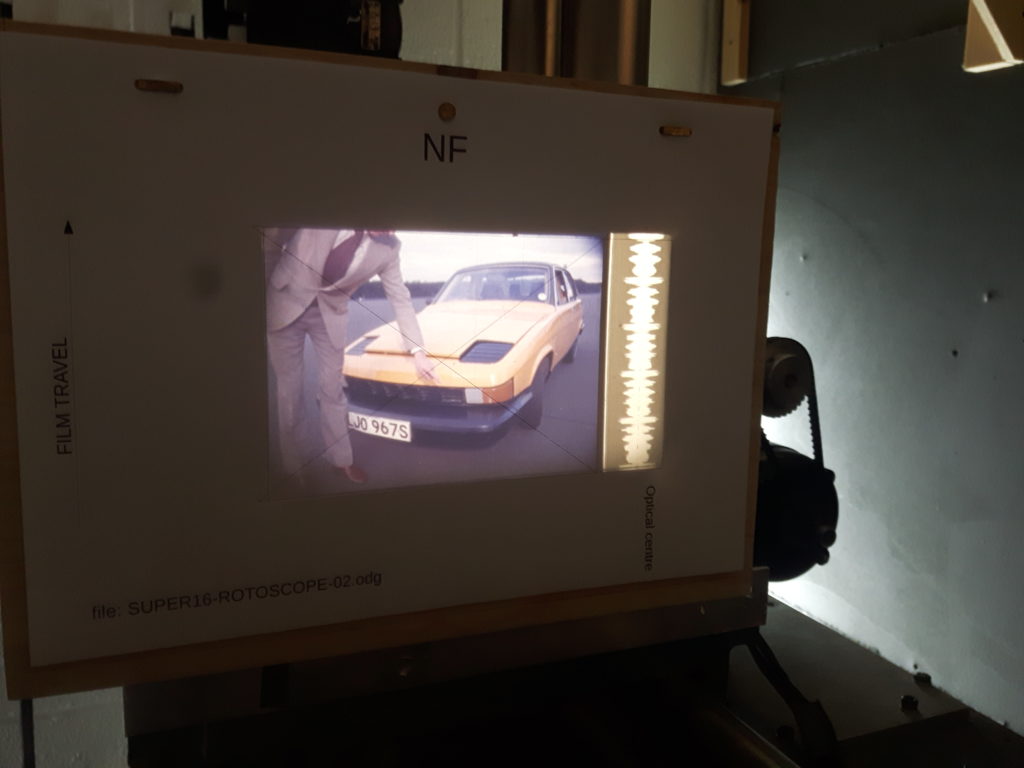
Heres a 16mm frame projected to align the soundtrack, centre point and margins for the printed material.

The film travel and NF are reminders that once printed, this image and thus film will be orientated ready for projection. I could add some perforation markers as well I guess.

The optical soundtrack centre axis probably does shift form print to print, this old TRRL print being a case in point as the peak waves creep near to the edge of the printed area.

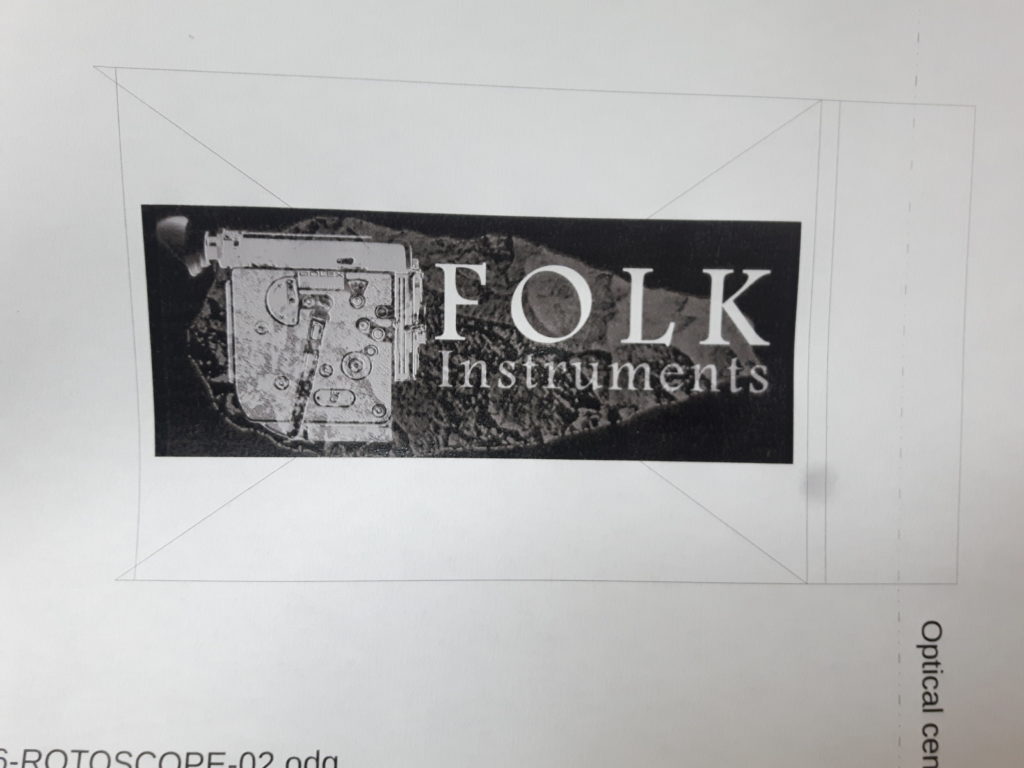
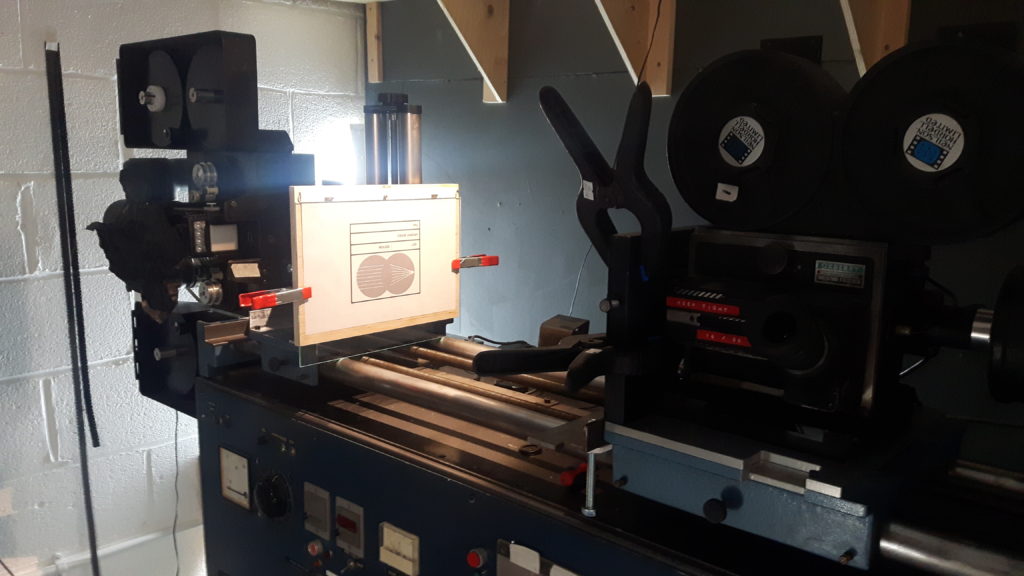
Here is a graphic printed out and mounted.

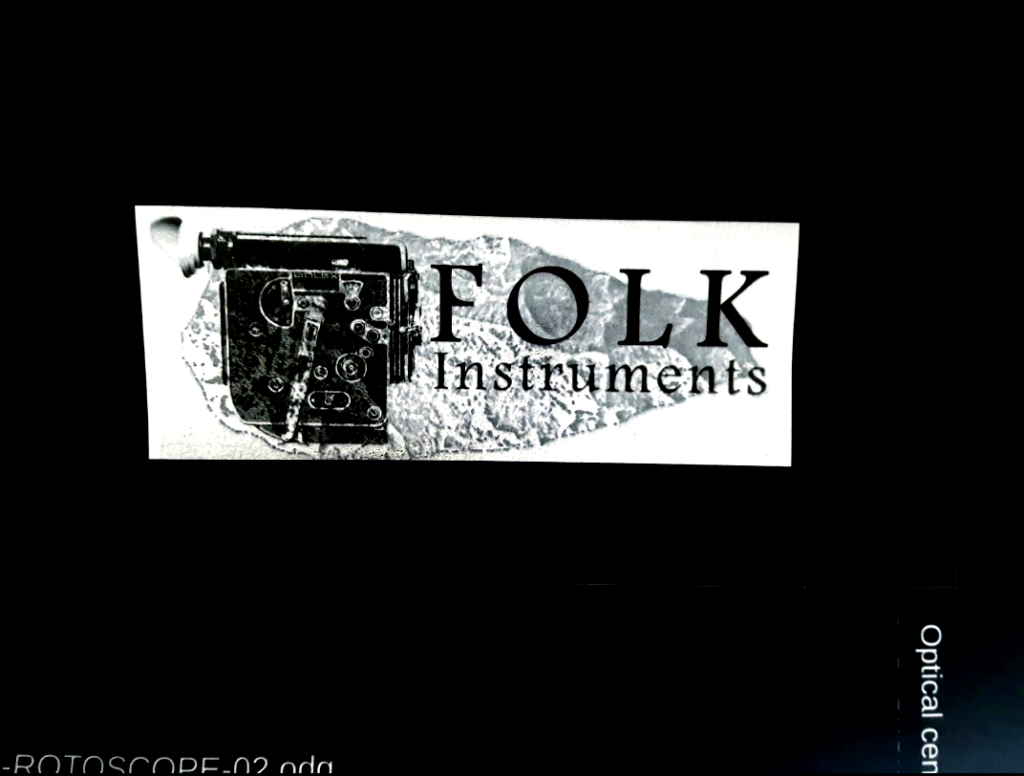
Underneath is an approximation of how it will look once printed to release stock. When I designed this logo, years ago I didn’t plan for it to be photographed and thus reversed. Weirdly then the flint axe and the camera come out correct. Weird. I got this idea when I was projecting some films by Luke Fowler. The ones he made to show with Alasdair Roberts playing live. I turned to him and said, “a bolex is like a folk instrument now….”
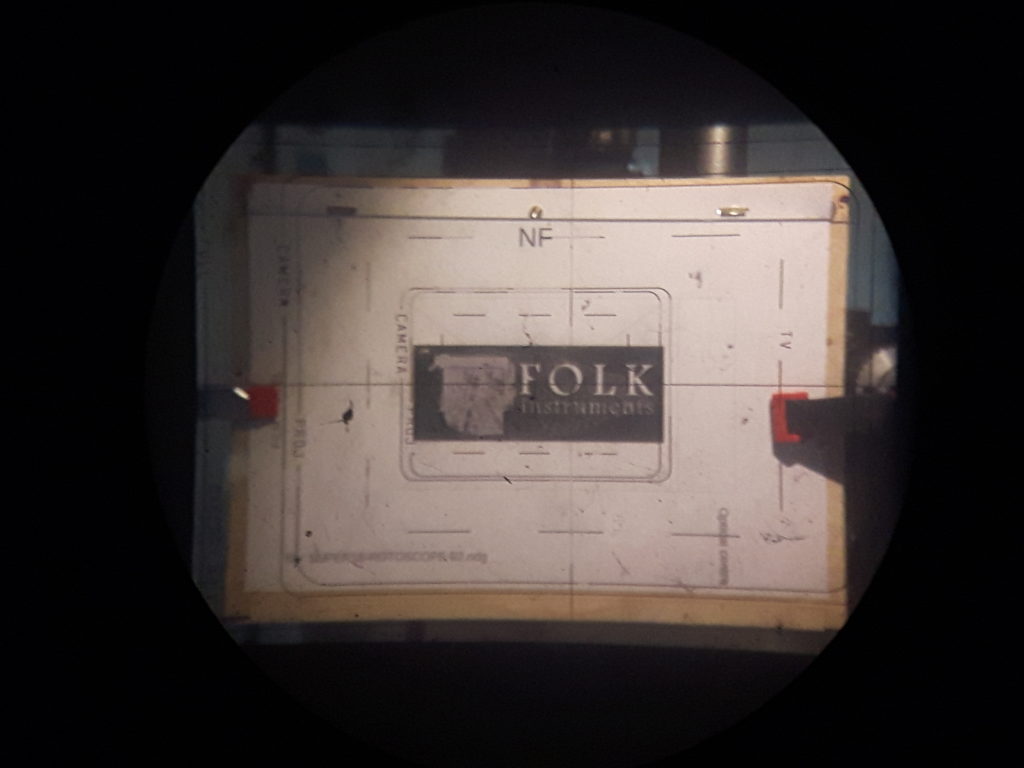
Under that is the view through the finder lastly to confirm a pretty good alignment.


108 and 72 the magic numbers for cinema blades.


In the video tests in an earlier post you can see high speed video of a projected 35mm image using a single aperture blade on a Kinoton.

After analysing the video its possible to say with some certainty that the RATIO of light to dark is 3:2 respectively. So there are 3 units (or steps, doesn’t matter) of light to 2 steps of dark.

This uses the 1200FPS footage which yields 50 frames/steps per real life second of time.

In this 50 step sequence 15 are light and 10 are dark, repeated again 15, 10.

If we want to now translate this to degrees, or angles to check against a physical blade we do it like this.

Each rotation of a blade in steps (or counts, just a measure unit) is 3, 2, 3, 2 which equals 10 units. 360 divided by 10 is 36.

To get the light count (3 x 36) we get 108 degrees.

To get the dark count (2 x 36) we get 72 degrees.

On a double bladed projector blade then the dark parts will be 72 degrees each and the light gaps 108 each.

On a single blade like the kinotons we add them getting 216 and 144.

Surprisingly there is VERY little fading in or out of the black. So in the 1200 per second video dark segment of 10 frames only the first and last frame are slightly dimmer. 

This means in action that the snap to dark and the snap to light happens in 1/1200 of  a second each. Not worth trying to mimic.

So the implications for my nitrate film digital flicker restoration is that we must see 3 frames of picture then 2 pictures of black. If the base frame count is 5 now, to run this clip at the speed of 13FPS (remember, my subjective speed choice) then the clips needs to run at 65FPS, 5 x 13.

As you were.

Oh, lastly the percentage then is 60% light 40% dark.



Loading, please wait…
BACK TO TOP