How to catalogue everything

I’m considering which database to use. I quite like Card Box 3.1 for windows, because it seems ancient and thus low impact, and possibly even reliable.
https://www.cardbox.com/
heres a framegrab from sample database


I’m considering which database to use. I quite like Card Box 3.1 for windows, because it seems ancient and thus low impact, and possibly even reliable.
https://www.cardbox.com/
heres a framegrab from sample database
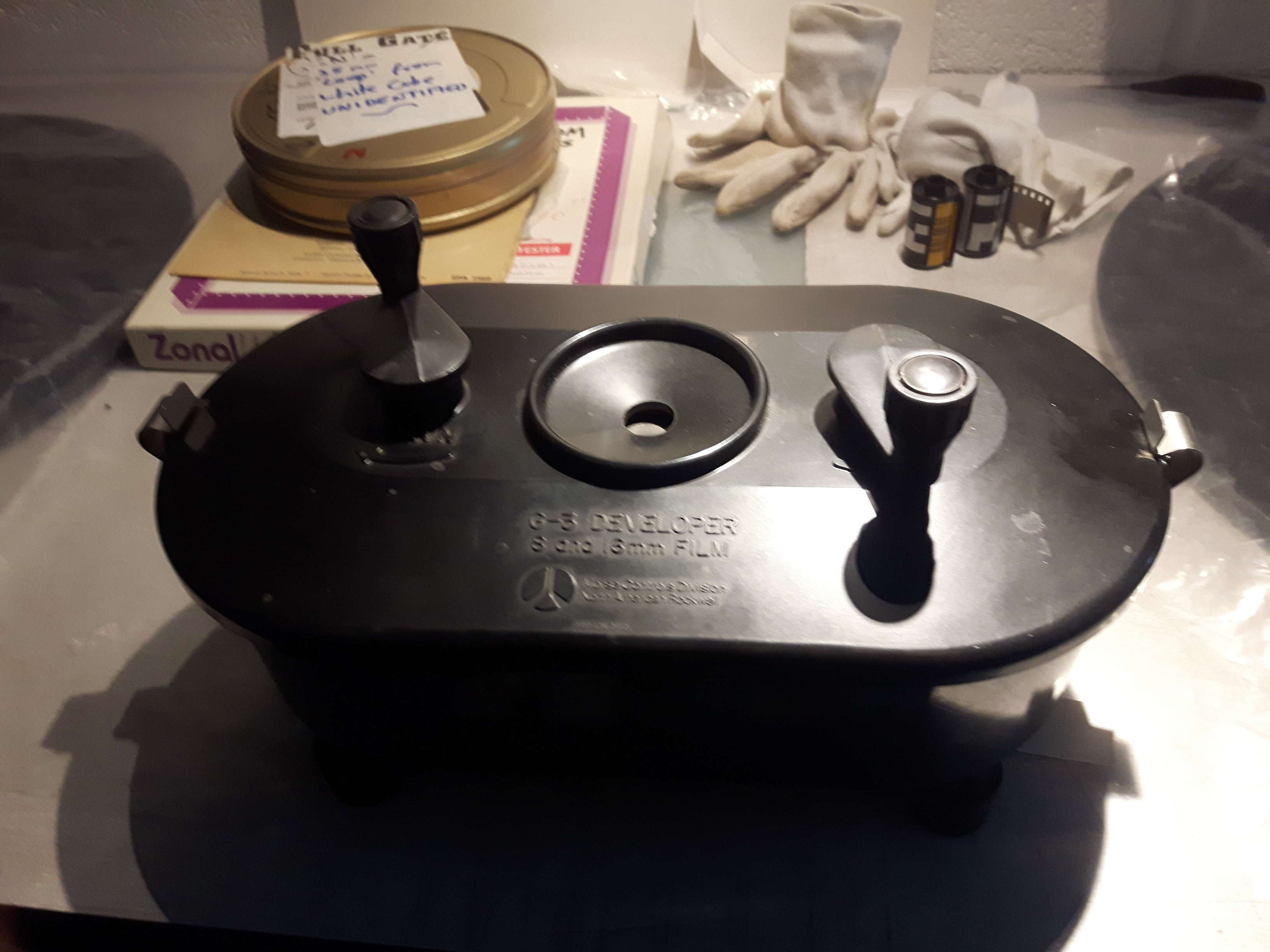
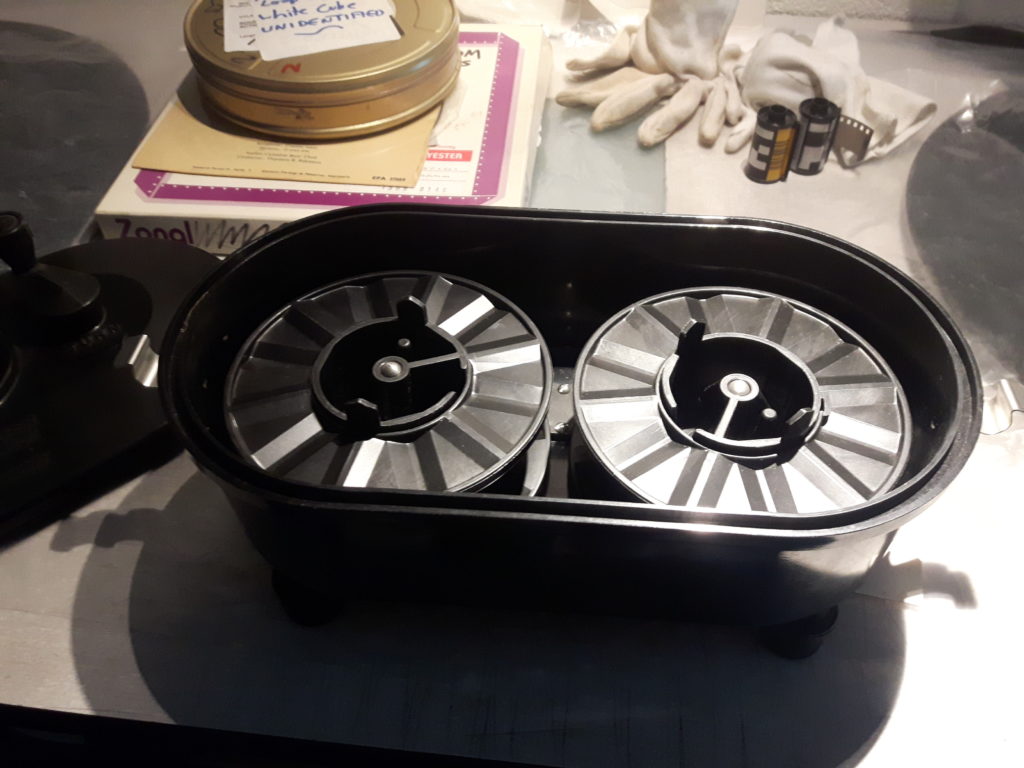
Dave at Geneva Stop lent me this morse tank.
It loads 196 feet!! of 16 or 35mm, but dev times are longer. There is not much data out there on times other than 4x the usual 5 mins (generalising). Its easier to load and use than a Lomo.
Also, it occured to me that it would be relatively straight forwards to design and build a tank this way that held 400ft.
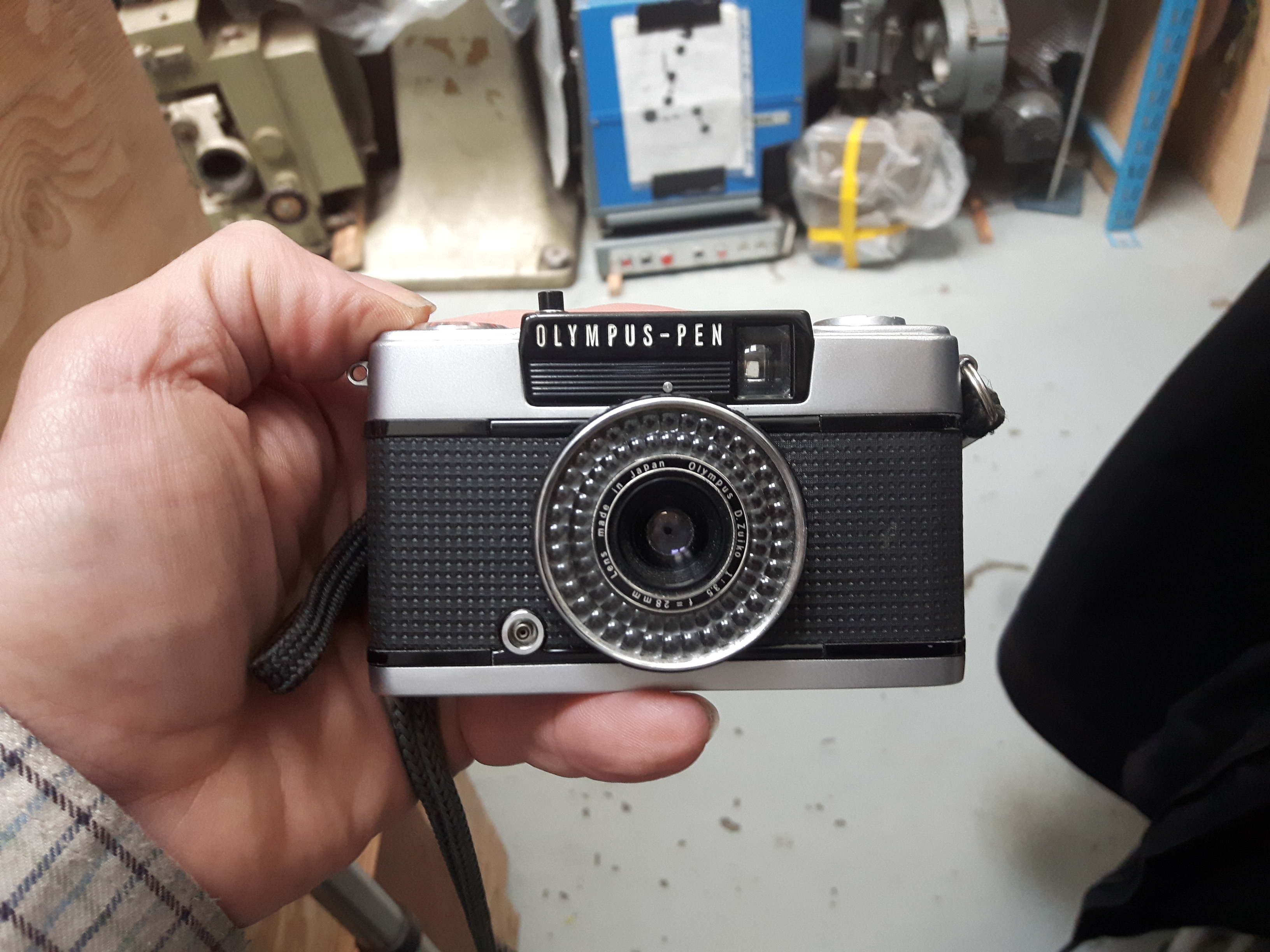
For some of my MASTERS practical projects I have decided to shoot frames of film negative on an Olympus PEN. This camera shoots half frame, which is exactly the same size as a 35mm motion picture frame, ie 4 perf.
I will shoot on XP2 and PAN F. Then once developed, I will hold each frame in the gate of the Oxberry and ‘print’ it for a duration down to 16mm print stock.
This way I can produce the lengths (in time and feet) I need from a very cheap and portable original technique. Its not crucial at this stage to have a moving image. In fact, its conceptually more accurate in some of the films I have planned to work from ‘stills’.
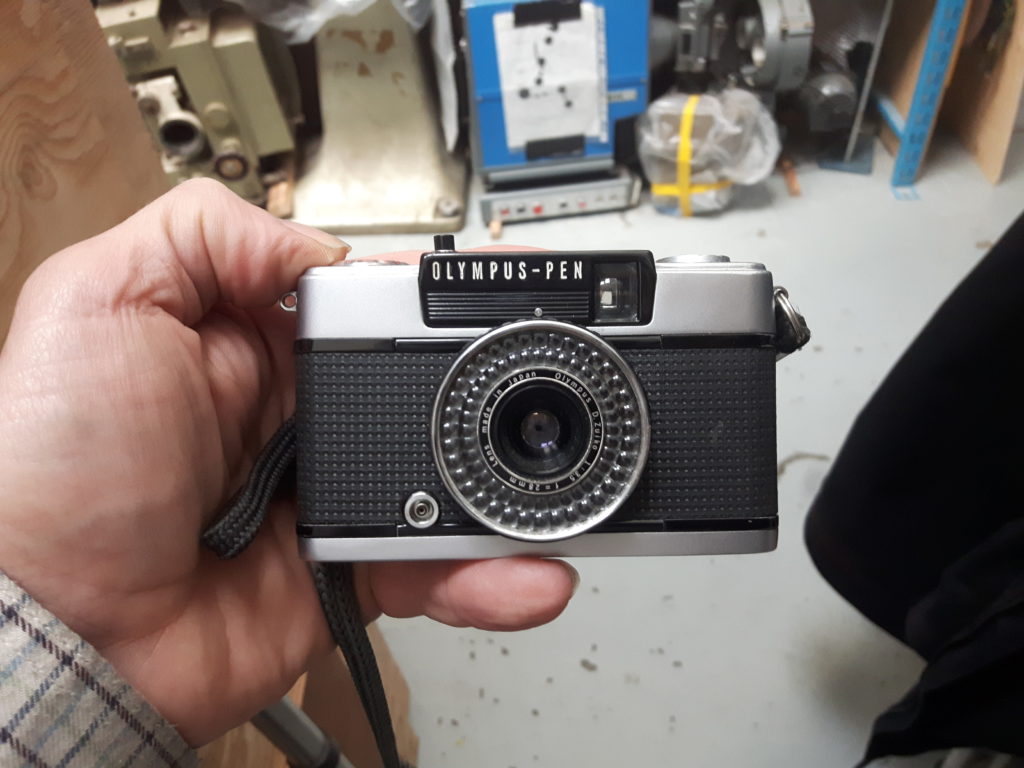
The film doesn’t really advance EXACTLY 4 perfs like a motion picture camera does, it kinda wobbles around in registration a bit. So what I do is shoot a few of each subject that I want so I have a few to choose from.
FLICKER WARNING. THE CLIPS BELOW ARE STROBOSCOPIC AND FLICKER AT RATES THAT MAY DISTURB THOSE WHO SUFFER FROM PHOTOSENSITIVE EPILEPSY.
Heres some tests done using a high speed casio video camera aimed at the screen whilst projecting some 35mm.
The Kinoton used has a 180 degree blade so we need to get the data about how many ‘pulses’ per frame you get with this blade config. By 180 I mean this blade has only one opening for light and one for dark. So this blade must spin very fast to at least achieve 48hz which is roundabout the figure we need for flicker threshold perception.
What we will see is a pulsing of image and black.
Once we know the kinoton pulse frequency, we can work out data from the video image because each one is shot at different speeds, 300, 600 and 1200 FPS.
So say the Kinoton pulses each frame twice, so 48hz picture, 96hz image frequency, devised because each image is separated by black.
So each blade rotation has image – black – image – black, ie 4 stages. And 4 x 24 (overall FPS value is 96.
In one second (300 frames at slowest speed) we should expect to see 48 image pulses separated by black. What I’m after is the curve, or fade in and out of the black and because the video will break that one second into 300 little parts, we can count them and see where and for how long the black occurs.
On the Casio, the pixel dimension of the image goes down as the speed goes up.
So the top one is 300, then 600, then 1200 fps at the bottom.
In each case, the frame counts for light and dark match the 3:2, division in 5ths rule.