Month: August 2018

Techniscope from 4 perf

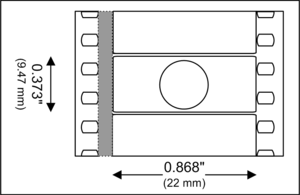
I am slightly obsessed with Vista Vision (above) and Techniscope. The former of course ran horizontally and took up 8 perforations. ILM revisited the format for Star Wars to enable a larger, non-animorphic negative to pull off their effects.  But Techniscope goes the other way. Developed by the Technicolour Labs in Rome, Italy, it takes up 2 perforations. The effect of this 2-perf high frame but full width is a widescreen (scope-ish) image that doesnt require animorphic lenses, any normal spherical lens can now be used to shoot (effective) Cinemascope. This isn’t all though. It also doubles the stocks running time. A  10 minute reel becomes 20!

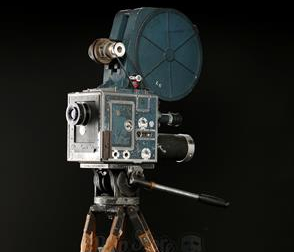
Now 2 perf adapted 35mm cameras are rare. But, thinking this through I realised I can shoot Techniscope on my 4 perf Mitchell! First I make a 2-perf apeture plate that sits in the gate of the camera. This will crop the neg exposure area down to the techniscope AR. Then frame and shoot 2 perf FRAMES, but move the film 4 perf. This would leave a huge gap on the neg if we developed it. Next, I rewind the film (close the shutter and cap lens!)  and via a registration notch in the film I then lace it 1 frame out of sync. This would expose now into the gap! Then in the printer a similar process is used to print alternate frames restoring the sequences. This WILL, work, its theoretical now, but there is every reason to believe it will work.

Lastly, if we don’t observe leaving space for the soundtrack and expose using the full width of 35mm then the aspect ratio becomes a healthy 2.62:1!! I would consider this for the UFO/psychic/dream-horror film being planned about the Rendlesham incident as this is planned as a fully SILENT film.  AR graphic below.
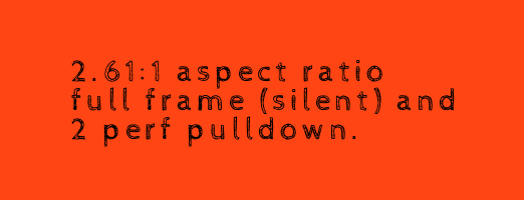
 

‘Super’–Techniscope with a 4 perf camera!!

Here is a  stunning, well researched document about all the various RAMA Vista Vision cameras that ILM used.
 

The workflow of analogue

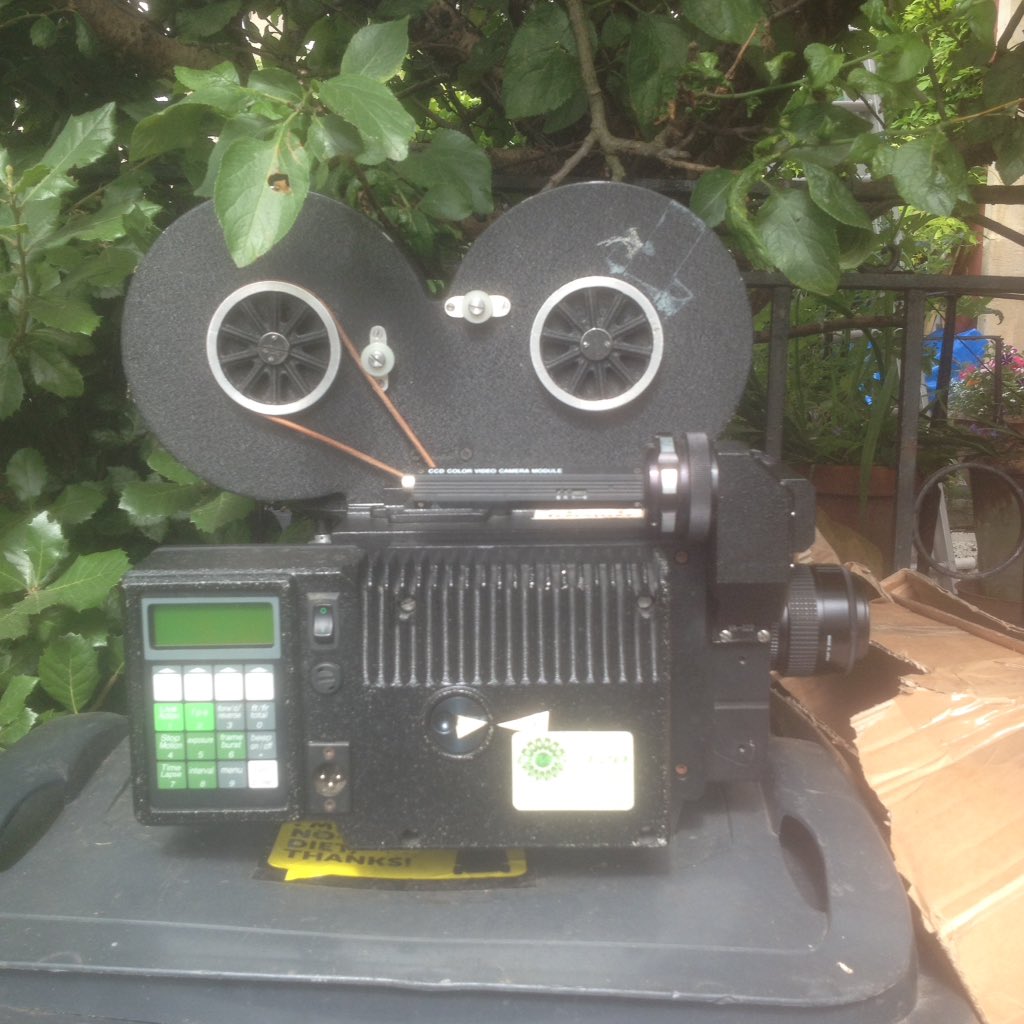
From now on all my production projects for the Archive Film Series will be made using this camera, the oxberry and small developing tanks.

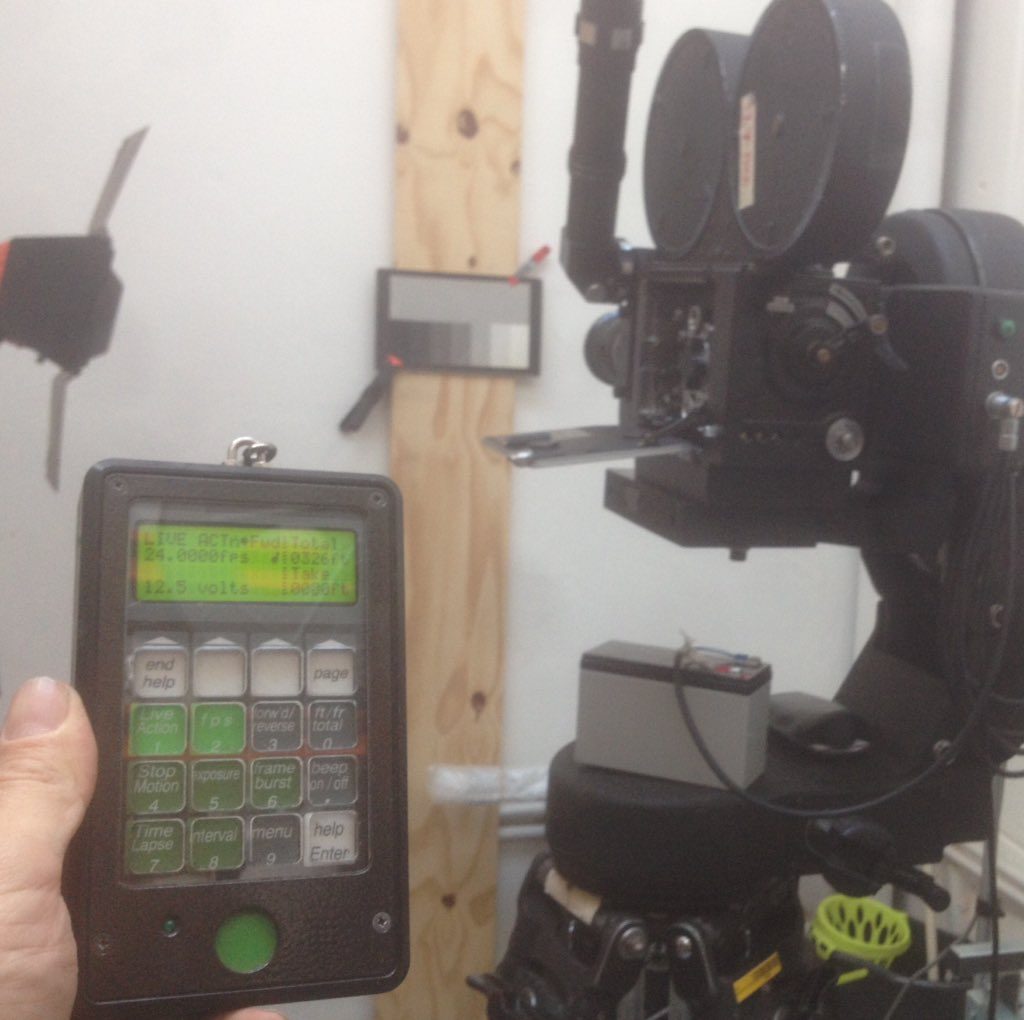
The specification on this Fries/Mitchell 35R camera is unbelievable. The remote controller in the picture lets you program so many ways. It can shoot 1 – 120 FPS (all at crystal locked speeds), it can shoot single frame with programmed bursts with exposures in standard fractions or long exposures ranging from 1 to hundreds of seconds. It currently takes Nikon F Mount lenses, handy! It can shoot forwards and back always to exact frame count. You can programme runs with feet/meters or frames. The shutter does the usual 170 degrees to closed over range.  Checking if it can be bi-packed. Also I got it running on 12VDC so I can take it into the field.

My plan is to produce all my Archive series films for my research projects practical components with this camera and make positives with either the steenbeck contact printer or the Oxberry. Also for using existing (found and collected) positive footage I plan to copy to 35mm using an internegative stock, then print back down to 16mm via the oxberry where I will have a chance to make frame stops and permutations of frames and copies. etc.

Having this degree of control over (mostly studio based) film ideas is a massive boost to the ambition and scope of ideas, especially the series based around bulk pass exposures.

The camera is a little heavy and unwieldy. Not as much as you might think though. Thanks to Aardmans for lending me an airhead mo-co to let me mount it and pan-tilt in tiny increments.

However a Mitchell geared head is really what I need when I take it outside. If anyone reading has got access to one of these and is happy to lend it please let me know.

I am eternally indebted to the late Bolex Brothers animation studio for this acquisition.


Loading, please wait…
BACK TO TOP