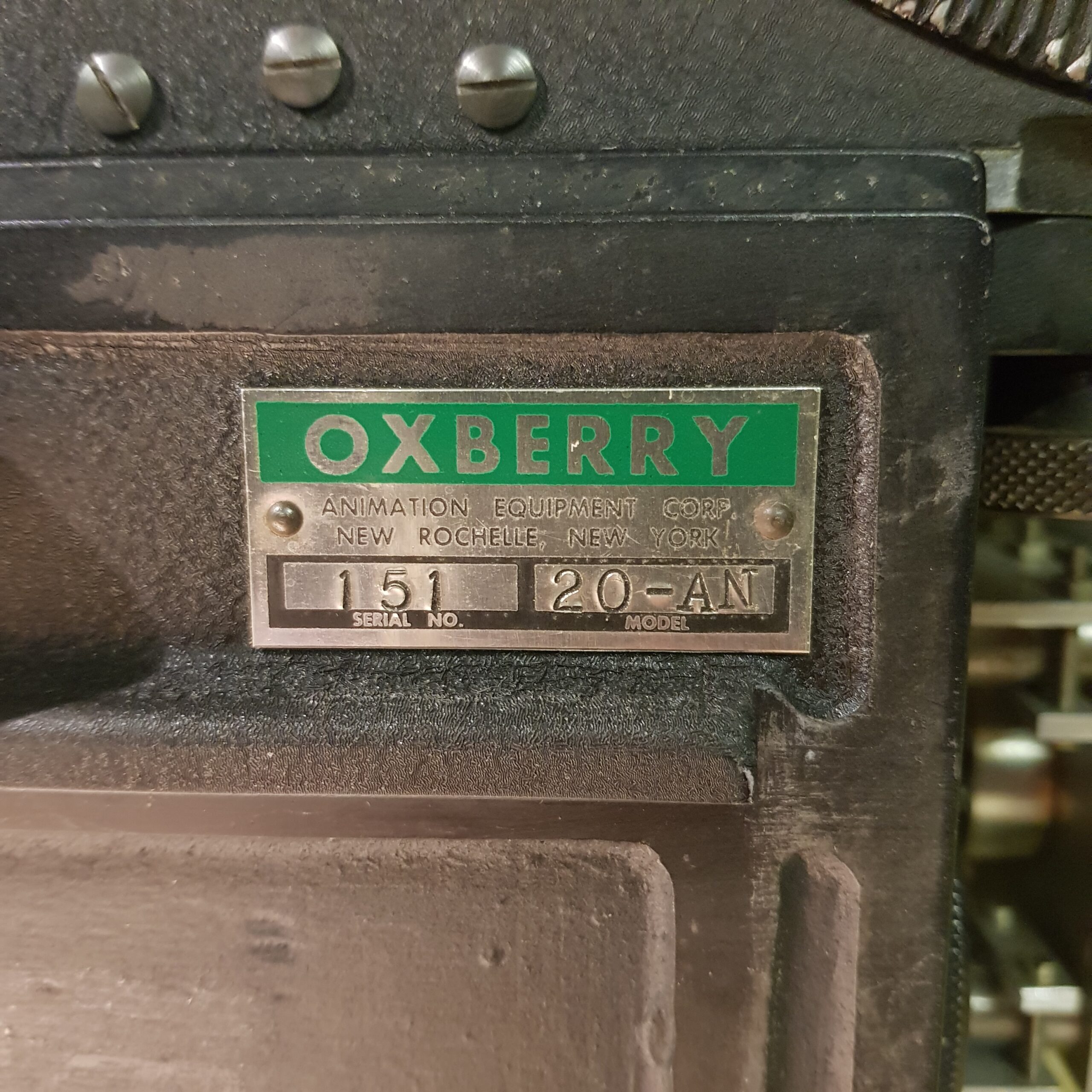
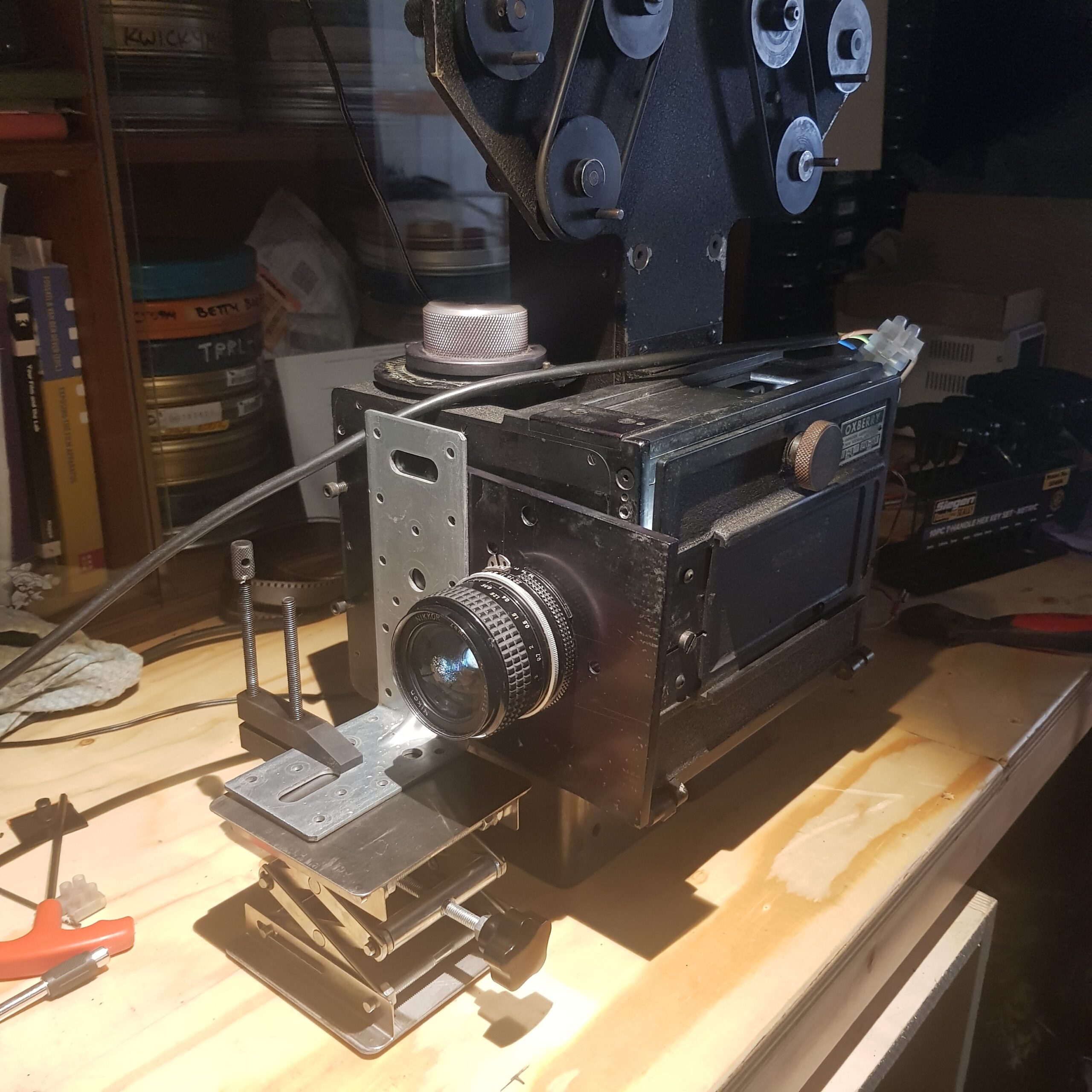
Oxberry 20-AN / sn 151

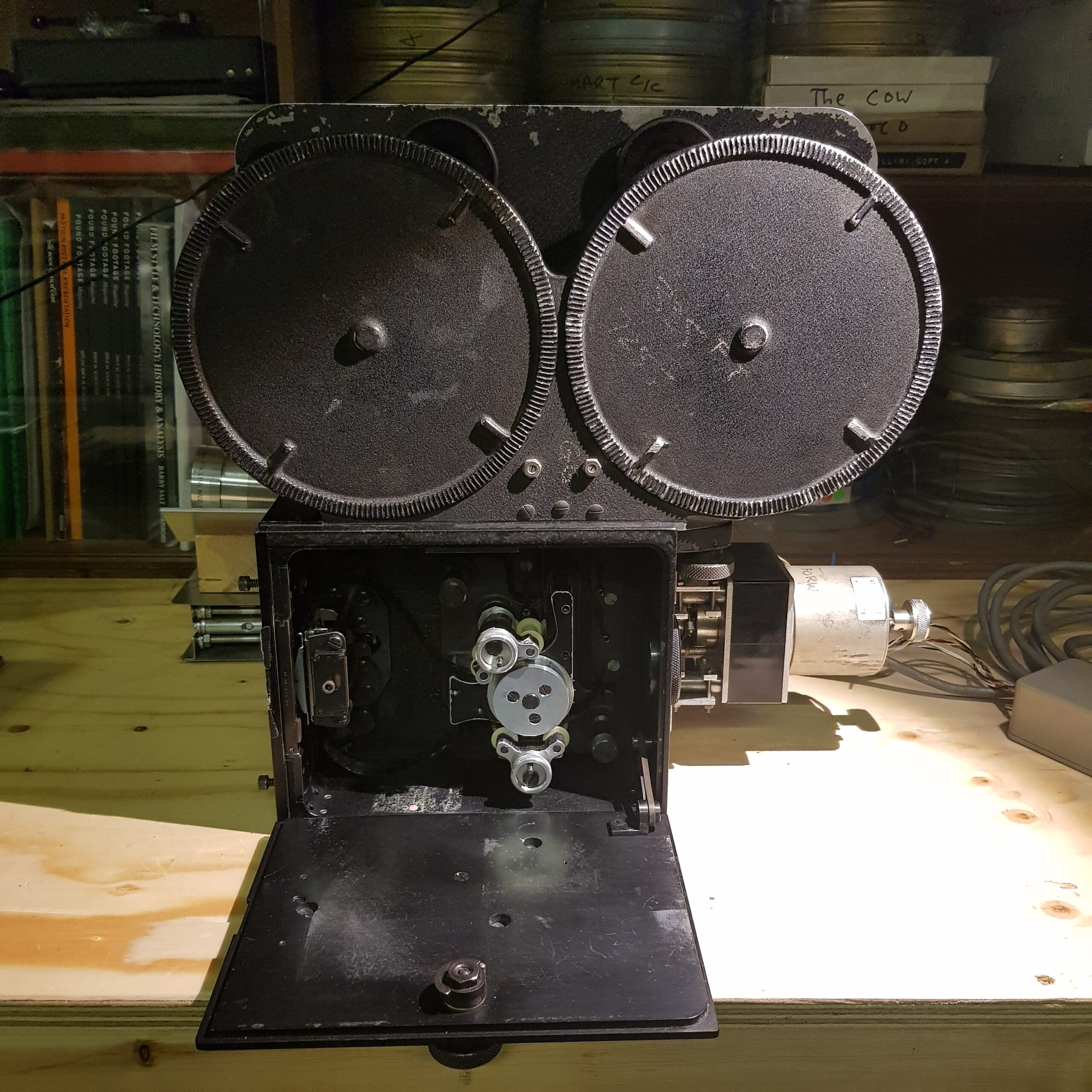
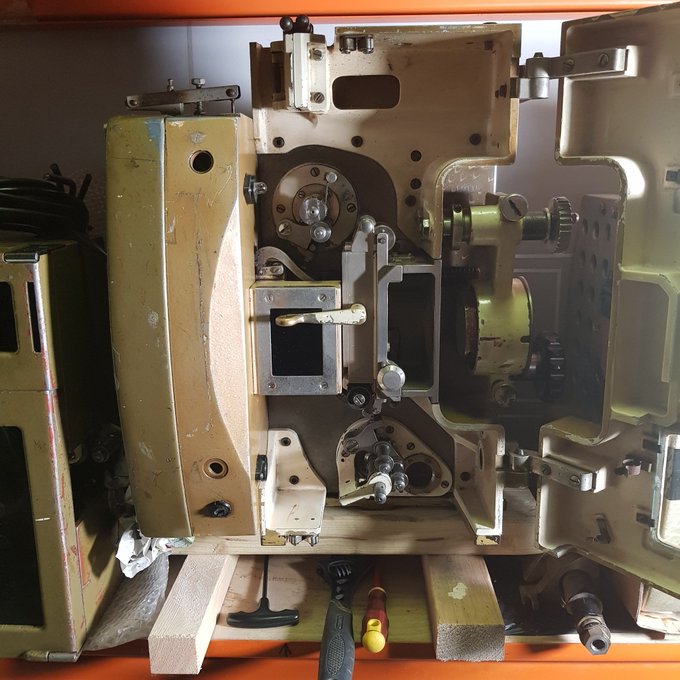
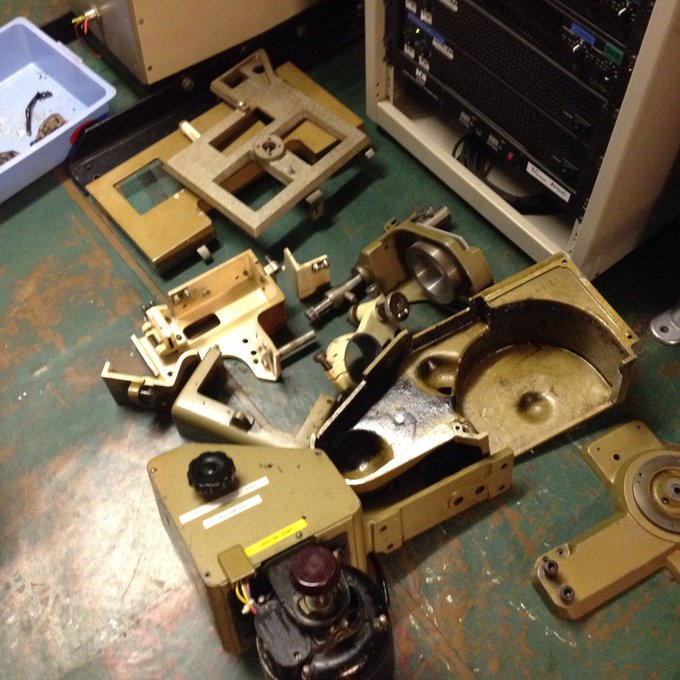
Heres is an older oxberry camera block than the one mounted on my frankenstein optical printer.

This camera has no rack over viewfinder. It has a voltage controlled movement and adjustable shutter angle. No viewfinder seems like a problem for a camera. How on earth can you compose, focus, even see what you are shooting? This camera will be used as a camera for matte work where other plates (film elements) have been shot elsewhere by another camera. These plates are laced into this camera as if it were a projector. When the image is projected it will allow an image to be framed, traced, focussed. Once this is all done, raw film can be swapped in and composites shots can be exposed.

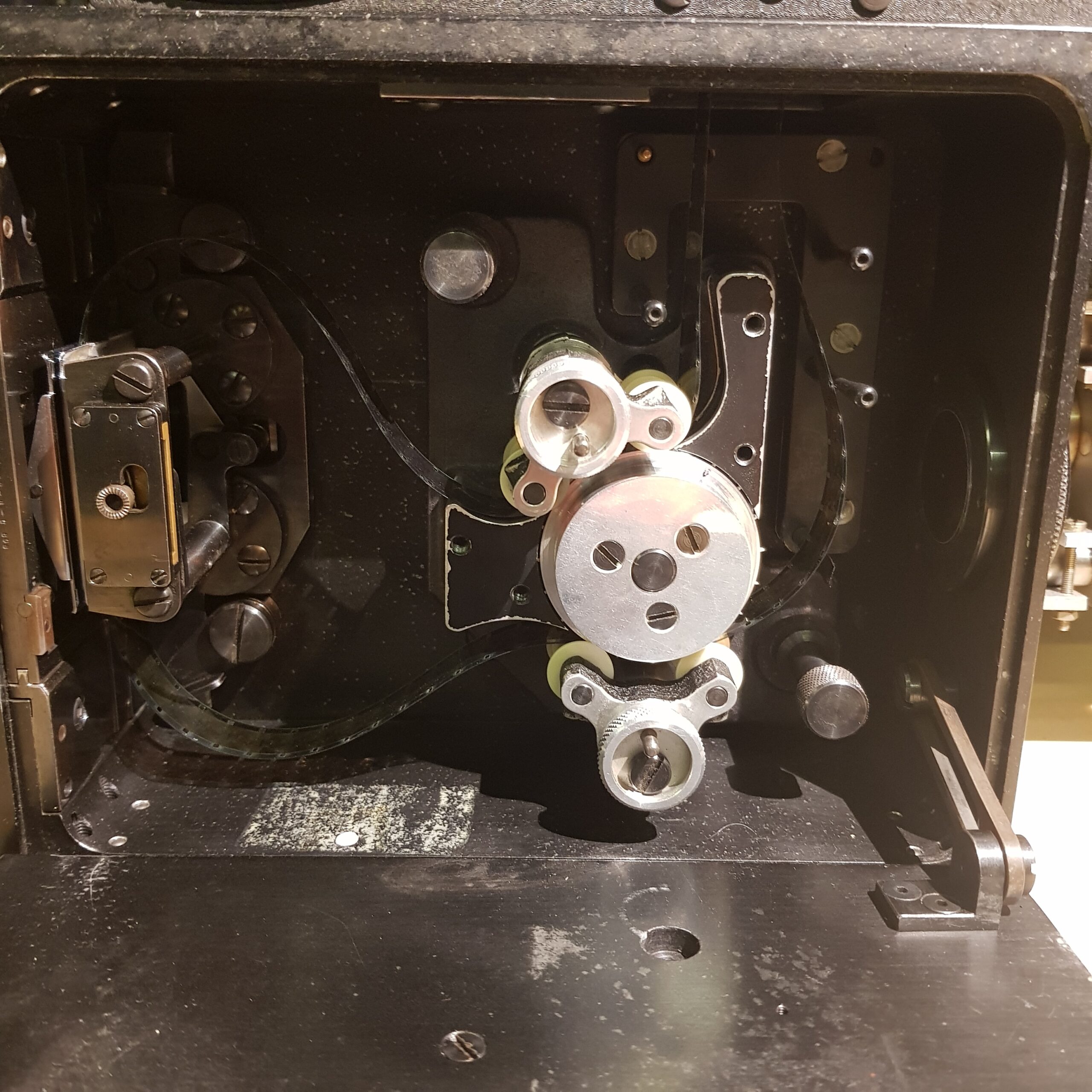
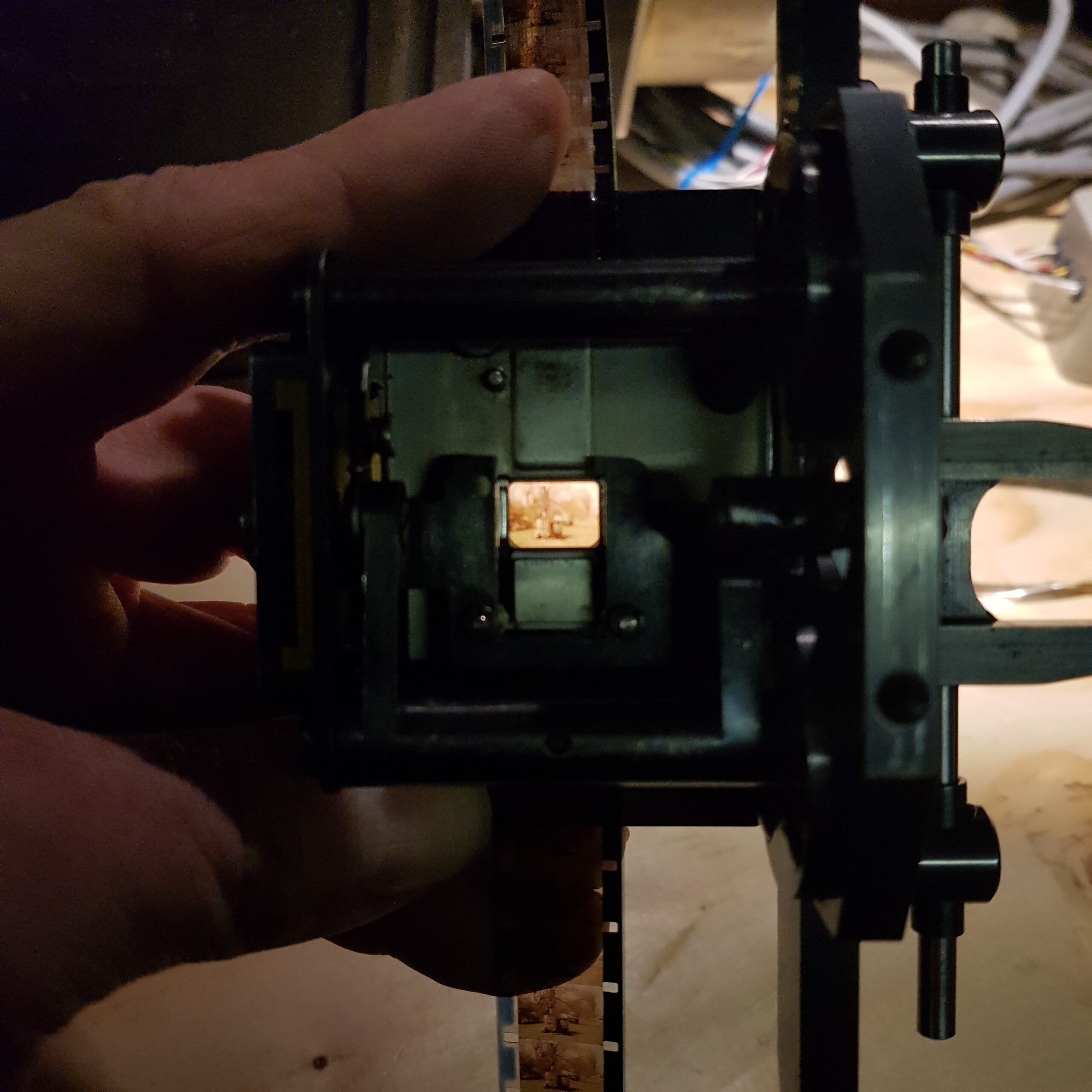
It has a 35mm gate and sprocket movement. It also has a standard 16mm, 2 pin gate! Finally!!! All in all its in very fine condition. Some work will need to be done to get the electronic controls working. Heres a bit of double pef film in the gate. Of course, if I wish to shoot onto single perf stock I will need to remove one set of pins. But this gate would be better suited to copying, or duping by holding material on double perf film

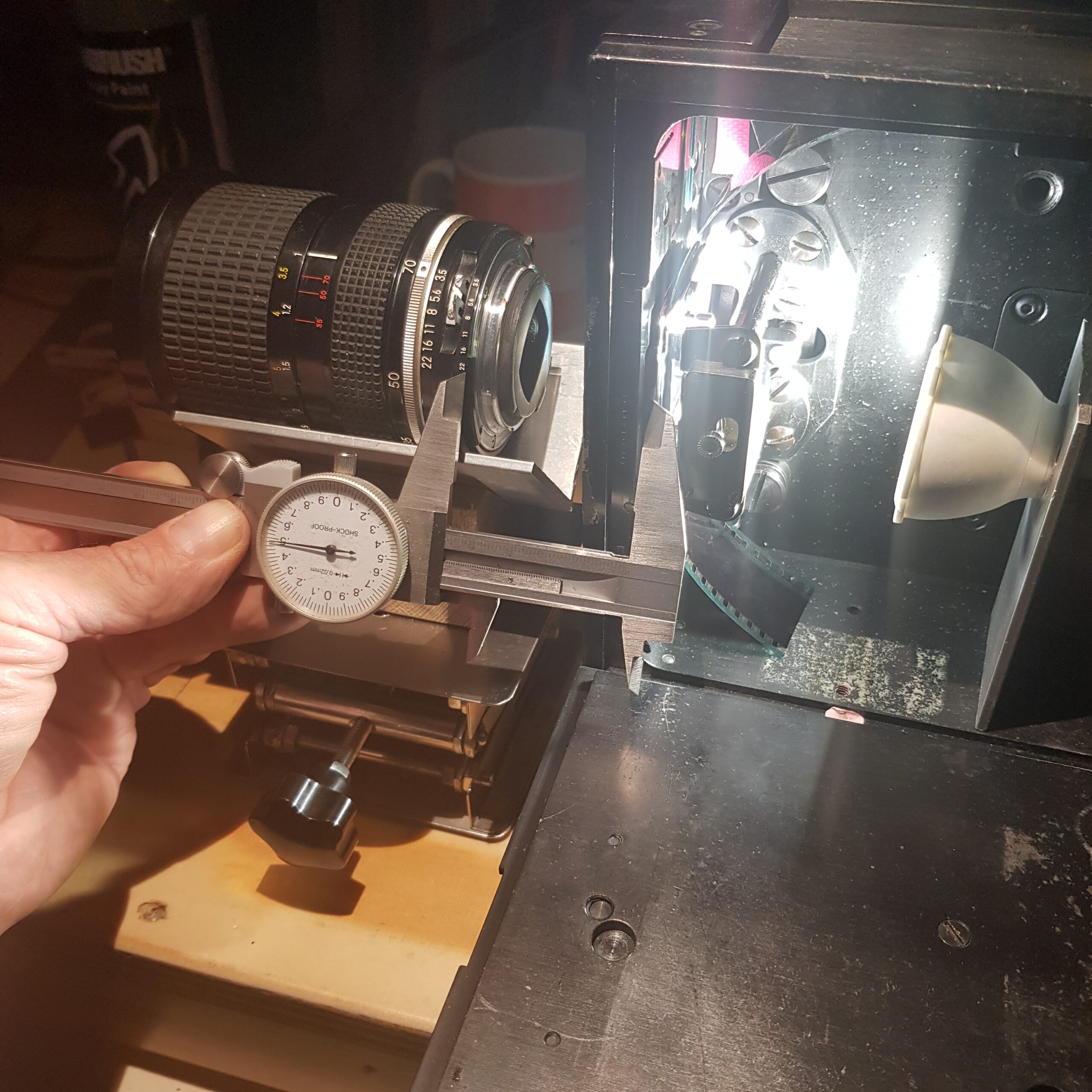
Heres some pictures of the prep for getting a lens onto the camera.

The Nikon F plate held infront to check focal range.
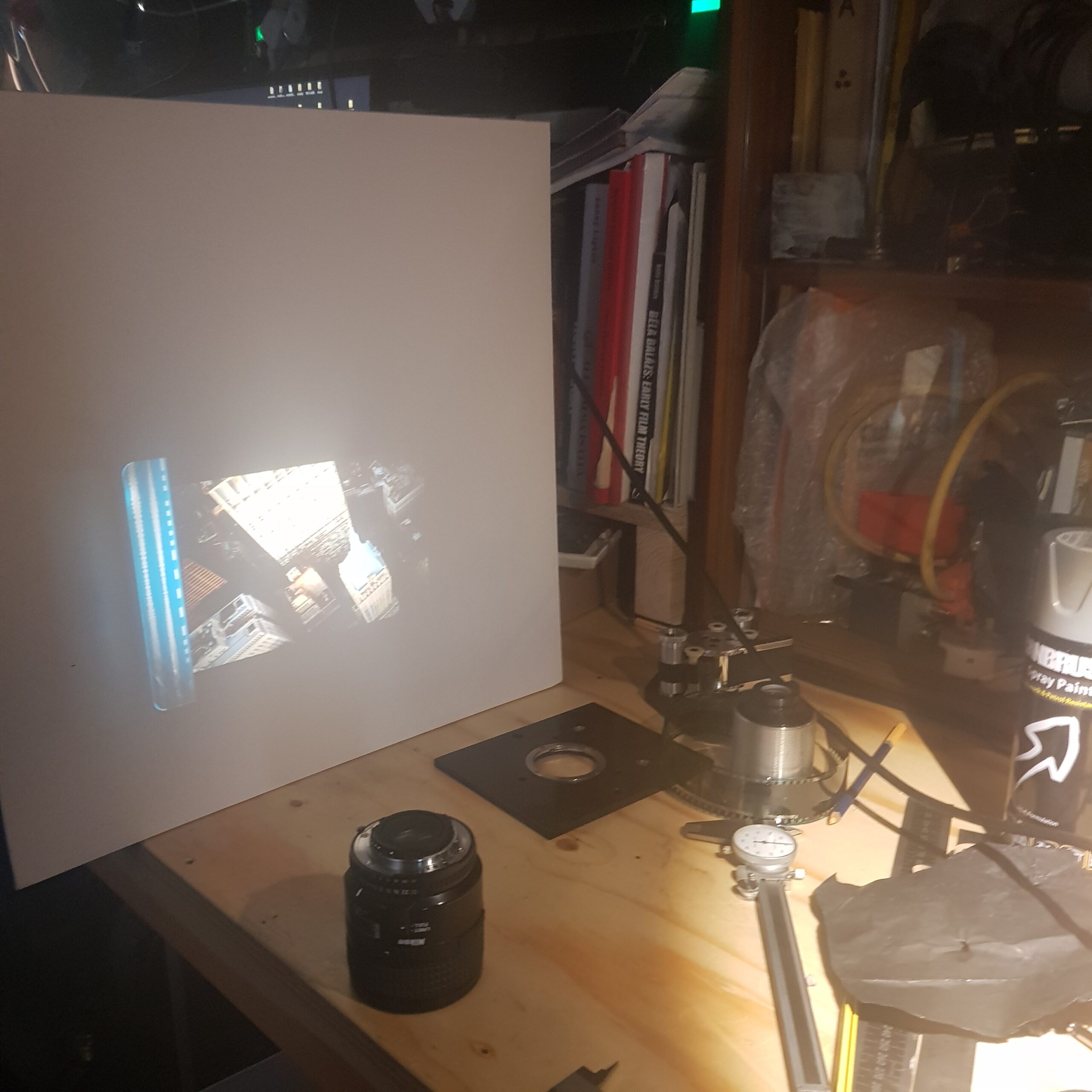
With a light source inside the camera (rotoscope mode) and a gate wth piece of film in we can project an image. Also check the Nikon F focal flange distance = 46.5mm
The image is correct of course because we photograph work to conform to projection

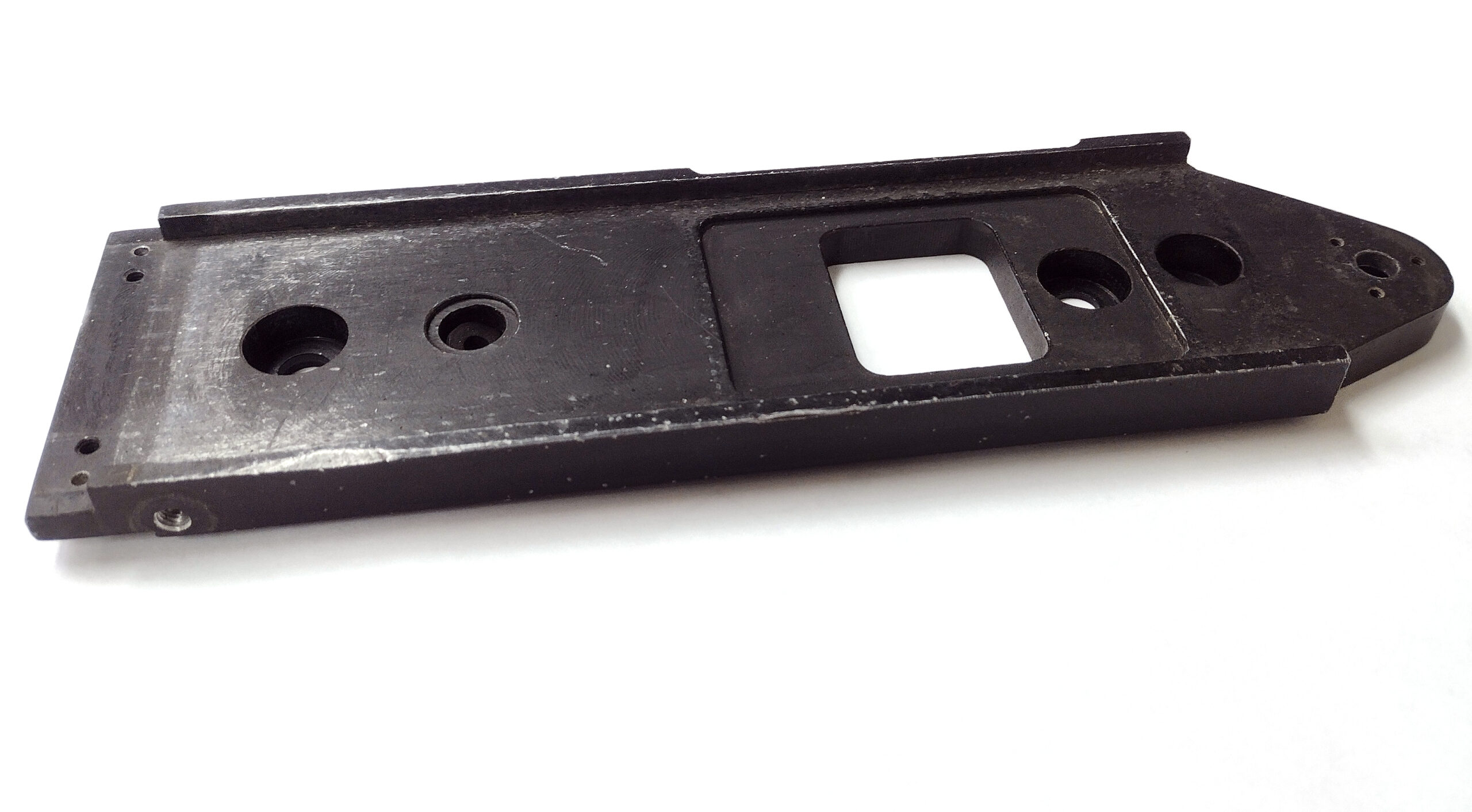
All that is needed is to machine a block of alloy/ali to fit the front machine bolt locations, put in a Nikon F bayonet mount, space and align the plate correctly and paint the inside black.

1000 ft mags

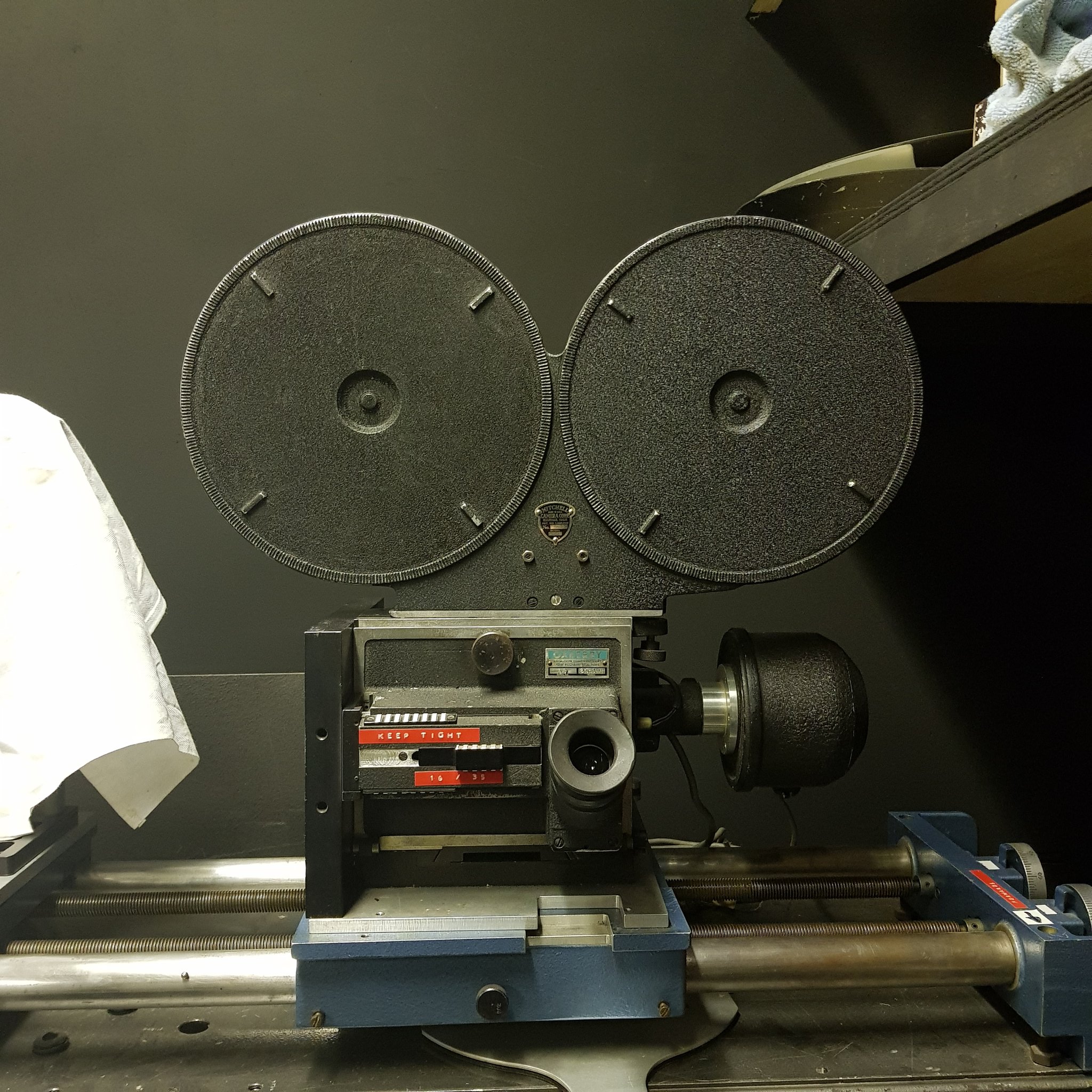
OK. So I am very happy with a new pair of 1000ft mitchell film magazines and here is one sitting on top of the animation camera. However, these mags have a wider base fitting known as NC (newsreel camera) and the camera uses one called GC which is smaller. Just waiting to hear from someone in LA who has an adapter. Hopefully not to expensive.

These mags are for the eventuality when large runs of film need to be exposed, possibly towards final prints for exhibition. Magazines can also house exposed film for certain operations such as long runs of rotoscope material, or at least longer runs than what 400ft reels can afford.

DEBRIS

The beginning and end of Disbanded Cinema

1 : the remains of something broken down or destroyed digging through the storm’s debris in search of survivors sifted through the debris of his flooded house. 2 geology : an accumulation of fragments of rock. 3 : something discarded : rubbish picking up debris after the parade.

I am hoping to hold an exhibition at my studios next year. It will be a mixture of sculpture, video and installation and will reflect on decades of collecting machinery associated with Cinema.

In marked contrast to Expanded Cinema which largely aims to enlargen conventional applications of projection technologies (albeit in inventive, experimental and innovative ways) my aim is to celebrate the metallic presence of film machines as artifacts, sculptures, bodies.

Through simple and crude reinterpretations and reimaginings of their design, aesthetic, function and mechanical operation, objects will explore the inner space of their own legacy of purpose.

Alongside these sculptural works will be several moving image works including one made using a 3 colour b/w seperation film preservation technique.

It struck me recently, when unloading a final lorry load of gear that all these strange objects and parts all have their own sculptural presence. And when some are combined they take on new forms that contribute to an extension, an expansion of their lifes, or afterlifes. That is they keep giving, even in advanced redundancy and obsolescence they provide ideas, materials, toolsets, techniques, functions and value, that are far from exhaustion.

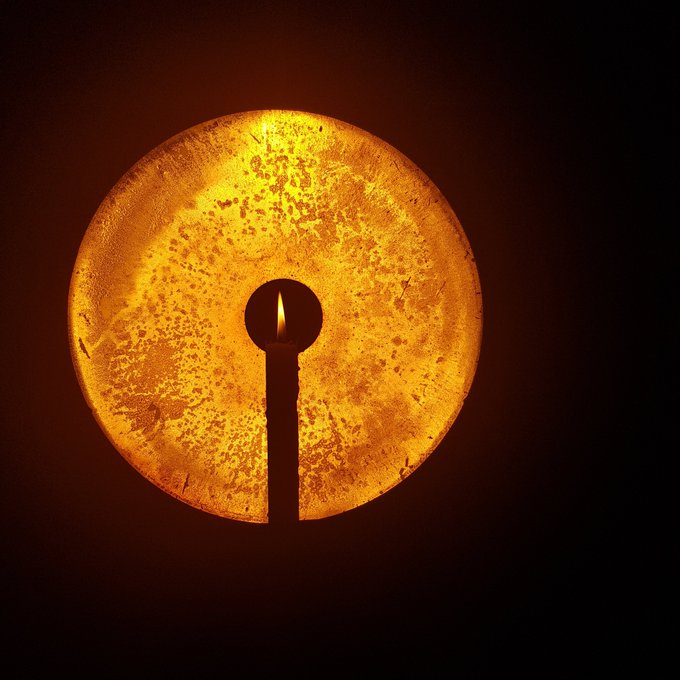
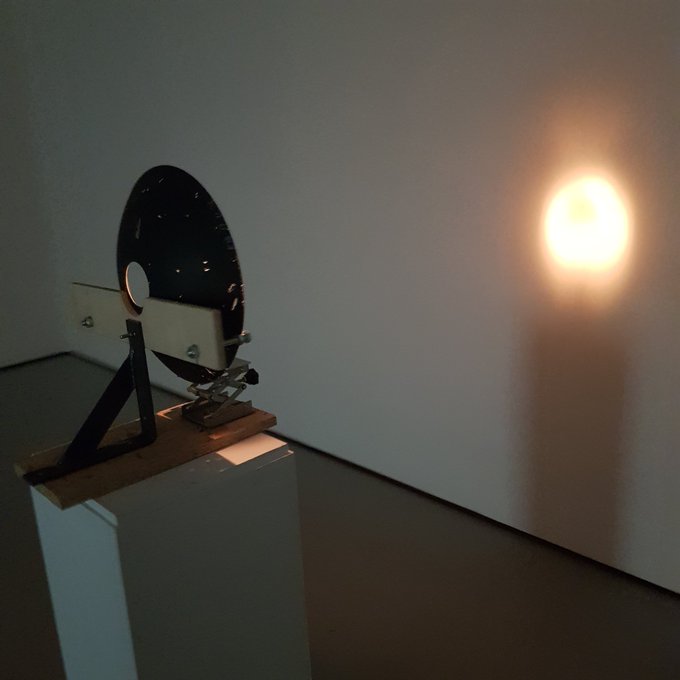
An old carbon arc mirror for instance, used in pre-XENON eera lamp houses finds a calm place when combined with the crudest light source, a candle.


Or here, where a cinema platter table, used to manage 35mm prints in cine-multiplexes combines with a completley stripped down steenbeck frame. Any use value or functional purpose this editing table had in a previous life is now dismantled to reflects it core being, a big metal welded frame that can act as a base for all kinds of projects.


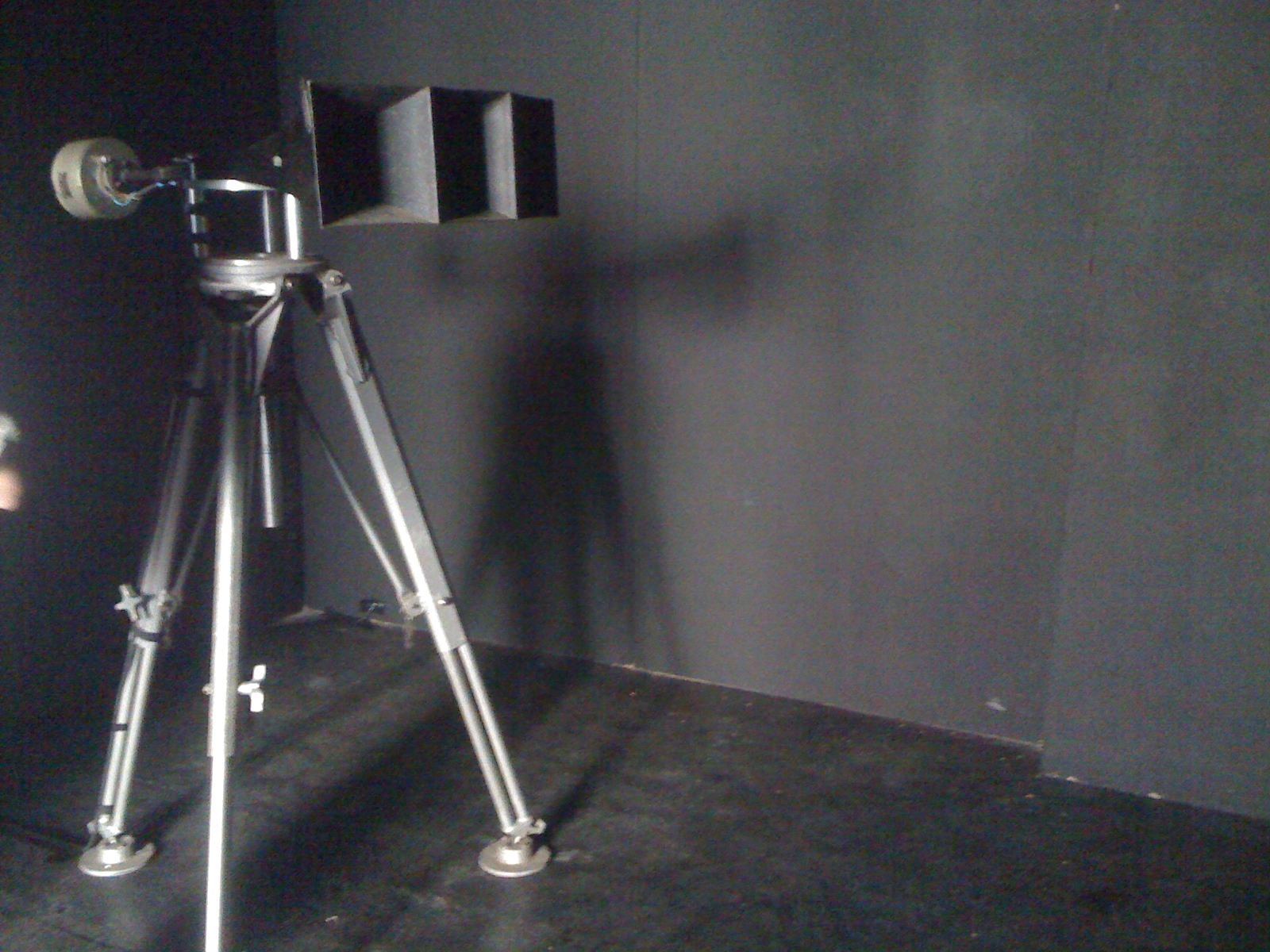
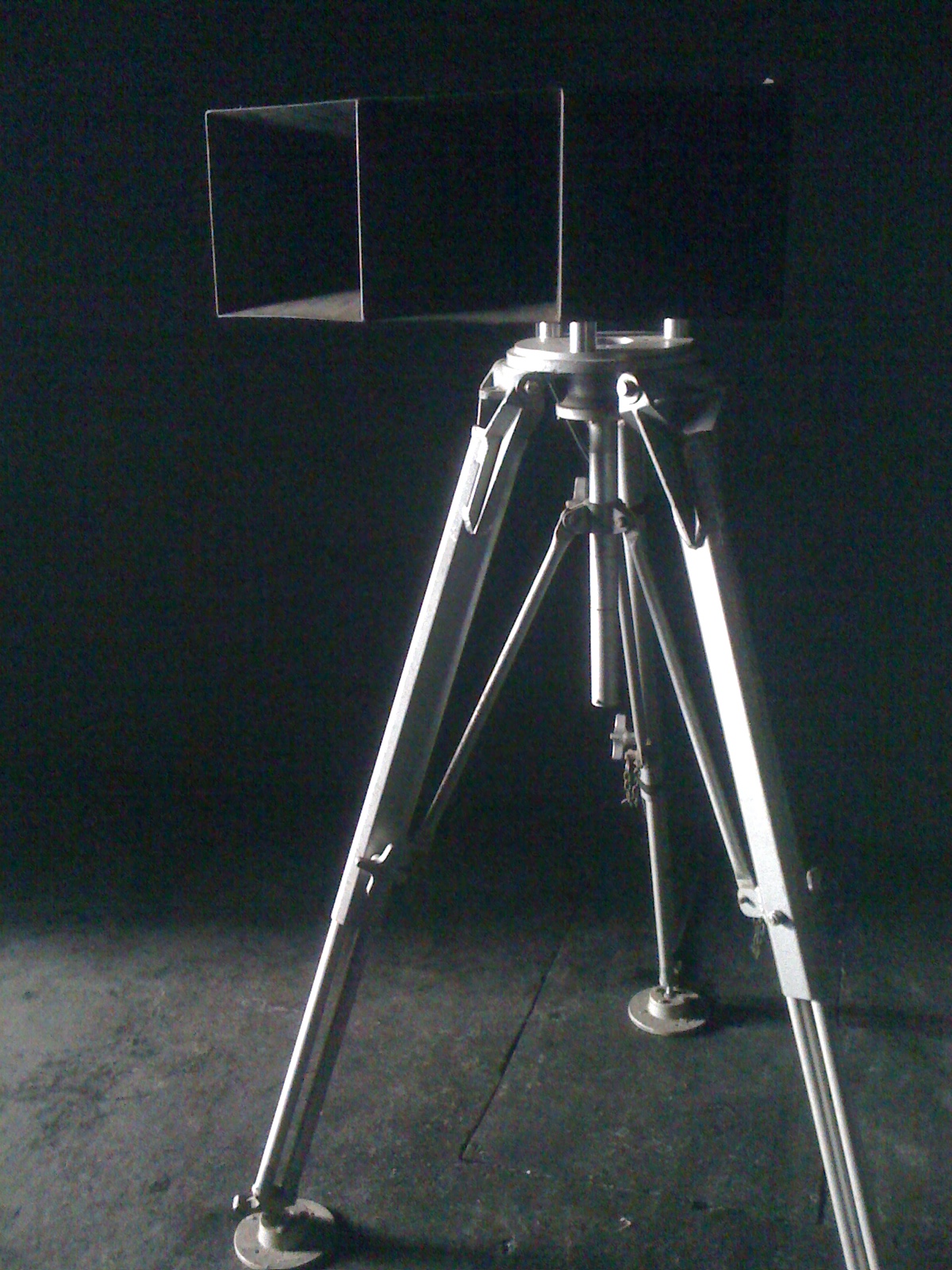
I will construct a new version of this arrangement where a large horn speaker, used as the centre speaker for over 10 years in an old cinema in Bristol is combined with some heavy studio ‘legs’ or tripod which I was gifted by the late Dave Borthwick from Bolex Brothers animation studio.


My old friend, the Kalee 21 (above) that we ran at the Cube Cinema from 1998 to around 31st January 2016 will be placed, like a bust, on a plinth inside which I might try and build a loop holder (like a Kinetoscope). It will sit on some scales as if to weigh its soul.


None of these objects is in fact ‘junk’ in any way. Their reorientation as objects in a gallery show is booked into their diaries. The rest of the time they are all employed in other ways, some reflecting their designed use and sometimes revealing re-purposings.

I have in mind about 10 pieces and am working from now until next year with the exhibition planned for March possibly.

I will use this blog as a diary/note book/sketch book/scrap book as I go along to document the whole process.

Night tests

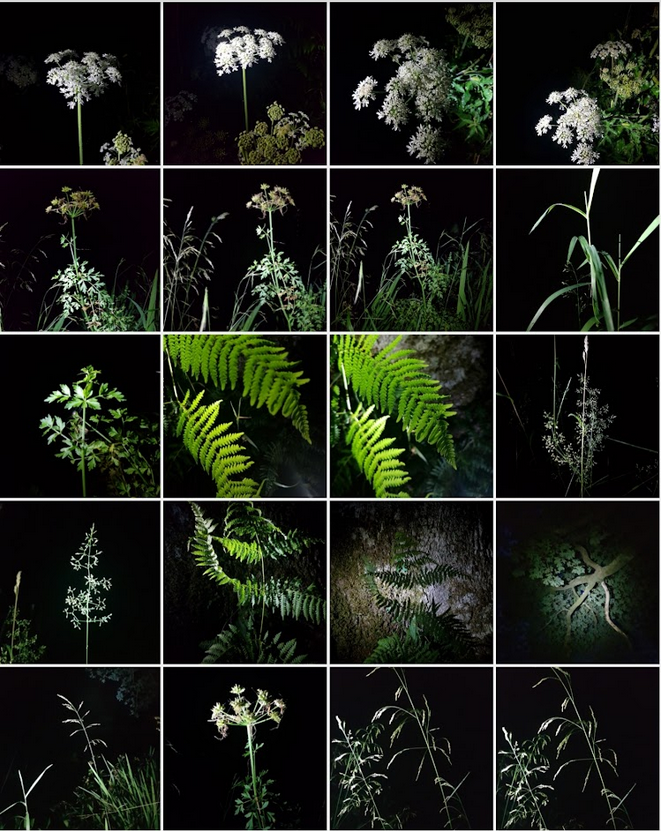
Down by the river Dart last week looking and listening to the Bats I took some photos using an LED torch and my phone.

The results are ok, but when you look closely they are really blurry, stroby and uneven. This process of looking at night time really appeals to me and I will be doing more using better gear.

Contact Printer 001

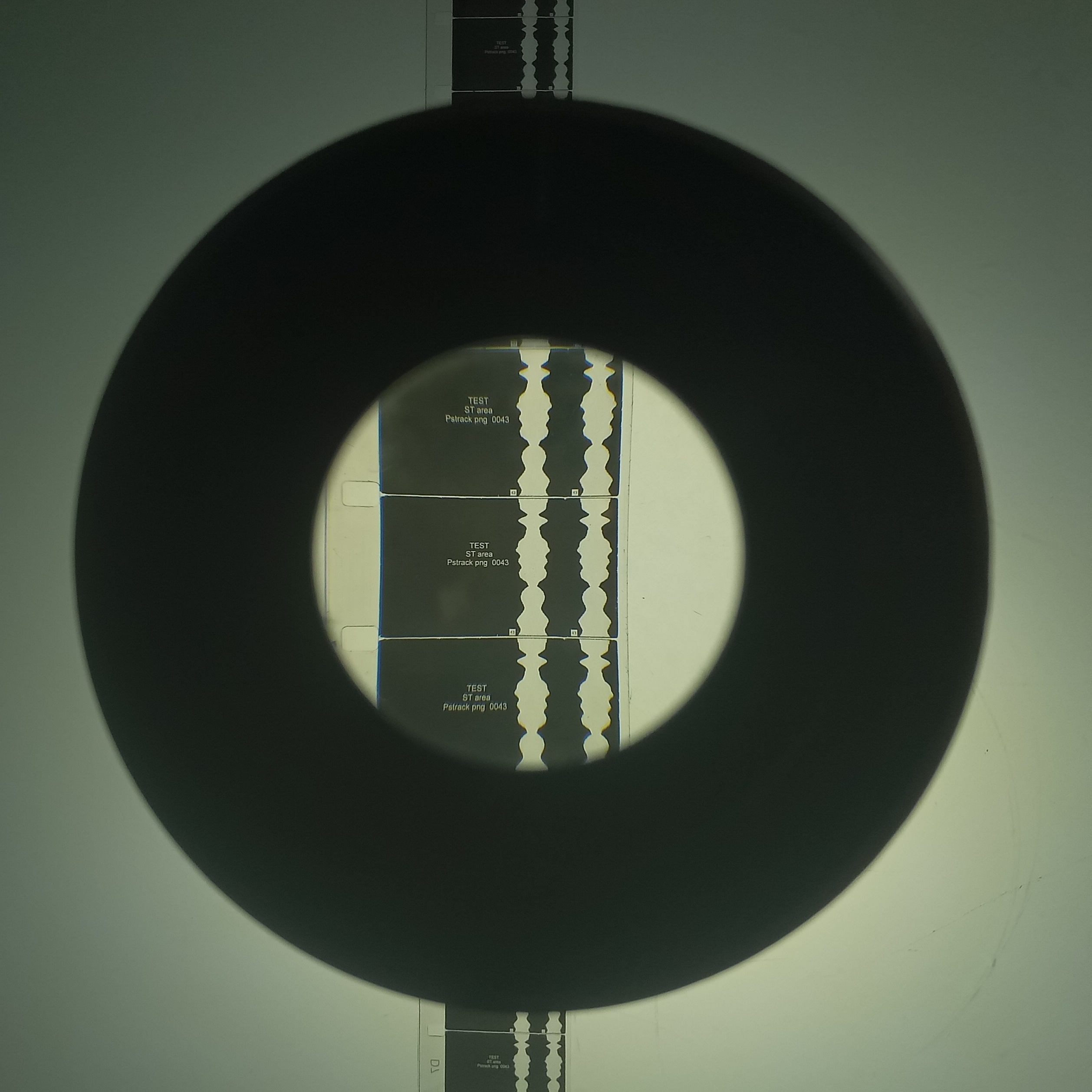
This thing then is a contact printer for 35mm. The strange image shows a punched film which controls the light.

photo A

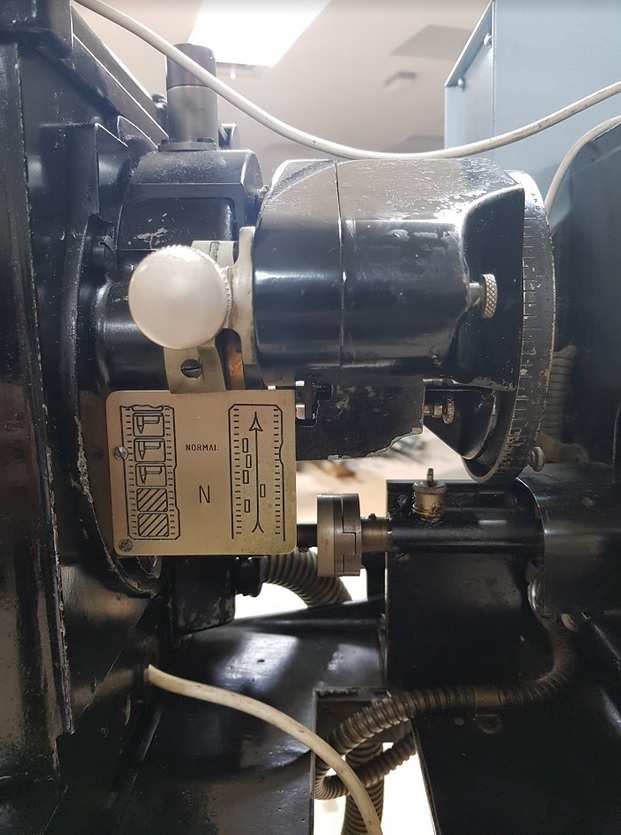
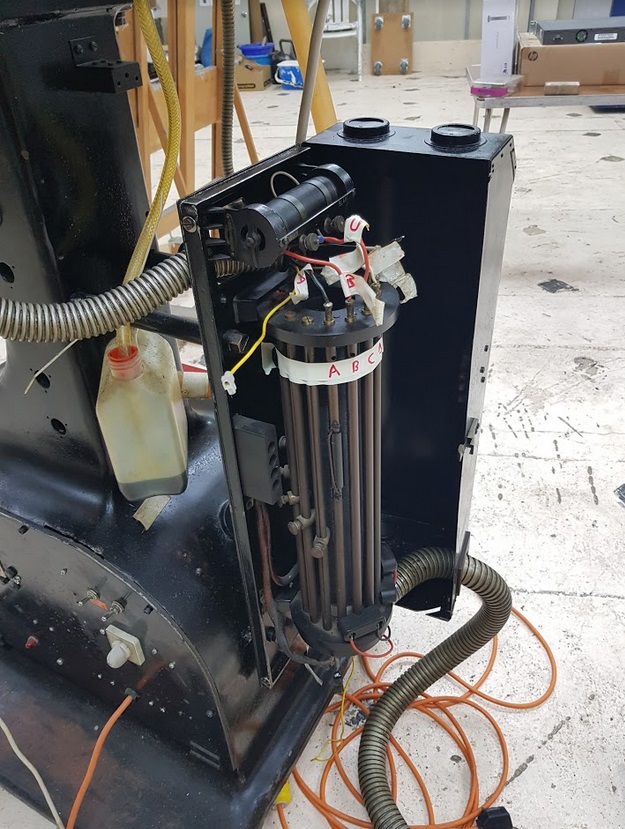
As I have no manual the only thing to do is work out everything as I go along. Very basically a light shines through the back of the negative (loaded on left spools) and through the raw film (on right spools) as they travel sandwiched together in the gate. The punched film (I also have the puncher, a very strange thing indeed) is loaded in the funny mechanism shown in photo A. As the holes pass through, metal followers switch on and off and these route the mains through the big rheostat with varying voltage shown in photo B.

photo B

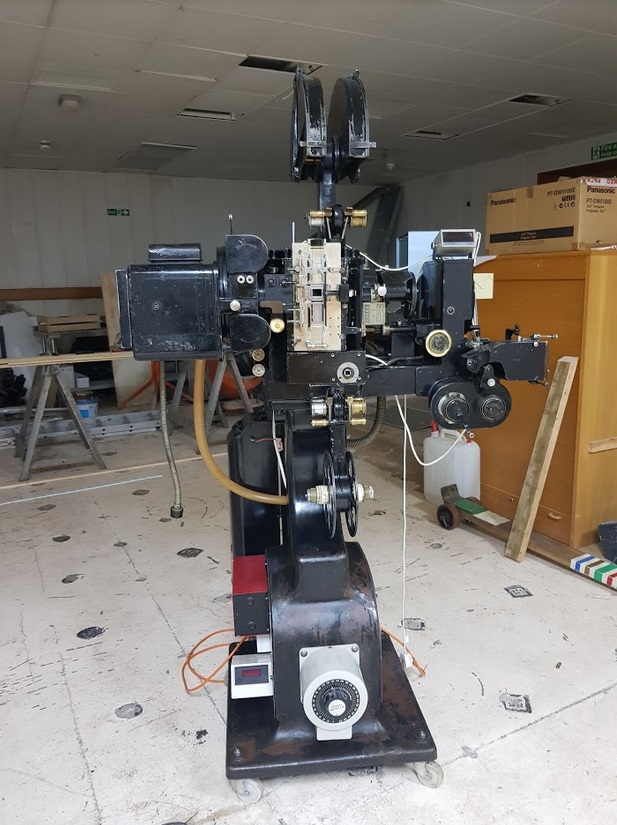
The lamphouse is on the left and there is a blade with a single opening, not unlike ones we see in cameras that obviously dowses the light as the film moves to next frame. There are various gates for full gate, academy, etc and I also have an add on unit for printing the optical soundtrack. Apart from ‘restoring’ this beast as close as possible to its ‘ideal function’ it reamains mysterious in many ways which will make this an educational task. What for instance is the purpose of roll of film that runs between the light/blade and mirror behind the film? Masks? Filters for colours? ND? What is the purpose of the other blade/light controller seen on bottom right arm in photo C? It appears as a cruder, simpler version of the main one. How is the speed of this punched film controlled? Why is the take up capacity so much smaller than the supply? There are micro-switches (very early reed switches) everywhere and strange cogs, gears and drives. All it really does is step contact print. And for this reason it is instrumental for me to be able to make positives from negatives.

It comes from the Imperial War Museum where it was being used to make safety copies of their nitrate material. When this process was completed, the guy who was doing it retired, ( I do have his number).

There is some documentation in Paul Read and Mark-Paul Meyer’s book which may give some initial guidance.

photo C

The future of every/anything

I am relooking at my own list of aims to pick it apart a bit, self criticise, expand, elaborate or just slag it off completely.

1 To make Art works.

The idea that ‘Artworks’ are the final output of my time is contingent on several other ideas that mostly involve the actual social role of the artist as well as the idea that the contexts for Art needn’t be dicated by anyone in particular; galleries, curators, theorists, archives, museums, funding bodies, national agencies, collectors or competitions. The only context that matters is the space inwhich a work becomes finished by the artist her/himself. The moment it becomes a thing readily available to be experienced by anyone. In this regard the audience of ‘Art’ is very diverse and ranges from the local vernacular of ‘artisanship’ to the seedy misery of wealth and business.

2 To form a new Archive of (film based) motion picture works.

If I had a patron, a wealthy one, I’d ask for a few million quid to buy as much film stock as I could and set about propogating this archive. However, where are the guiding principles? Where is the Brunhes inversion? The essential drive to make film records that preserve the current times is based on my belief that we have not yet fully understood or resolved the philosophical problems raised by existing film archives (ones arising out of the birth of film) in the senses of cultural memory, the terms and conditions of humanity and the nature of life. Therefore, we cannot let a discontinuity in media technique dicate the full experience of the solutions that film offers us to problems of sustainabiltiy.

3 To produce works in/through/with/about film apparatus.

Included in above?

4 To collect, select, re-use, re-purpose existing film motion picture
material to extend any of 1, 2.

The idea that film begets film (Leda) is very important to the materiological networks my project explores. Films reused, films altered, films remade, films restored, films as living things……

5 To Produce a set of open and experimental guidelines, directives and
plans.

Not even sure what I myself actually mean here. Will drink more cider and have a think….

6 To ensure works are accessible in Cinema form for Cinema presentation in a
Cinema as part of ‘Cinema’.

Basically the idea of the importance of the ‘cinema’ as a socio-cultural vital organ. This is also a kind of joke, that it encapsulates the logical end position of certain ideas found in the cinema and archive worlds.

7 To make research tests into any related film technology apparatus and
share any findings openly.

This could be elaborated better, or written entirely better.

8 To explore digital technologies in relation to film translation and
restoration.

Is this infact the same as number 7. I use digital techniques to augment and inform analogue ones. But I am not a fan of the idea that digitising everything is a good idea. I think it serves short term anxiety over the public role and value of film archive collections, in that a pressure is excerted from ‘the cloud’ which falsifies the intrinsic materiological ‘livingness’ of film records and seeks to covertly replace their network of creative, historic, playful, local, real world, sustainable, varnacular to a dangerously meaningless dataset and abstract condition, itself contingent only on a narrow phase of technology. In another way it (the process of digitisation) seeks to render film artefacts as mere surfaces containing shapes, colours and movement.

9 To provide facility in Analogue Motion picture, ie Cinema for use by
associated Artists and Film Makers.

Infact, I dont want to share any of the things Ive collected until Ive used them to make things myself, which may never happen.

10 To engage with, support and collaborate with any other individuals,
organisations or associations or networks who have similar aims

Another lie just like 9.

Not really….
poem

Light and dark 

We know the light 

How well do we know the dark 

Like dreams 

A third of our life spent in them 

In film, 2 x 5ths spent in darkness 

Resting 

2 x 5ths is 40% , which sounds more than a third. It is. 

Sounds closer to half 

It’s hard to think of the agency in the dark 

That moves us in rest 

For 36 minutes in any 90 minute feature 

We remember all the changes and details in the light 

But the dark remains the same the whole time and we forget it completely 

Or do we 

Is the dark the other us 

Slumbering but listening 

Soaking up the dreams 

Making us what we become 

At the movies

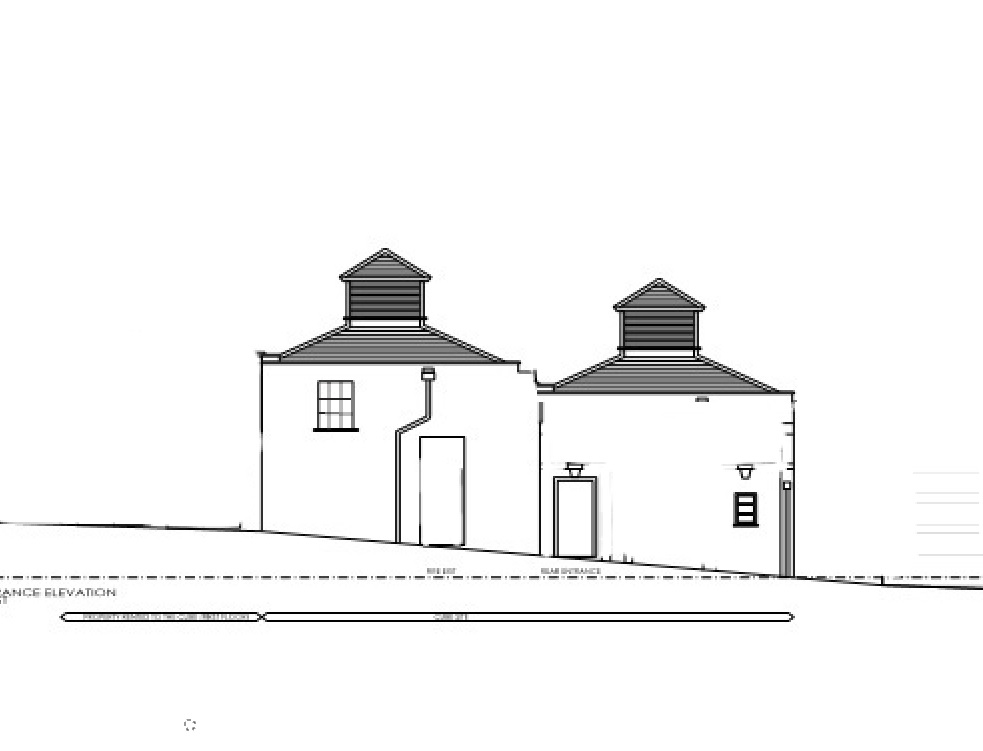
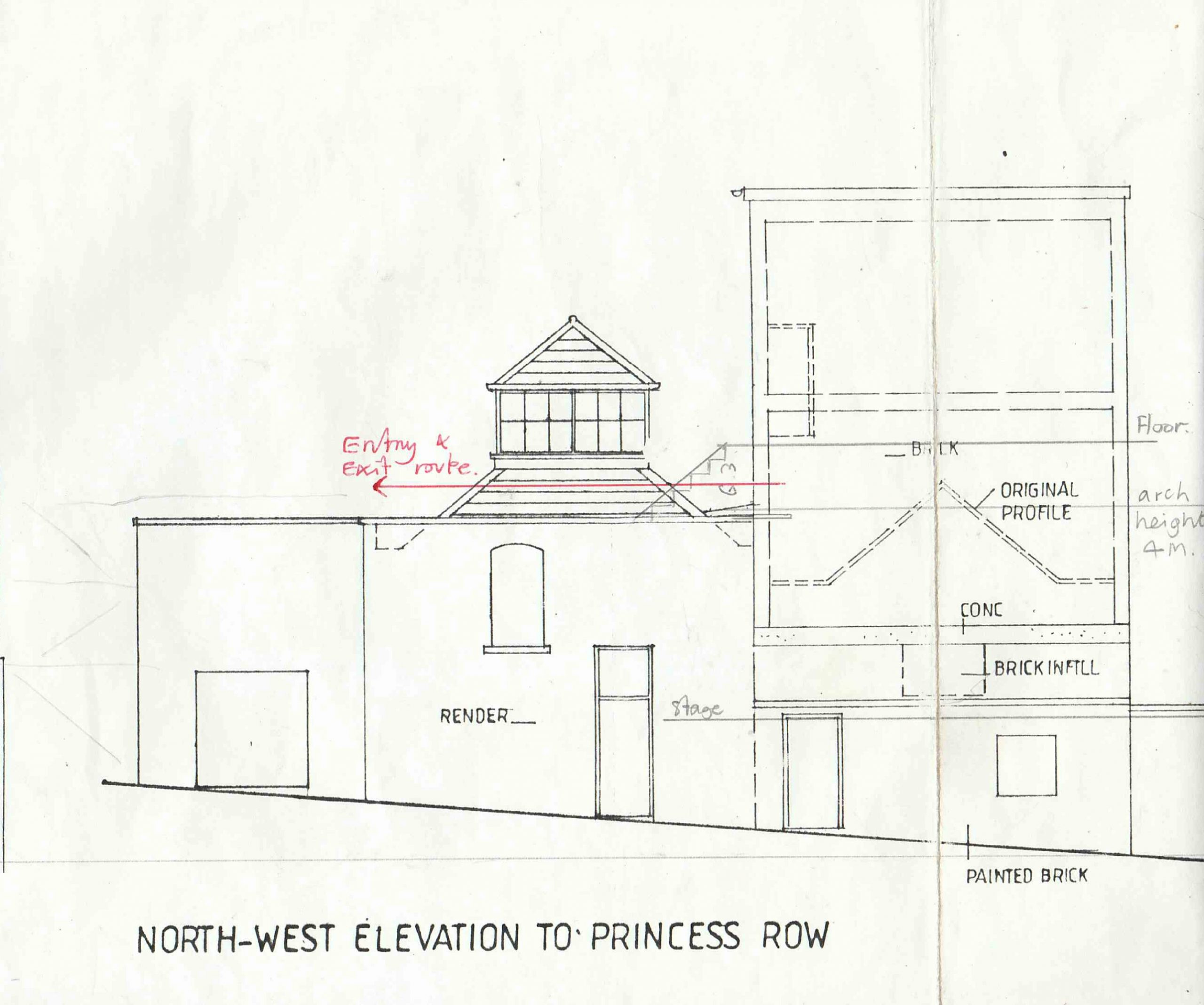
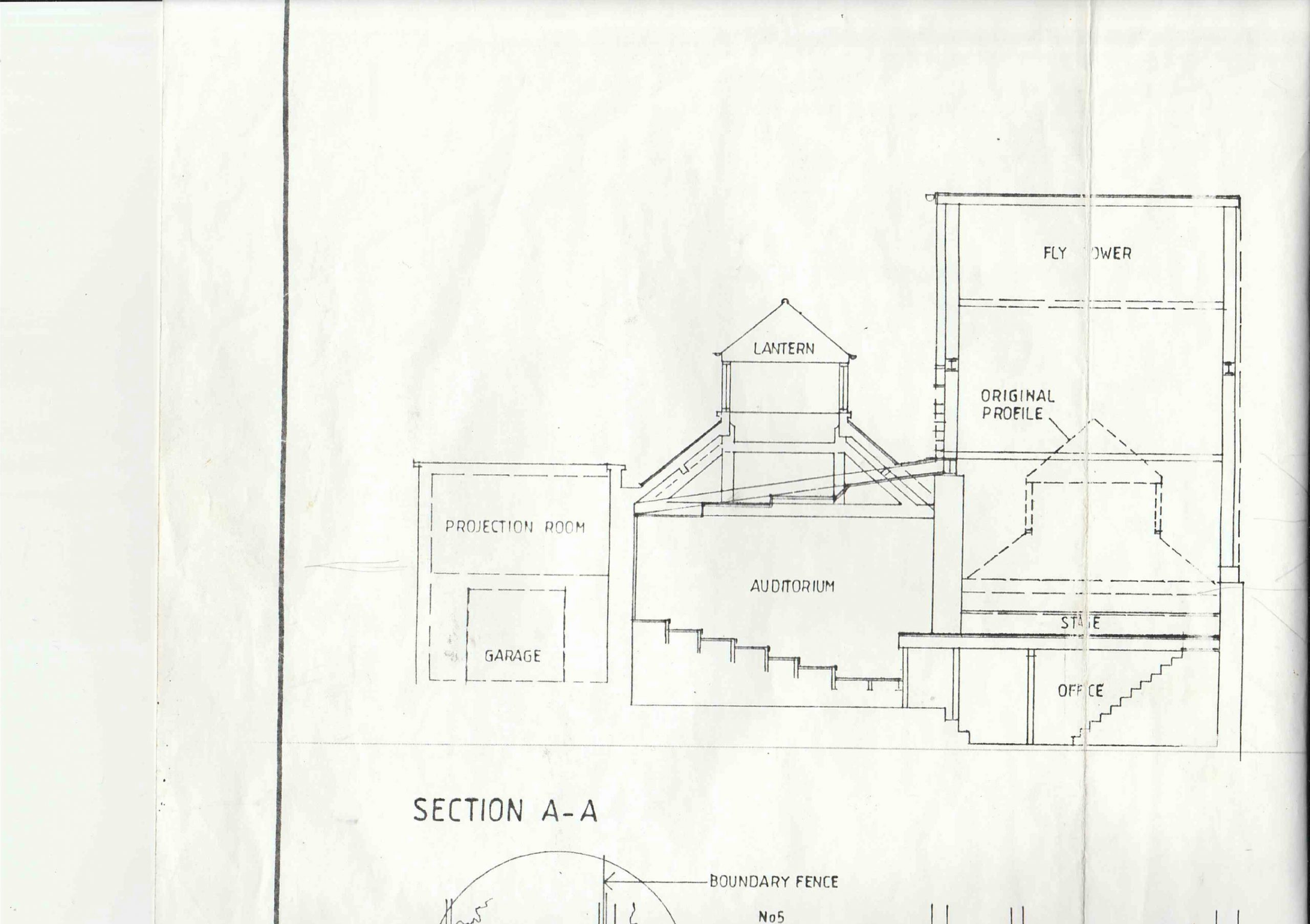
2 old architects plans of the Cube Cinema

Here we see the Cube buildings from Princess Row, the staff door entrance. A nice detail is the glazed windows in the Lantern. This lantern feature was originally the means of light coming into the workshop which is now taken up by the wooden, fan shaped, raked, T&G auditorium. We would like to restore these glass features and explore the possible cooling and heating offered by controlling the air temp and flow in this volume which sits directly above the cinema auditorium. Plus there would be an aesthetic value adding to the historical roof views of this area as well as possible night time illumination.

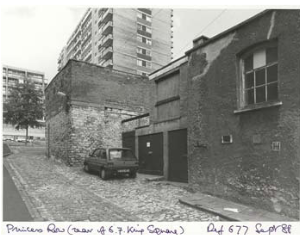
An old photo showing the window and glazing that is currently covered up. This would have been at one time after 1916 a window into the workshop.

This section shows the modification that was made to the orignial 1916 workshop for the Bristol Deaf Centre. In order to get the height for the proscenium arch from the viewpoint of an audience seated in a raked auditorium, pitched RSJs (x 3) span from back to front. The orignial lantern frame was sliced into and now sits on these steel beams. Everything below the angled RSJs in this drawing was removed.

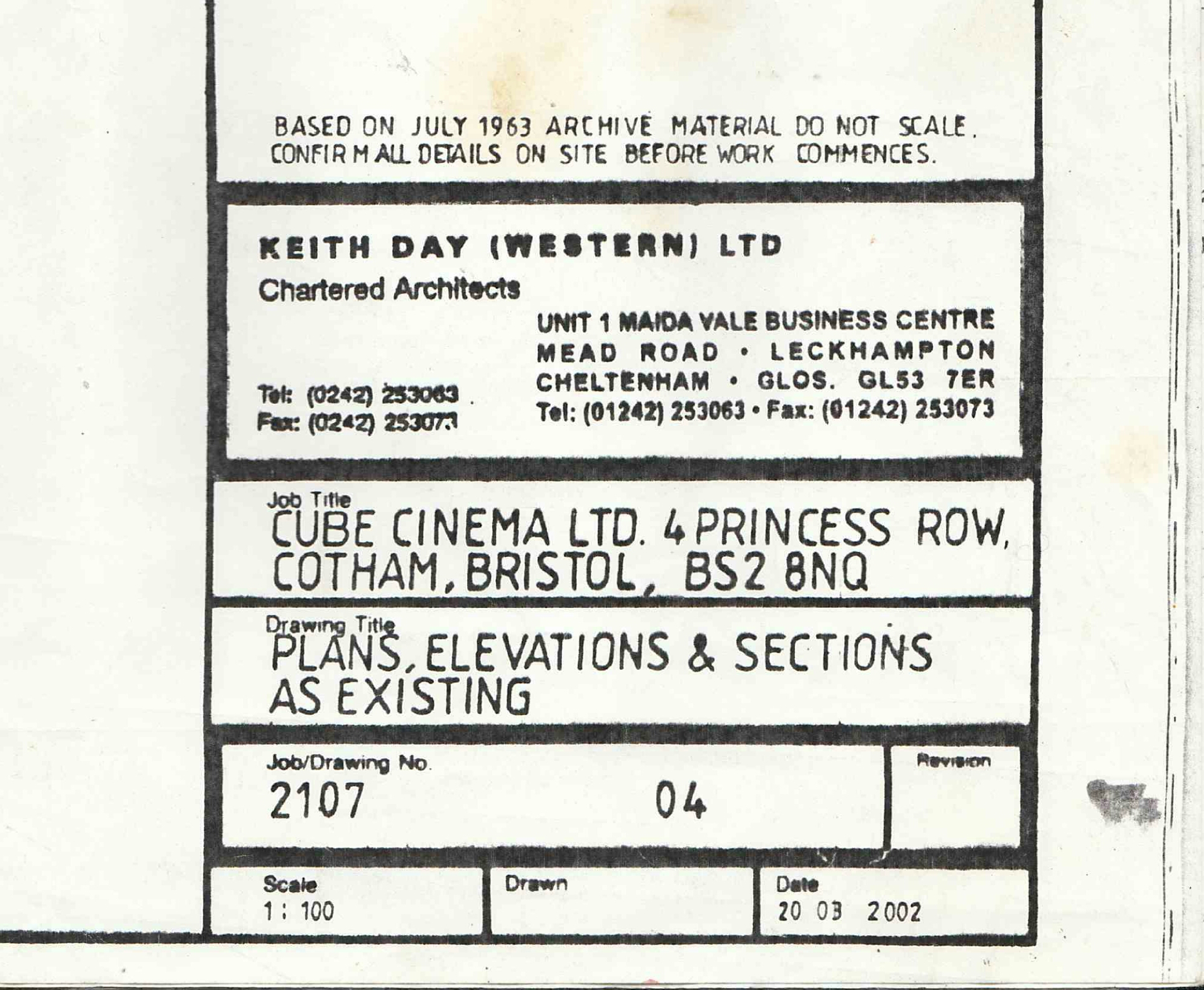
These 2 plans were drawn up by Keith Day Architects on behalf of Nicholas Upton, the Cubes one time building owner and our landlord. Above you can see the reference to the 1963 Archive material that must be in the Bristol Records Office or the City Planning Office.