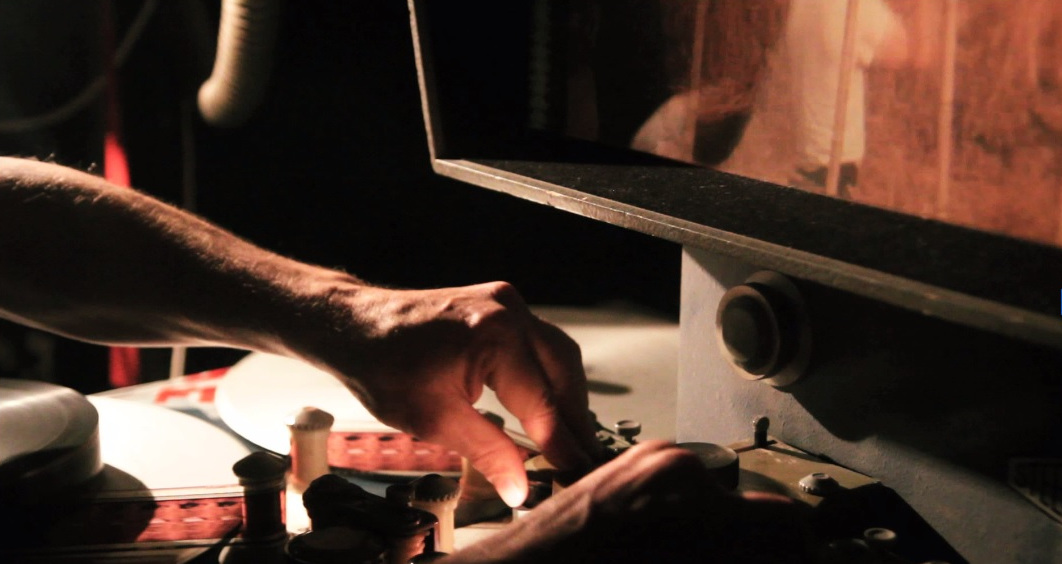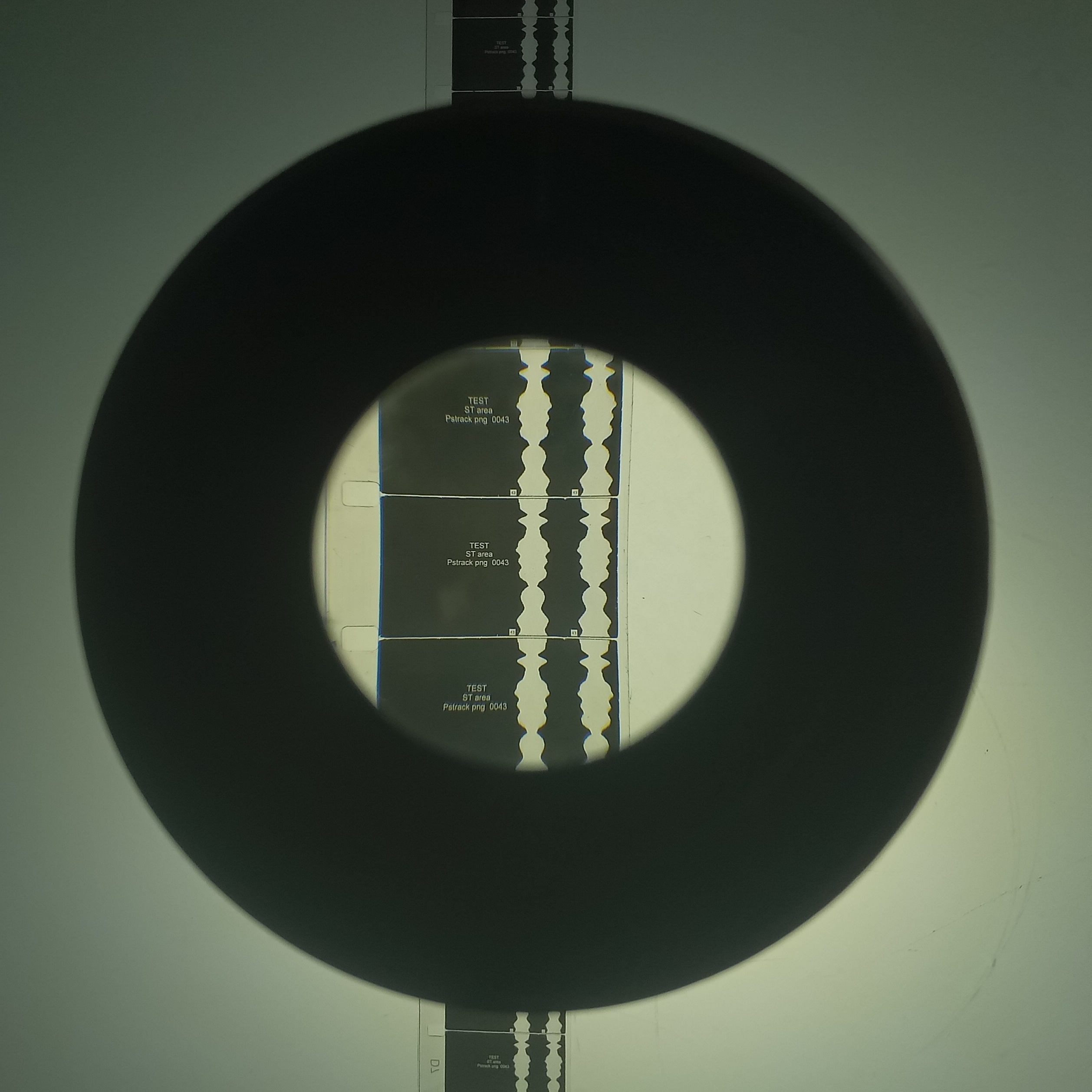
Old photo of Mark Berry on one of his UK visits. Ray is probably playing with Danny who is out of shot. This is the back door of the projection room at the Cube Cinema which leads out onto the roof of the garages in Princess Row.
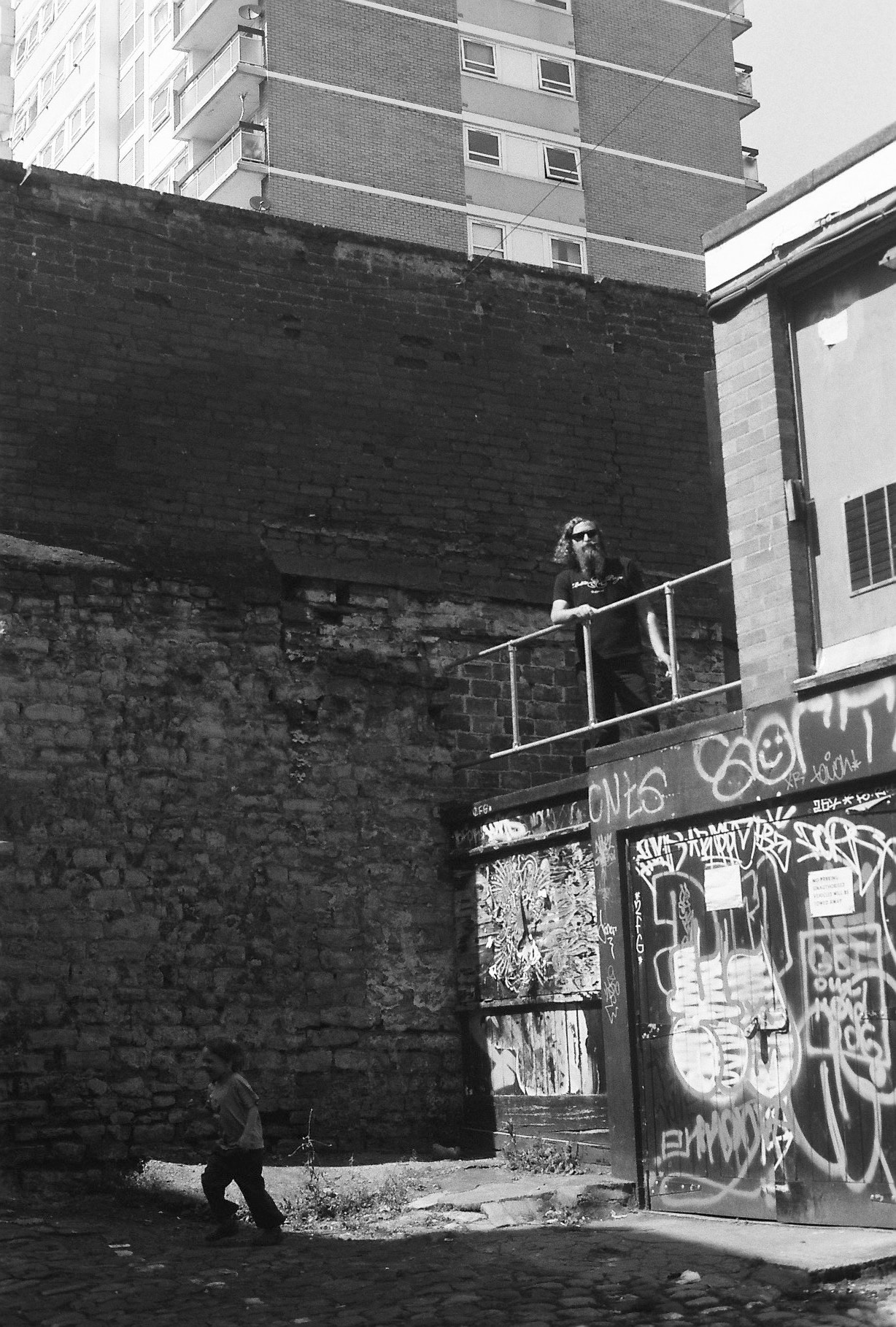
Old photo of Mark Berry on one of his UK visits. Ray is probably playing with Danny who is out of shot. This is the back door of the projection room at the Cube Cinema which leads out onto the roof of the garages in Princess Row.
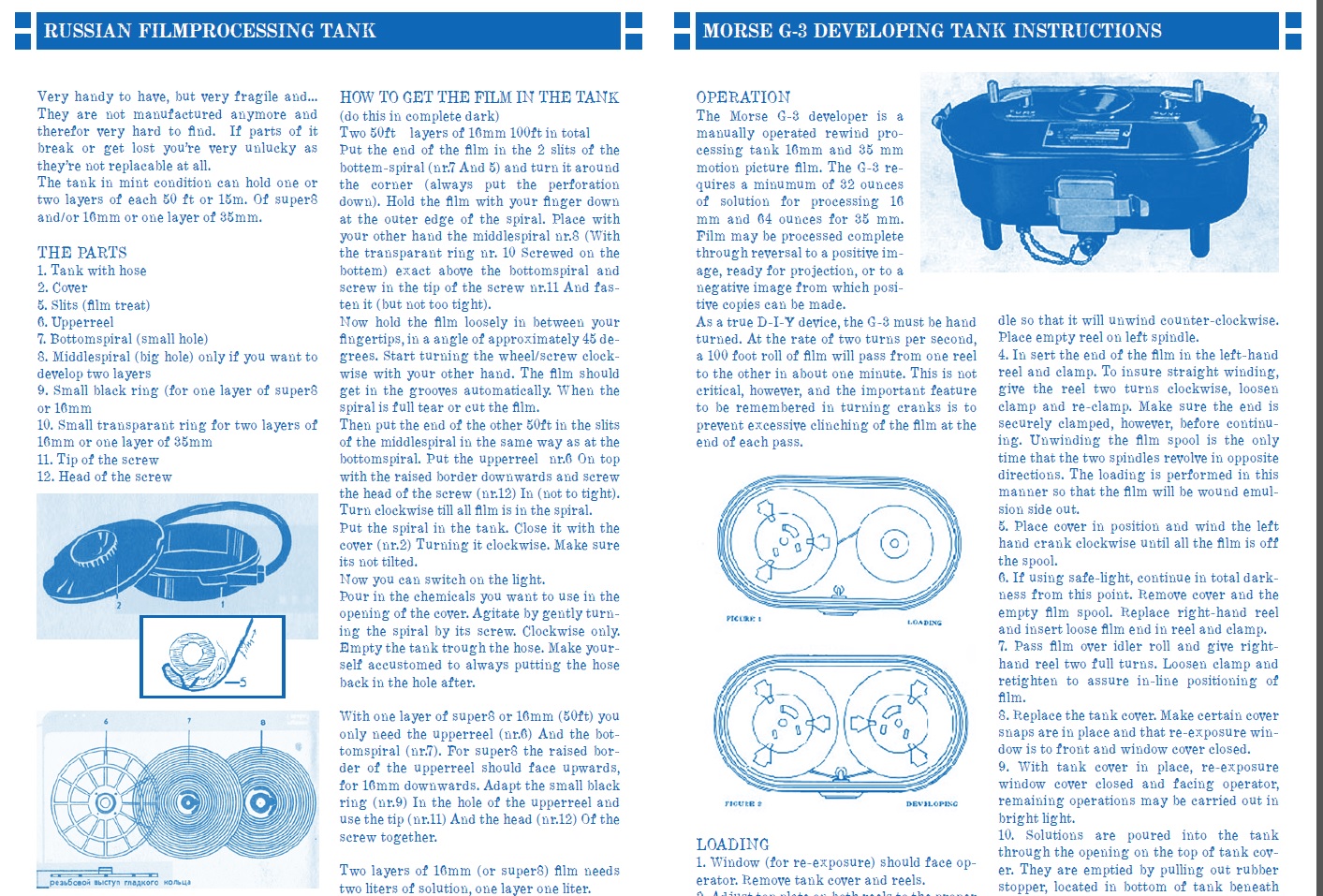
This endlessly resourceful and insprational booklet by Esther Urlus at Worm in Rotterdam is now available as a pdf. Here is a link to the pdf version. Its free and its amazing!!!!
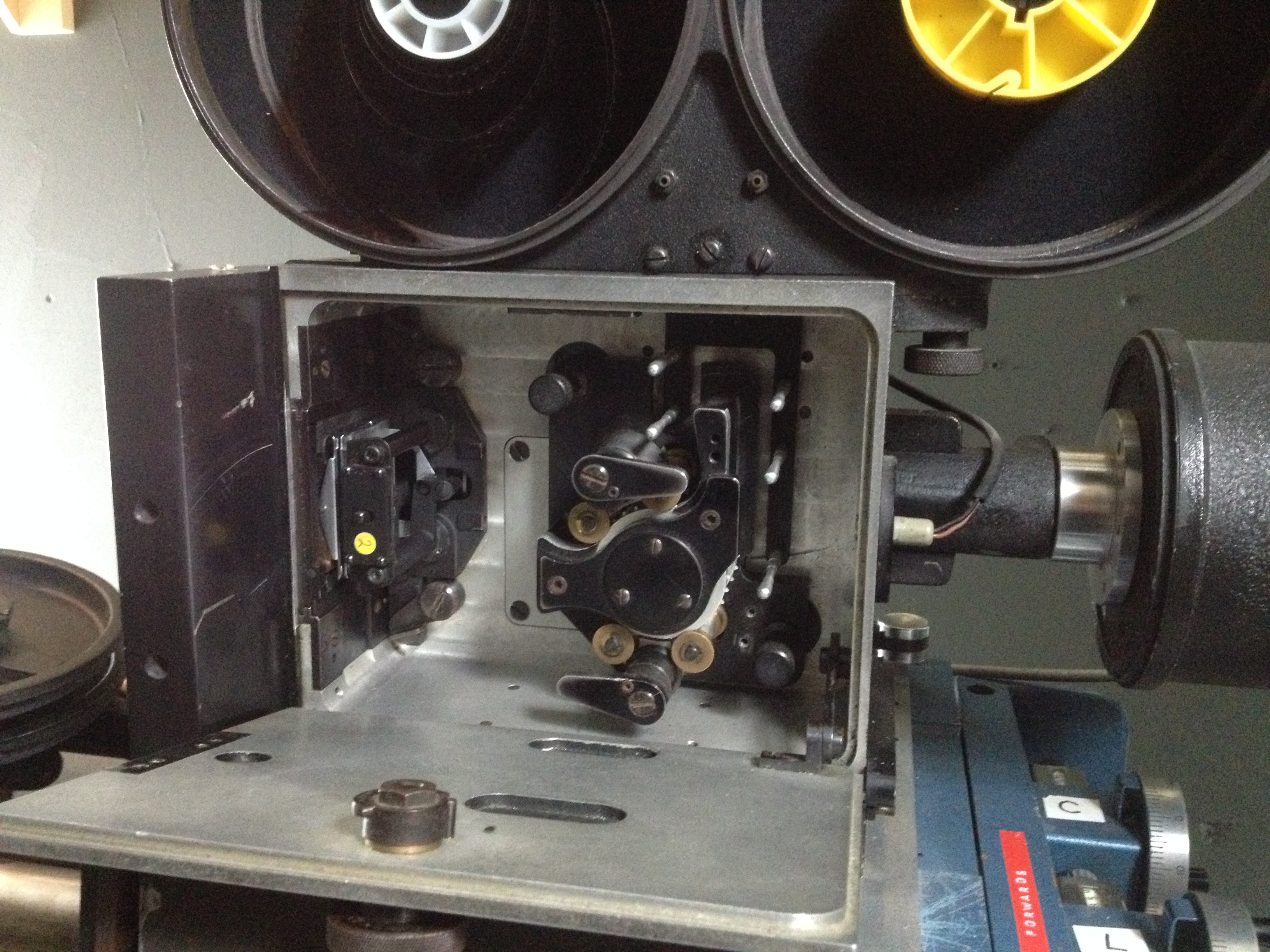
Been getting into workshop hardly at all due to full time kids homeschool. Managed to get in on monday and started on the viewing table area. Ive got a 16 and a 35 and they both need a few bits of work.
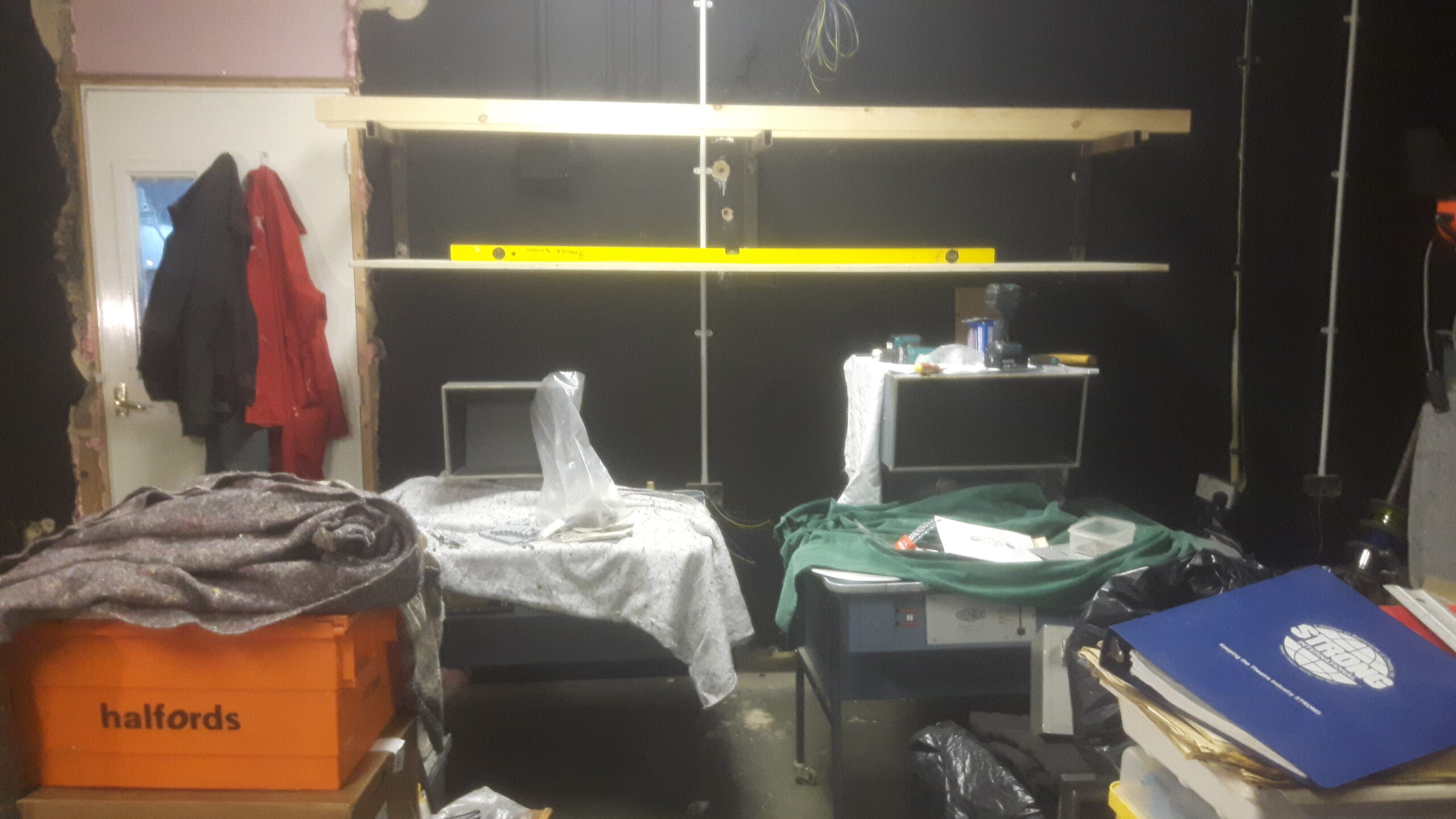
The 16 has had a full drive belt and bearings service by Lew.G and the picture is the best Ive ever seen it. However the optical sound reader and circuit does not work. I need to replace the whole opt/mag2 assembly and see where that gets me. I’m considering bypassing the pre-amp and greater audio circuit anyway as can be done to improved audio quality on 16mm projectors. If the red LED light source is succesful then this would be great. The 35mm problem is power to the excitor lamp and other issues, so both tables are currently without opt sound which is annoying. Luckily Ive got plenty of spares and boards and parts, so shouldn’t be too big a problem.
The next project will be adapting the tables to contact printers. This is done by sealing all light leaks, inc the screen. Then fabricating a small slitted plate, probably brass painted black, into the prism assembly and finally a guard to surround the film / prism area. All these adaptations are non-invasive, the table can ALWAYS be returned to normal use within minutes.
Different sized slits will give different exposures. You could also do things like mask the optical soundtrack, or portions of the picture. Triangular slits will produce fades, etc. The creative possibilties are endless. Other nice adaptations will be things like homemade digital frame counters and maybe smpte sync option. see below resources. (some of these are other sites that use, celebrate, maintain and work with these machines.
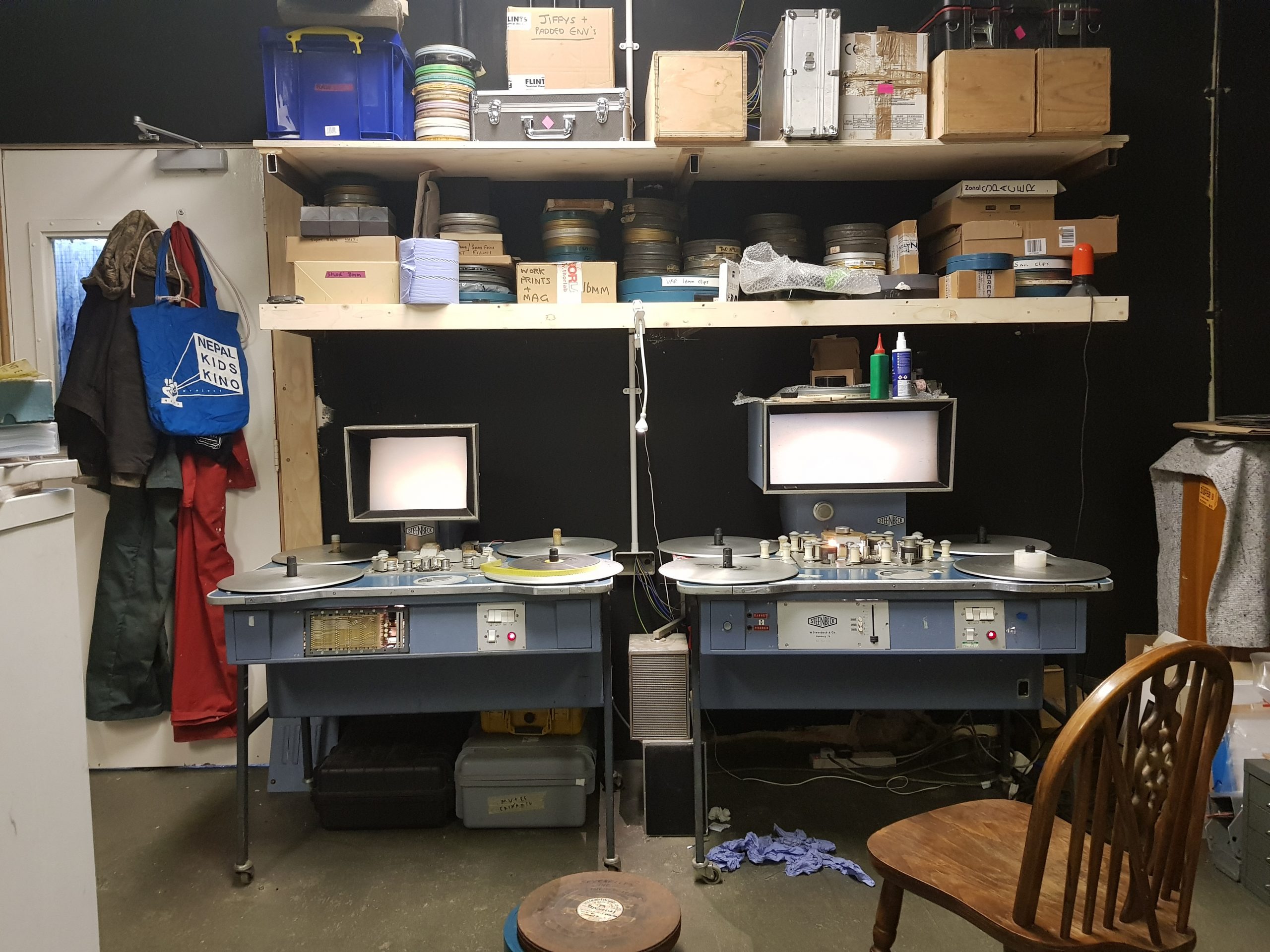
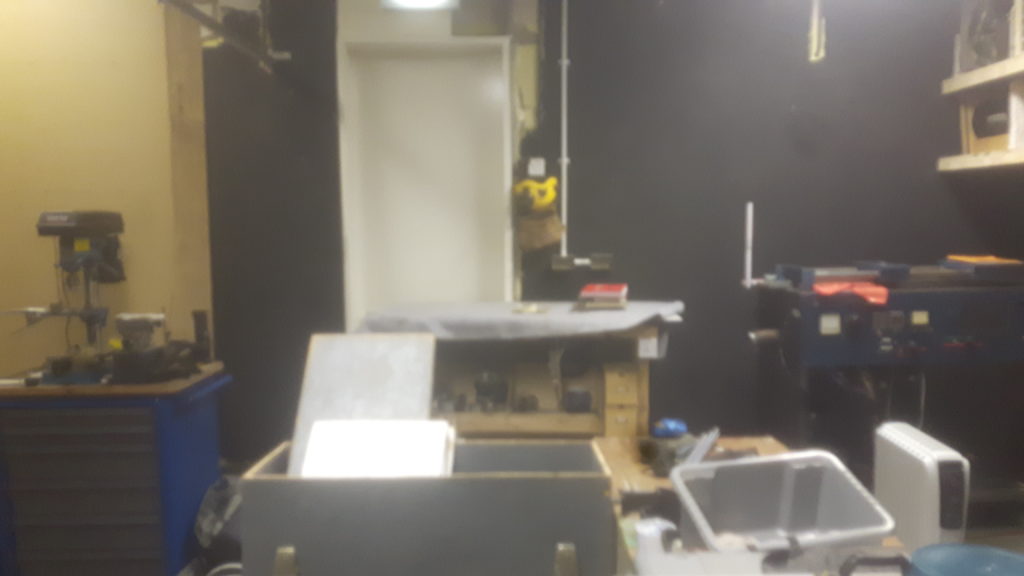
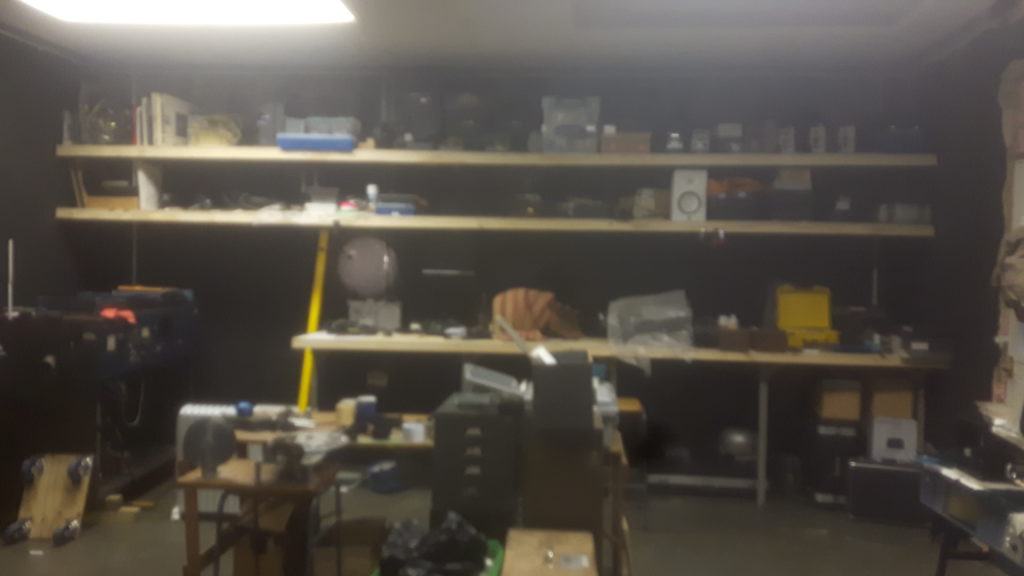
Heres the final layout for this wall. All raw stocks, films and associated materials are above. Gave the machines a clean, lubrication and service. Need to solve pesky sound problems and then we’ll be away.
http://www.filmlabs.org/index.php/technical-tips/synchronise/
http://www.hi-beam.net/fw/fw46/0709.html
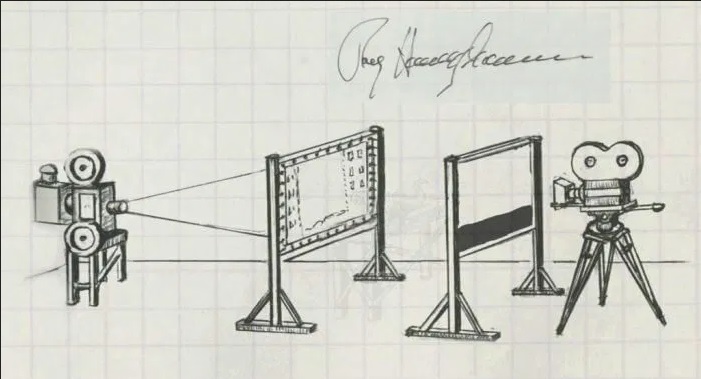
I suppose one thing that seems to be appearing more and more as a focus of interests is the idea of practical explorations of historic cinema (trick photography) techniques but with a very different set of image outcome aims, ie not trying to create ‘fantastic’ or even ‘literal’ images that illustrate a mythological storyline or visual interventions into illusory realities as they find expression via photography. Rather, the aim is to explore what ‘other kinds’ of visions these techniques can bring to fruition.
Seeing as they arguable arose out of the application of multiple techniques (say double exposure properties, models, stop motion, matting, etc) when put into the service of very specific ideas (say, ‘How do we bring this statue of Talos to life?) it also stands to reason that as an individuated process or entity even, they also permit or afford more than the specific instance that contributed to their design. So this is a reversal of the ‘Idea > Technique > Realisation‘ way of doing things to produce ‘Technique > Idea‘ where the idea isnt preconfigured and the Realisation is the appearance of it!
 |  |
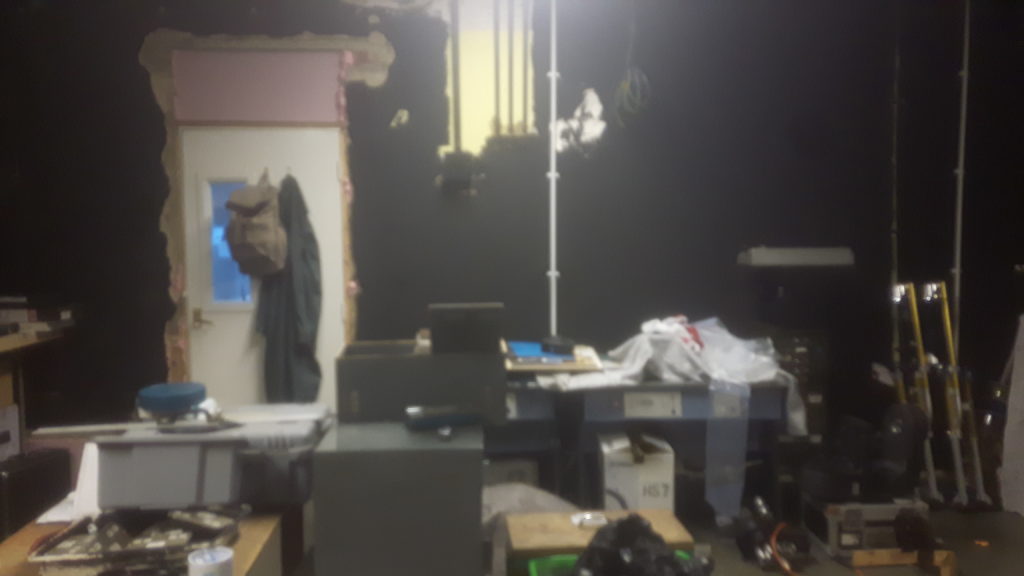 | 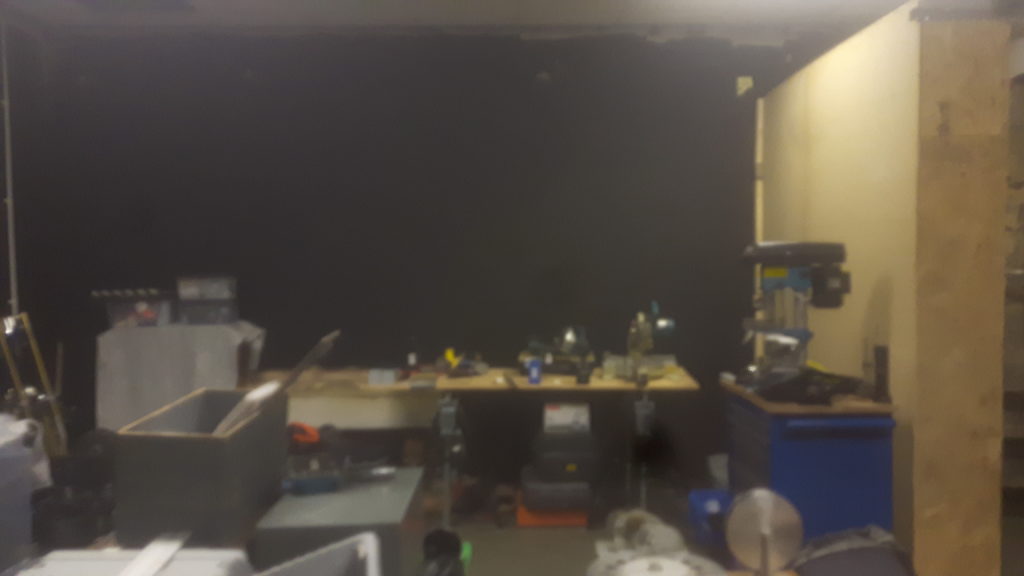 |
The PLAN in new room is to create as much SPACE as possible. I can do this by putting all filing cabs on wheels. Everything on wheels. Then with an overhead scaff grid and clean / free wall I can operate it as a studio and actually work towards making the films I have been planning and devising for years. The whole room is also a DARKROOM as there are no windows. Things like old Kalee projector bases become incredibly useful as bases for scenery, lighting rigs, model rigs, projector rigs, etc. There are no distractions out here. The cycle from the station is arduous and my back is killing me. Once in, its the same bunker vibe as the office at the Cube. Time flies by as one scurries deeper and deeper into the rabbit hole……….
This subject has a deep fascination for me both as history and as a practical art. This attempt at a more long form post hopefully works and I will be coming back to it when I can with new research, results of practical experiments and other readings.
Reading Craig Barron and Mark Cotta Vaz’s (1) great book about matte painting has revealed to me the interesting genesis of the optical printer starting with several strands.
Starting with Norman Dawn and going through to Clarence Slifer we see the emergence of the requirement for such a machine out of the relation between the camera and its own optical system under the condition of projection, that is when camera negs are projected with the taking lens. (this process later on came to be called Rotoscoping).
Slifer built a system to composite the matte work in Gone With The Wind (many mattes in that film) and Norman Dawn discovered early the benefits of the registration properties of the Bell and Howell 2709 camera in terms of composite tolerances necessary for the ‘original negative’ matte to work. (A technique he felt he’d invented enough to try and patent it). This process liberated the artist from the labour intensive and location bound ‘glass shots’ which were done in camera.
After Dawn developed the idea of taking the painting control into the studio he effectively required the camera and projector to form some degree of combination or symbiosis or at least altered the projector enough for it to take on some characteristics of the camera, namely single frame registration and light control. So in some ways the optical printer emerges as a specialist function of the projector, a kind of ‘Camerafication’ and this idea is confirmed by Salt, B (2009) below.
In some ways then the location glass shots were an enaction of the camera, being in the moment and the present. Wheras the act of taking into the studio was a way of thinking with the camera. Planning ahead in time knowing certain things and conditions would occur if certain actions were taken in advance.
Another thought is how mattes at this time were always static, wide, establishing shots (not always of course) that formed part of the emergence of film grammar. In that space of solid, framed and held, earthed, locked and perhaps even architectual visual space, the optical printer had its freedom/chance to develop. The foundational bases required for buildings finding another application in the large and heavy metal bases needed for optical printers. In another way the optical printer is a machine linked to the environment! It is rooted upon the ground which it relies on for its operation.
(note: see Katharina Loew’s talk at the DOMITOR 2020 online conference about early cinema split screen effects. https://domitor2020.org/en-ca/split-screen-effects-and-early-cinema/ . Such a good talk and I was thrilled to see so much mention of mise-en-abyme that has been occupying my ideas since writing my MA dissertation. )
Whats interesting then to me is how closely the development of matte painting techniques occurs in parallel with the optical printer. The changes brought about to make matte paintings work better had far reaching effects for all areas of special photographic work.
Also the cost dimension, as in the fine engineering design and fabrication associated with say the 2709, was still effecting results as late as when Pop Day was still using a Debrie to make his own orig’ neg’ matte paintings for Elstree with a young Pete Ellenshaw looking on. (we talking late 1920’s here…) as well as new technologies like fine grain film which came along in time to allow something like King Kong who had the master Linwood G. Dunn doing opticals, the eventual designer (with others) of a kind of standardised optical printer configuration.
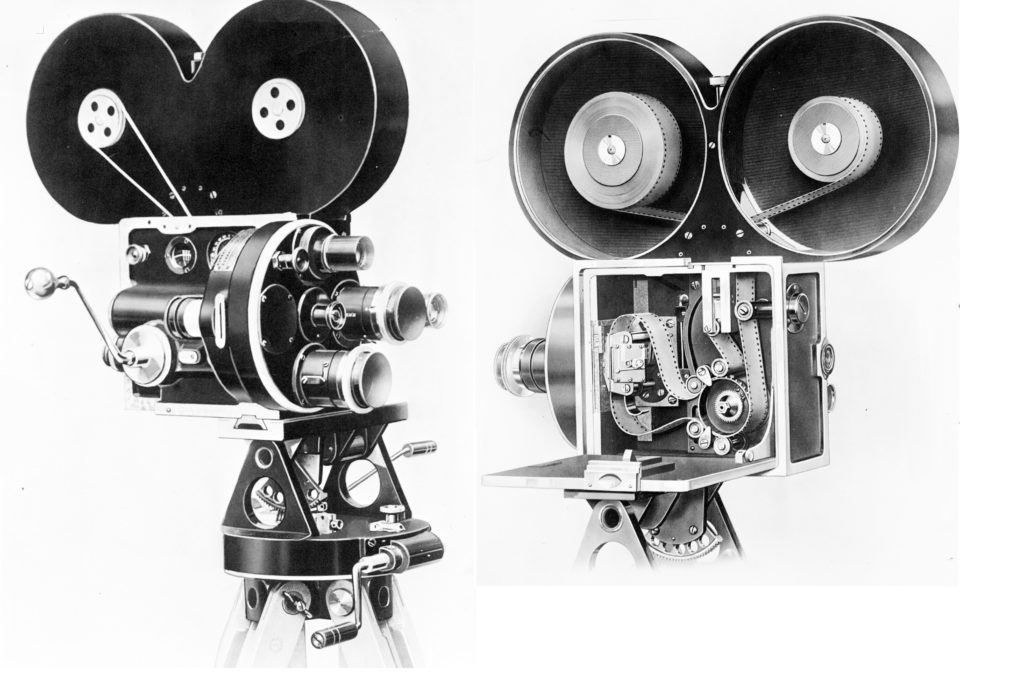
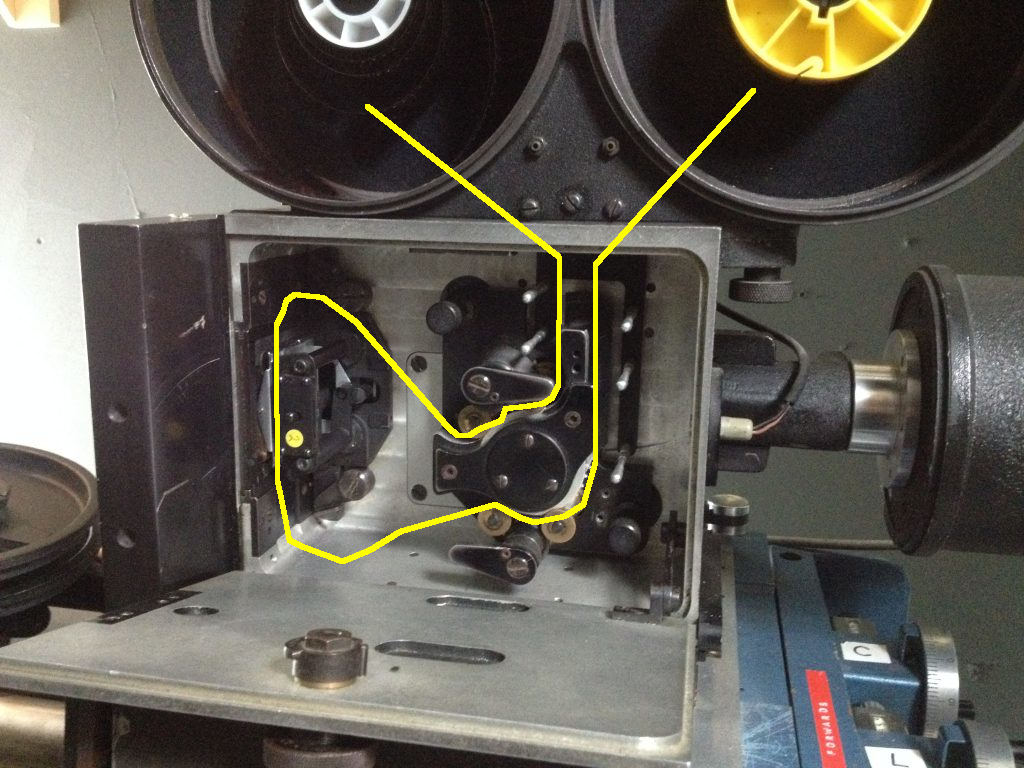
I cant be sure until I have examined a 2709 (2) closely but there is a distinct similarity to the film path in an Oxberry animation camera. I’ve heard this story about Oxberry getting into trouble because they copied the B&H movement. In the 2709 illustration above the gate looks very similar. In the blog linked below by Adam Wilt there are some good photos of the camera being loaded and gate being oiled.

Infact, cinemagear.com list this ‘B&H type’ shuttle for the 2709 (converted to VistaVision) as opposed to Acme type shuttles so perhaps the oxberry gates would fit a 2709?
Its also hard to ascertain how fast you can crank the oxberry, shuttle and fixed pin type gates and my training always stipulated 12fps as a guide plus in its setting on printers or rostrum stands it was always a single frame camera. Having said that, my oxberry, when driven by the Deimos controller in reverse, rewind basically, goes at one heck of a speed. Another factor are modern polyester stocks which you would not want in there at that speed. How brittle was new nitrate stock?
There is much in all this that could guide practical experiments. For instance using a Debrie to make experimental glass and orig’ neg’ matte shots and seeing for myself the ‘jiggle’ and if this property could be put into the service of other ideas, ie non-illusionistic. Also designing a system for projecting processed material (instead of using the cameras) by adapting and machining the two pin & claw type gates that Lew Gardener gave me. These are like half oxberry, half mitchell style shuttles. The registration is done with a fixed pin but the transport is done by a pivoting claw. Theres a 16 and a 35.
Another area or question is ‘which kind of gates was Linwood Dunn using in his designs?’
https://www.oscars.org/film-archive/collections/linwood-dunn-collection-0
notes
(1) The Invisible Art. The Legends Of Movie Matte Painting. Craig Barron and Mark Cotta Vaz. 2002, Chronicle Books, San Francisco.
(2). If anyone wants to gift me one of these cameras they have two at cinemagear.com. one for $9000 and one for $6000. Ha ha!
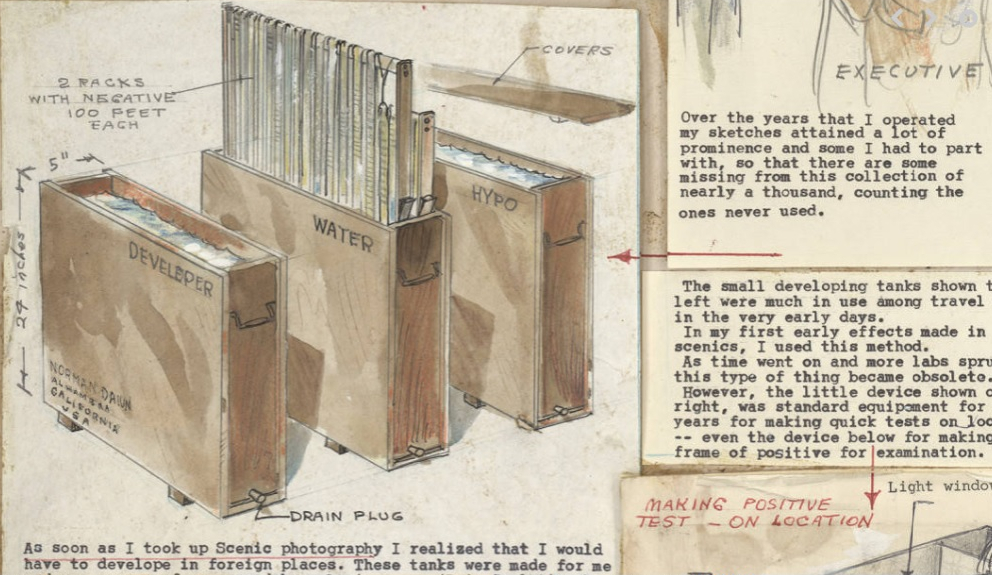
Explore the Norman Dawn collection below. Of main interest is his use of the Debrie (Missions Of California) and the timeline on his move to the B&H, ie what are the records relating to other uses of that camera in Hollywood at that time? His ‘Cards’ at this collection are a real treat and I recommend anyone into film now, artists, film makers and all those hipster analogue youngsters to look at them. Even things like these processing boxes are interesting. I mean if I wanted to make some, did they have plywood then? And all this was being done often out in the hot sun with nitrate stock!! In the card I have enlarged below there is even a tiny test contact printer. (Card 1). This great resource can be found at the Harry Ransom Centre at the University of Texas.
Salt, B mentions (p186) in period 1920 – 1926 leading figures as Irving Knechtal and Max Fleischer. On p51 he mentions the process being called ‘Projection Printing’ although he offers no citations or references for this. Need to look further into this.
Further reading (link to external blog/material. I hope none of these people mind me linking this way. They’re really good blogs. )
Any serious matte fan will already know this blog below and Im posting it here incase you havent discovered it. I’d love to get in touch with with NZpete actually as he seems like a one man treasure island!! Just endlessly incredible research…
http://nzpetesmatteshot.blogspot.com/2010/06/jack-cosgrove-burning-of-atlanta-from.html
Lastly, Ive copied this photo of Clarence Slifer here (on left) from NZpete’s blog about optical effects because it shows something quite important. Its especially important to me because it might dictate the next stage of my own studio practice. The optical printer in this photo has been arranged so that with a suitable printer head, a further plane, distant from the main printer base can be imaged. This plane is of course here one occupied by a matte painting, the square area on the left lit up. In almost every setting Ive seen optical printers in, they do not allow this as everything re-photographed is considered film based.
This arrangement could theoretically ‘expand’ the functionality of a printer to include flat artworks or even small sets. I’ve experimented a bit with flat art work that is mounted between the projector gate and camera, but here we have a real sense of how the optical printer is more a studio camera than anything else.
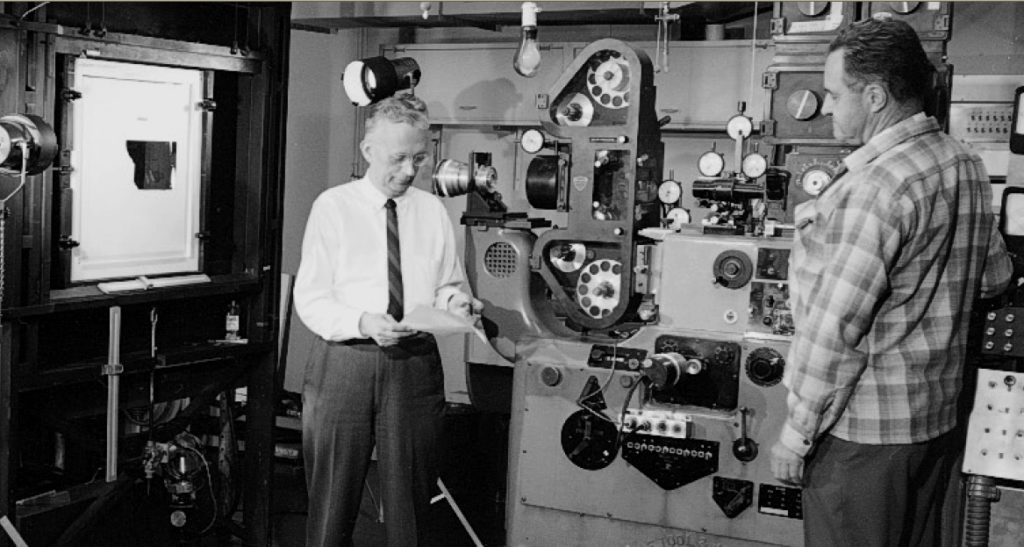
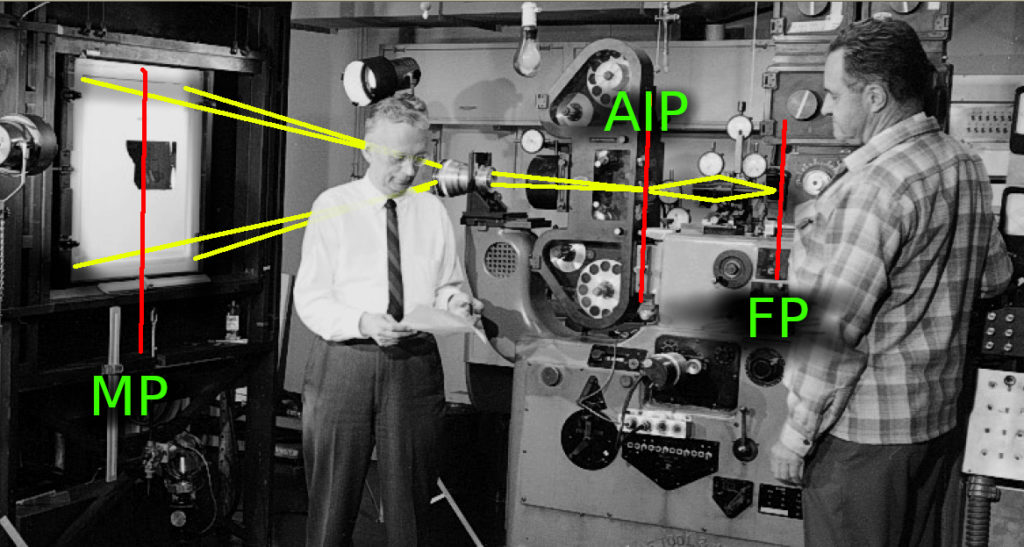
Here is my decoding of what is going on here. MP is a matte plane which is brought to focus by the lens just next to Slifer onto AIP, aerial image plane. The AIP can be checked by inserting a gauze, or ground glass. Additional exposed film elements are threaded into the reels seen above and below the AIP. If one of these film elements is a filmed live action foreground with masked out background, ie black and the MP painting fits this masked area, then they come together at AIP. The MP focussed by the lens, the film element sitting in the same plane. The final film at FP film plane images them both via its lens. This whole thing could be done with another mask in the bi-pack magazine seen behind Slifers assistant Dick Worsfold’s head. This mask could hold back another pass made later of another/different matte painting.
Below is a photo I’ve found in Raymond Fieldings comprehensive focal guide to special effects cinematography. It shows the same type of printer config as above but interestingly Fileding does not mention Slifer anywhere in this book. Below is a further photo showing clearly what happens in the aerial image system as opposed to normal optical printing.
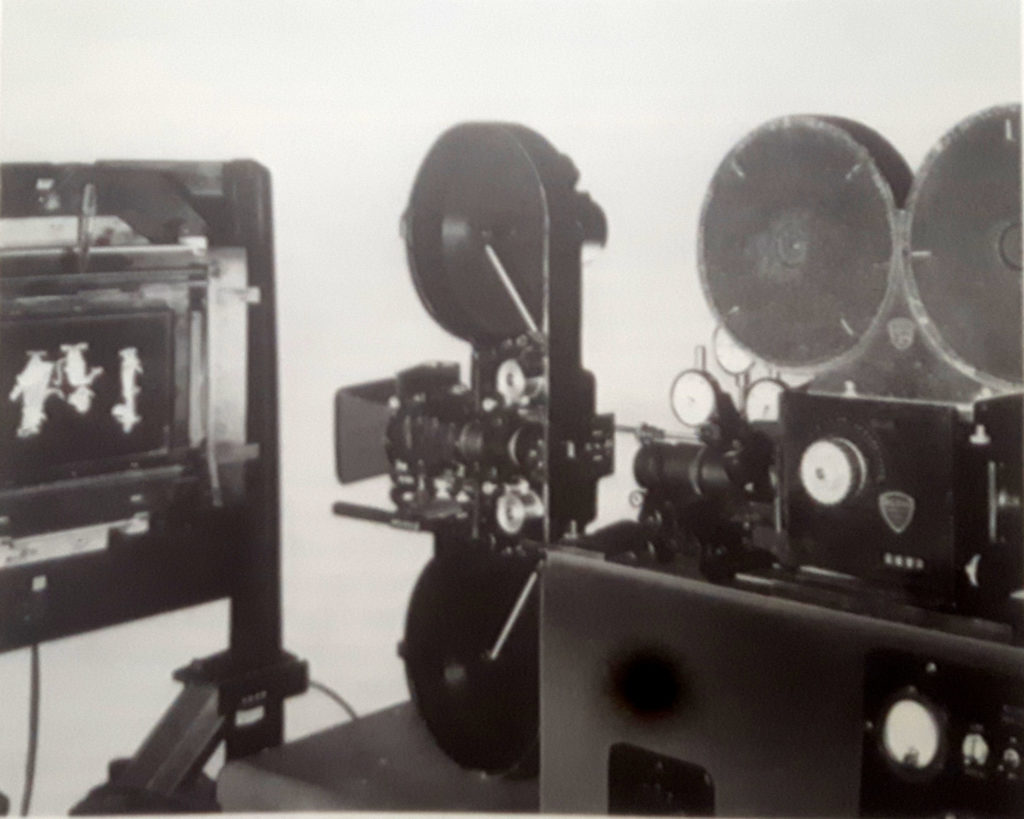
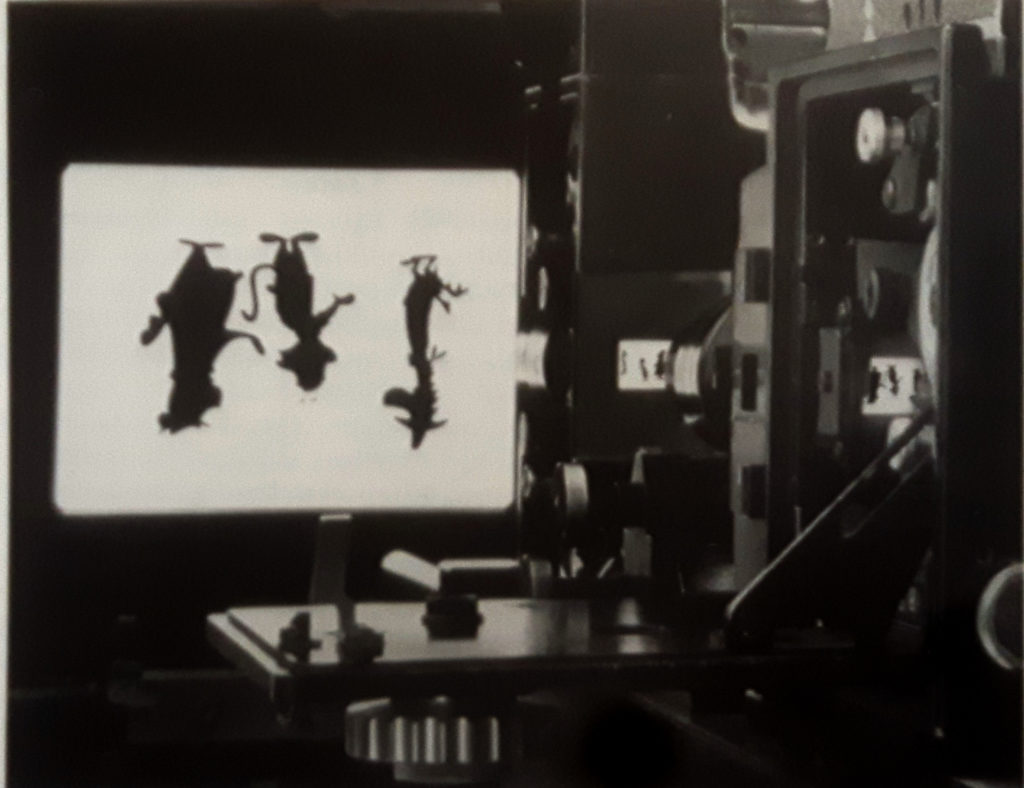
What is apparent then is that an aerial image, although not visible to the eye unless diffusion material occupies the image plane, is, nevertheless, imaged again by the next lens which is the one here in the camera gate. If there is a film (already shot and exposed and developed) in the projector gate, they will combine together, but in what kinds of ways?
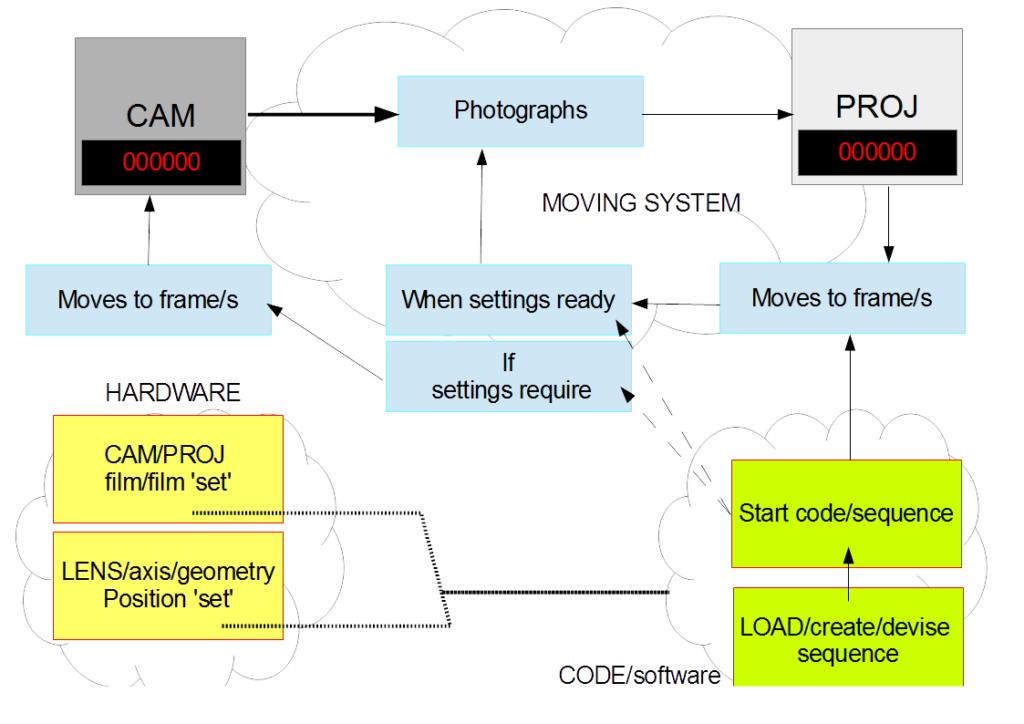
As a guide to my own practice trying to reconfigure and modernise (digital controls) optical/contact printers, here is a state of operation diagram that shows the functioning basis of this machine. There is only one counter for PROJ’ ECTOR because my system is a single head, that is there is only one gate for holding exposed film material to be rephotographed. There is much to be said for modernising these machines mainly because the electrics they were built with are old, unreliable, hard to find parts for, and don’t offer nearly as many functions as modern micro-processors.
Another area of fruitful research has been ‘patents’ that relate to different technologies and techniques in the printer. For example here is a patent entry from 1977 that goes into detail about using diffused light as opposed to collimated in optical printers. It mentions the possibility that with well set up diffused light and exposure variables, results can be as good, if not better that those achieved in direct contact printing. This detail has significant implications for analogue film restoration let alone production possibilites.
Another direction entirely is the use of optical and contact printers by artists, or film makers that would be better contextualised as not part of commercial narrative cinema. This whole area has not really had any significant work no doubt due to the diverse, unrecorded, adhoc, home-made and personal nature of some machinery but also because commentary or writing on experimental cinema has a tendency to focus on the politics of the image or aesthetics rather than too deep a tangential exmanination of specifc techniques or apparatus.
There maybe good reasons for this however I myself can’t but help be interested in what exactly Yervant Gianikian and Angela Ricci Lucchi’s ‘analytical camera’ looks like or how it works as well as numerous others including Pat O’Neil, Jordan Belson, etc. It would be easy to argue that under the control of artists the optical printer has developed into a different kind of instrument that brings into question problematics in perception and representation that have had far reaching impacts in contemporary moving image culture.
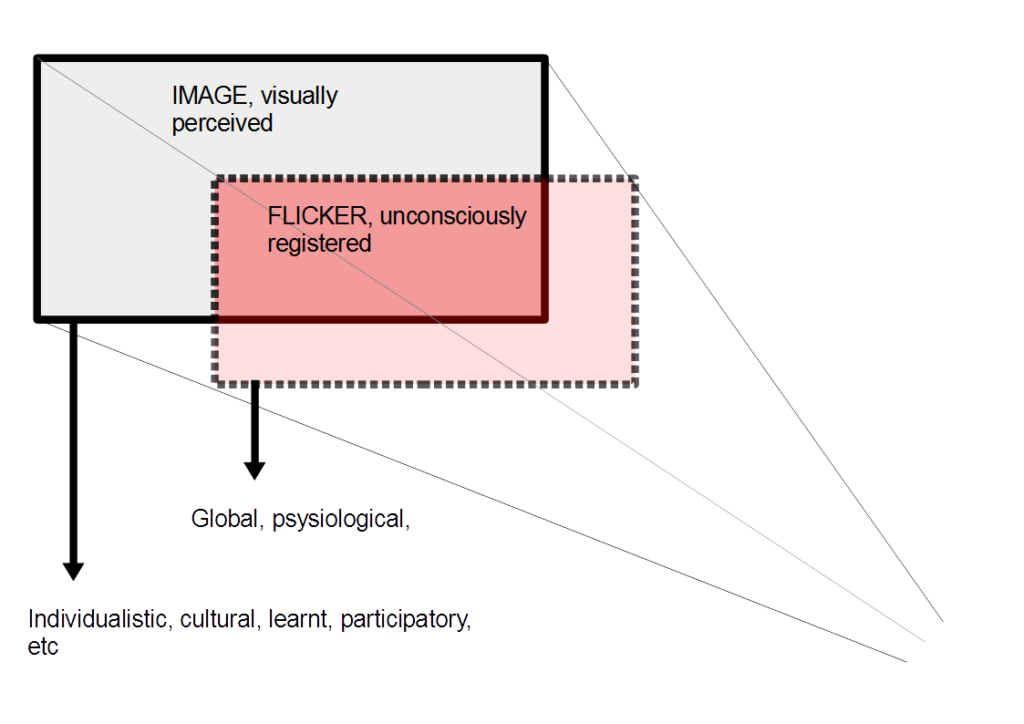
In every moment of an analogue film projection, there is another mask, or matrix, or screen which is going to effect viewing and viewers in different ways than the perception of visually recognized cultural forms. This ‘FLICKER’ based screen is the total background field effect of an analogue image regardless of the content of ‘the image’. This screen is also present in DCP projection but this is not currently the object of my study. Throughout the history of cinema analogue presentation, this ‘flicker screen’ has been remarkably consistent and there are various ways of measuring its ontologcal properties as well as its psysiological impacts on human viewers.
Regarding the former of these, this is of course linked to the essential nature of analogue film itself, ie 24 frames per second image succession rate. So 48 hz and 72hz are common frequencies as they represent 2 bladed and 3 bladed shutters respectively. But, as I’m trying to investigate in other pursuits on this blog, should we count the blacks as well as the lights. A two bladed shutter shows each 1/24th second frame twice, but it also shows a black/rest twice resulting in the (truer?) frequency count of 96hz? We also have the issue of ‘duration of image segmentation’ within the overall flicker field. Is it just too simplistic to say that beyond the 8 – 30hz ‘danger zone’ we are nevertheless still in a ‘health threat’ zone.
The first thing to note about these frequencies is that they are SLOW. They infact sit near the threshold of human flicker cognition which is commonely said to be around 80hz although this is a complicated field that goes into cone properties aas well as neural ones.For eg, an easy test to do yourself is look at a projected image head on. Then look above it, you will notice flickker more when you look above or away and this must be down to the different capacities of eye components to perceive flicker.
LINKS listing
ALZHEIMER’s https://www.sciencedaily.com/releases/2020/02/200203141446.htm
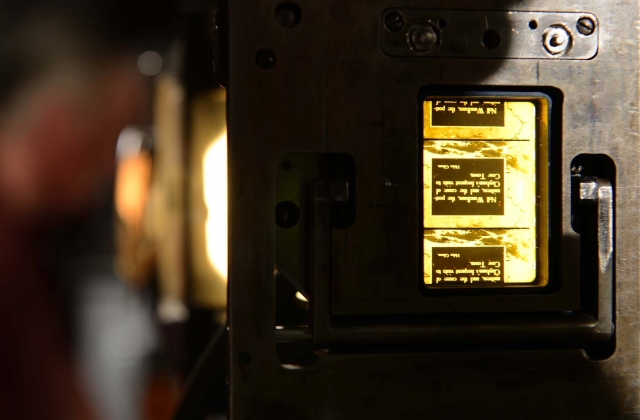
This isnt my photo but you can see here an interesting feature of a vistavision gate in a printer holding a standard 4 perf 35mm film strip. The ability to see the framelines top/bottom means that adjustments to new framing can be made very easily.
There was an Oxberry vistavision gate for sale recently on a trade website and Im kicking myself now for not buying it.
See the Vi archive pages link above in main menu or go here

Also here is my recent ‘MRES’ dissertation whose full title is
DEVELOPING AND DEFINING AN EXPERIMENTAL ARCHIVE, PROCESS, PROBLEMATICS AND PITFALLS.
I received a 62 with merit for this believe it or not…….
I can see many shortcomings, errors of thinking and failures when reading this now and I will be producing my own written commentary on it this spring.
If anyone reads or is interested in it please get in contact. Any kind of commentary, feedback, criticism or support is welcome. Naturally if you use any of it then please give it a proper citation.