shutter speeds

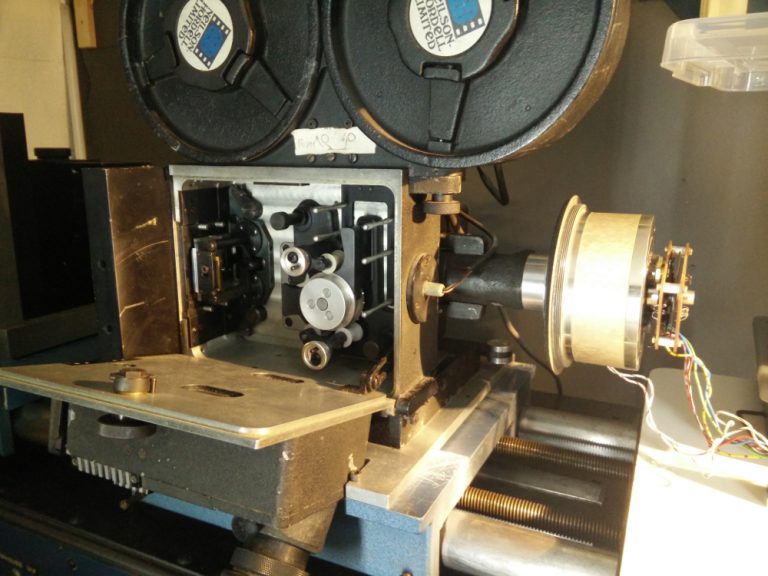
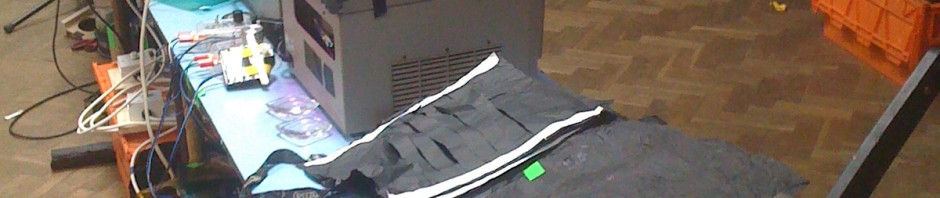
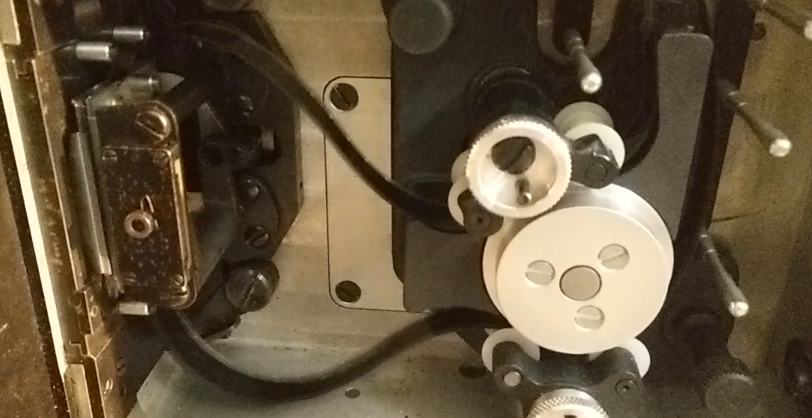
The controller has 3 settings that produce different DC voltages for the motor and produce different speeds to the spindle/shutter that results in different shutter speeds. The videos below show the 3 speeds and all these clips have the shutter set to 170 degrees. My first attempt at the linkage had the effect of a tiny amount of open shutter after firing a single frame so Ive rejigged the setup by turning the camera mech 90 degrees.


Below is shuttle cycle showing pin registration during exposure. So the linkage is set up right.
motor controller working

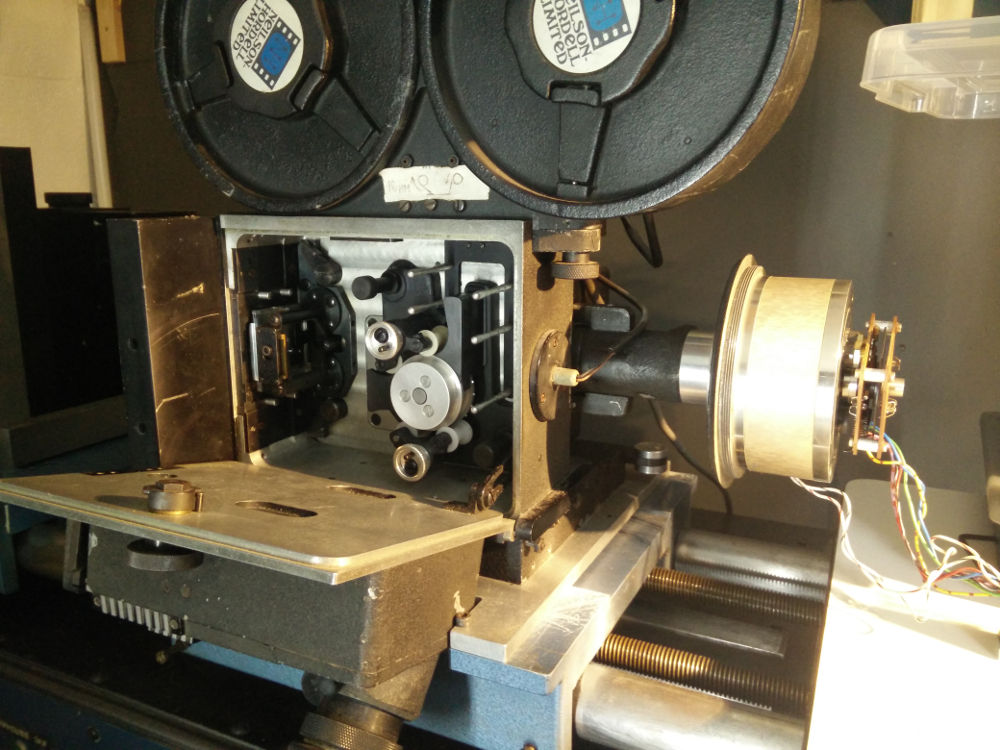
VERY great step forwards but I got the camera motor controller working and rigged it up to the camera to see how it runs and it runs smoothly, beautifully, accurately!!!.

cam-motor1

The controller has loads of speeds that turn the main spindle/crank at different speeds so that means different exposure lengths AS WELL AS the different lengths provided by the variabe shutter which can be adjusted during running. The motor tacho EMF feedback circuit works well accurately registering the spindle/crank in precisely the same position each turn or run of turns.  Next Ive got to design/build (probably Arduino) a gadget to measure the shutter speeds/exposure times and design a (better) system for programming sequences on the printer, remember the set-up as I was given it was configured for 1 to 1 blow up printing from S16m to 35mm/4 perf (full gate). This is a bit limited for me. I want to be able to run very complex mathematical ‘rhythms’ for want of a better term as well as obvious things like skip printing, reprinting, reverse printing, loop printing, etc.


Printed Armature motor

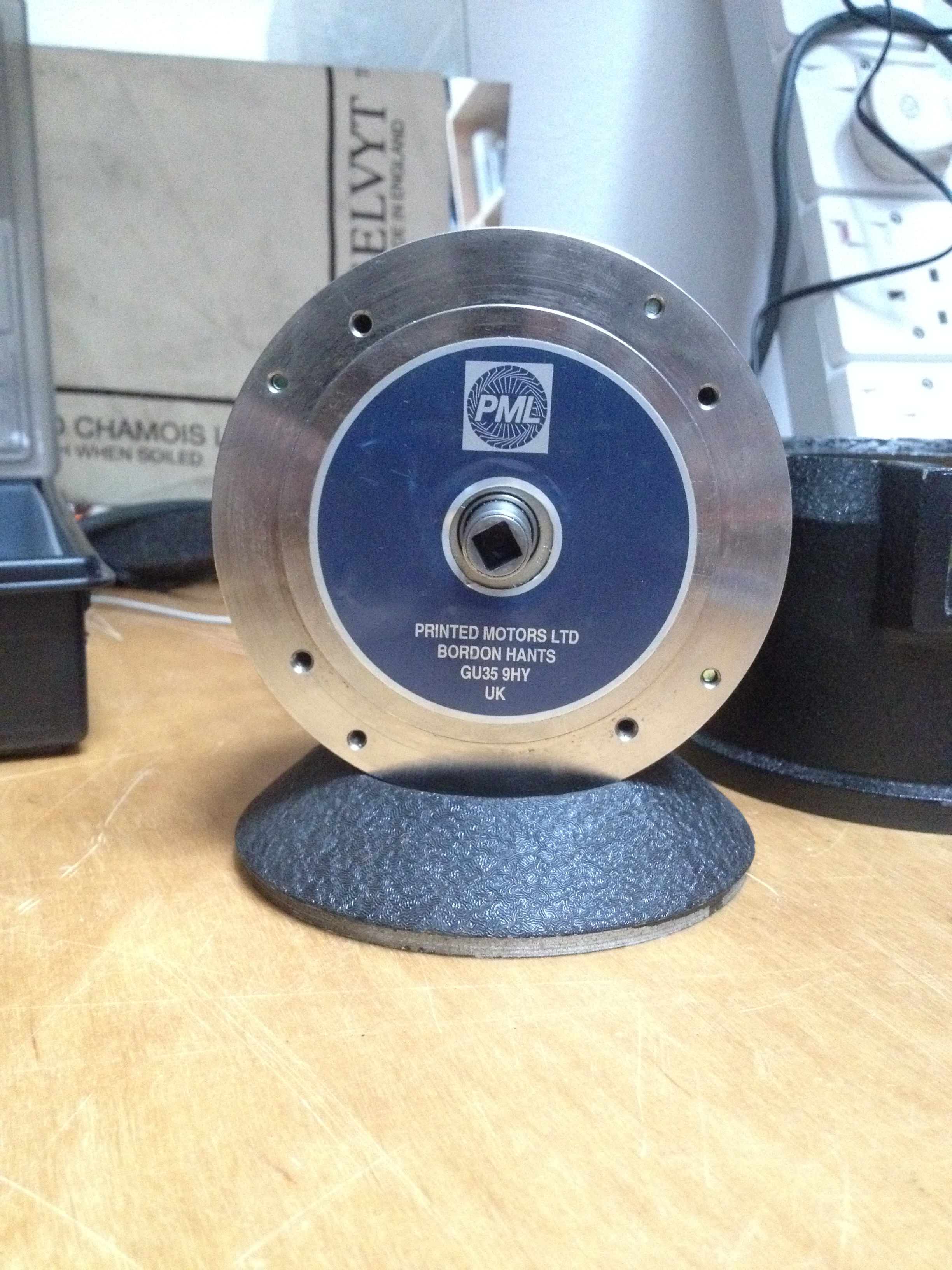
Finally uncovered the oxberry camera motor. Its a printed armature motor that is typicaly found in industrial environments like automation, medical, oil&gas etc. They are extremely precise, very smooth, have instant torque and other exciting mechanical properties. In our application we are just spinning a mechanisim and taking one picture. But this motor will provide an exact time signature for each exposure as well as even things like variable speed, etc.

img_2503

test scans

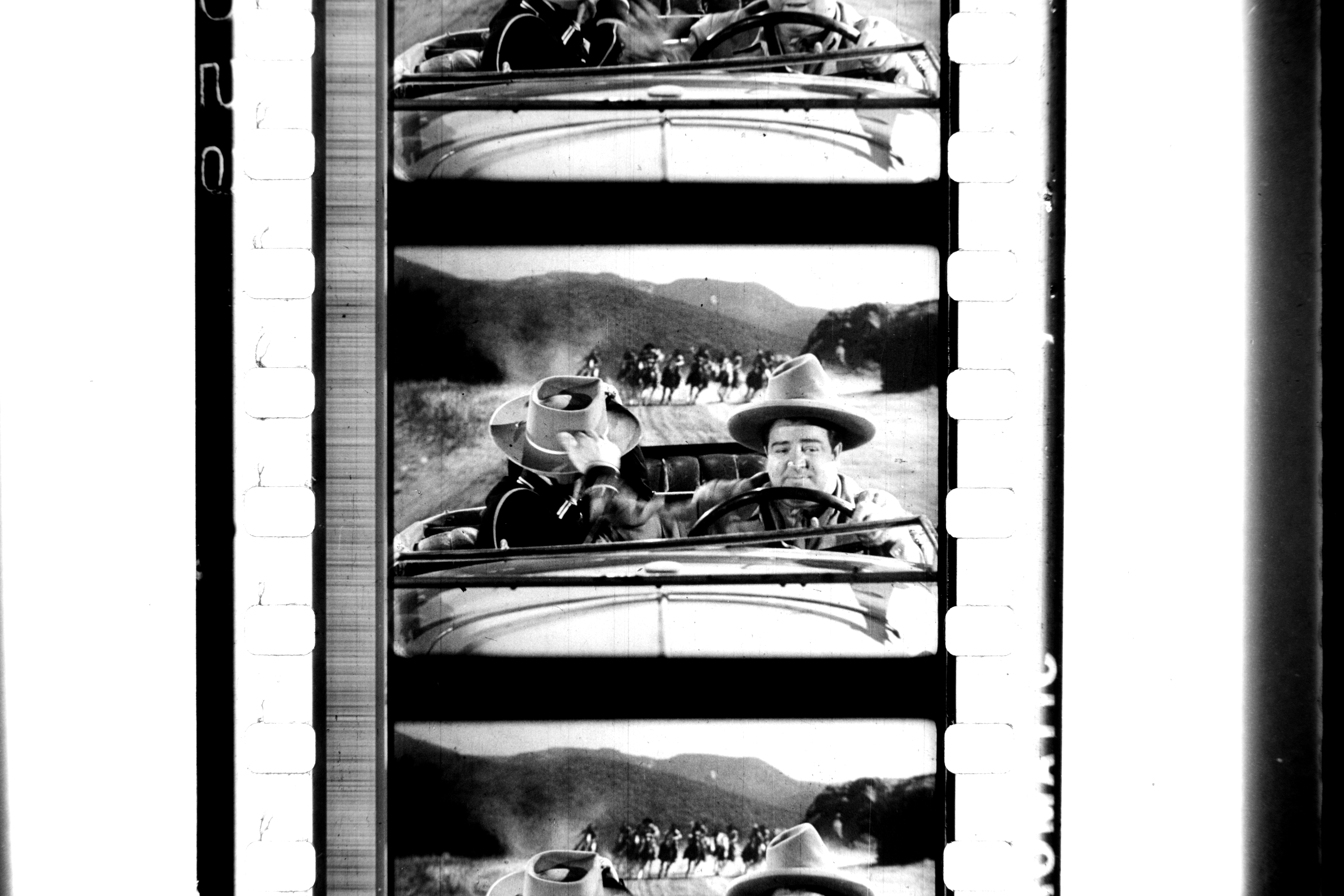
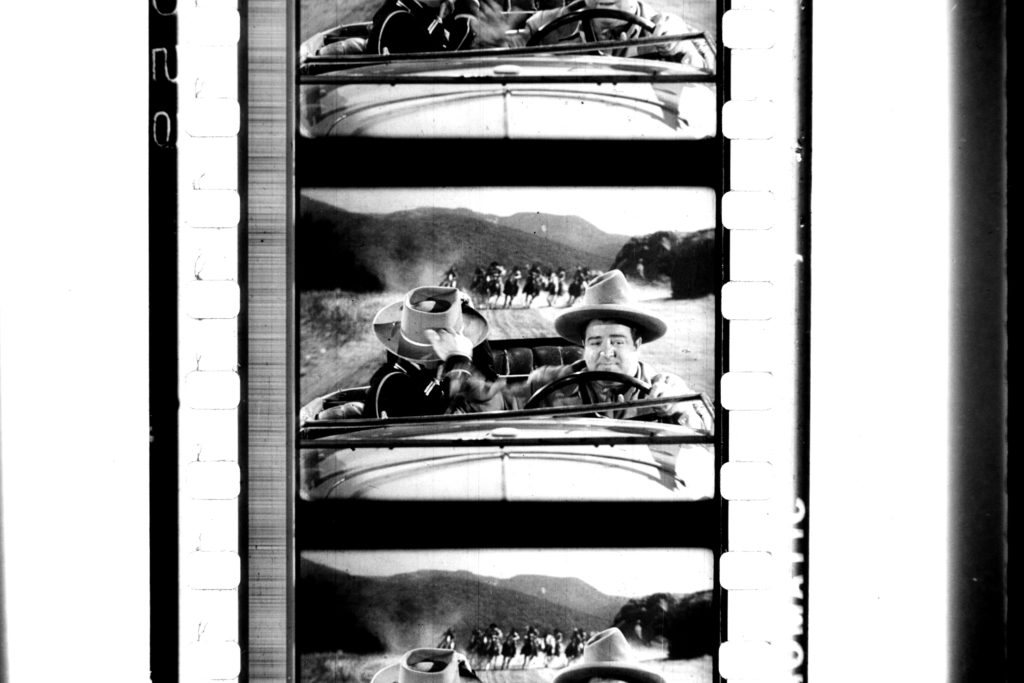
Here is a  test scan to see what kind of frames I can produce on the current camera/lens set up. When I come to fully digitise this small piece of movietone (1.19:1) format Nitrate I will frame the picture area only.

dsc_1901levels


dear film

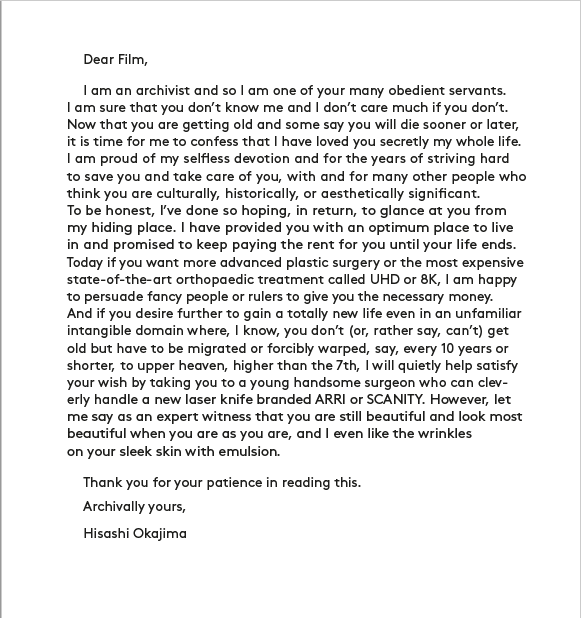
I really like Hisashi Okajim’s ‘letter to film‘ taken from the issue 89 of FIAF Journal Of Film Preservation.

letter

Hand powered projectors

I’m really excited about getting hands on with the Curzon Cinema’s (in Clevedon, England) fine collection of projectors and other Cinema apparatus. I first contacted them in 2011 about my idea of doing an ‘Artists Residency’ IN the collection to explore creative projects, repurposings, workshops, events and experiments that all utilise and respond in some way to the objects moving image functions.

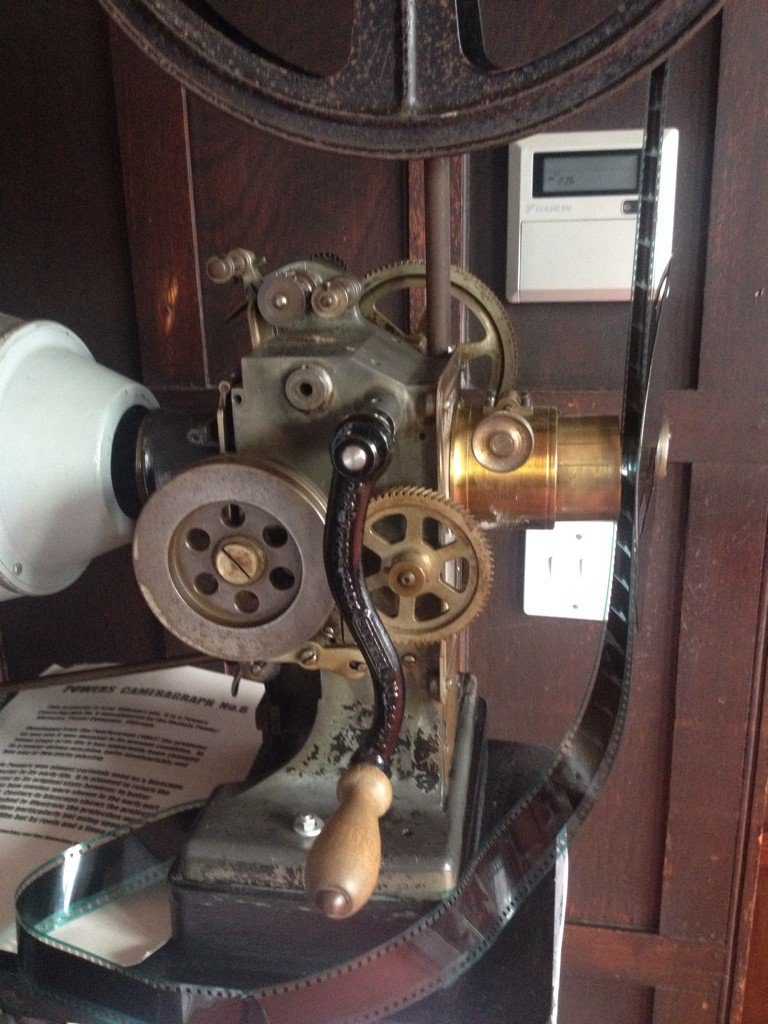
Here’s a very nice hand powered 35mm projector that I am going to check over get fully working along with about 3 others.

proj1

Id like to make something in the mould of Oskar Fischingers 1926 Raumlichtkunst but with hand cranked machines and historic gel colours.


3screen-fischinger


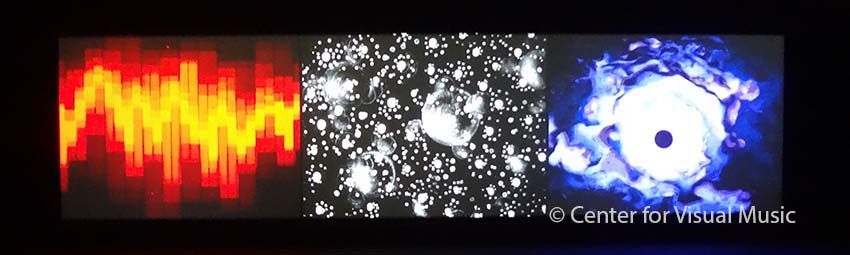
light show clips

Heres some video clips of the light shows James and myself were doing for MV&EE back in 2011


Blind Mans Buff

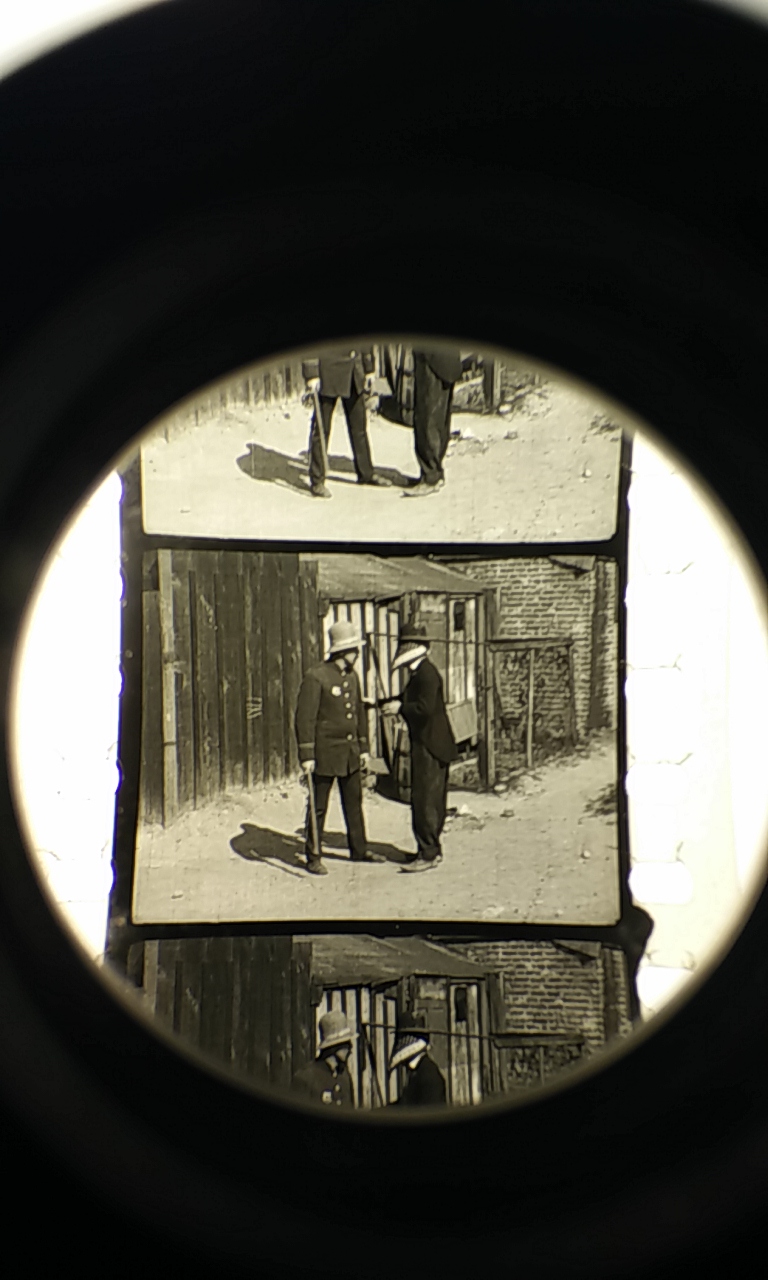
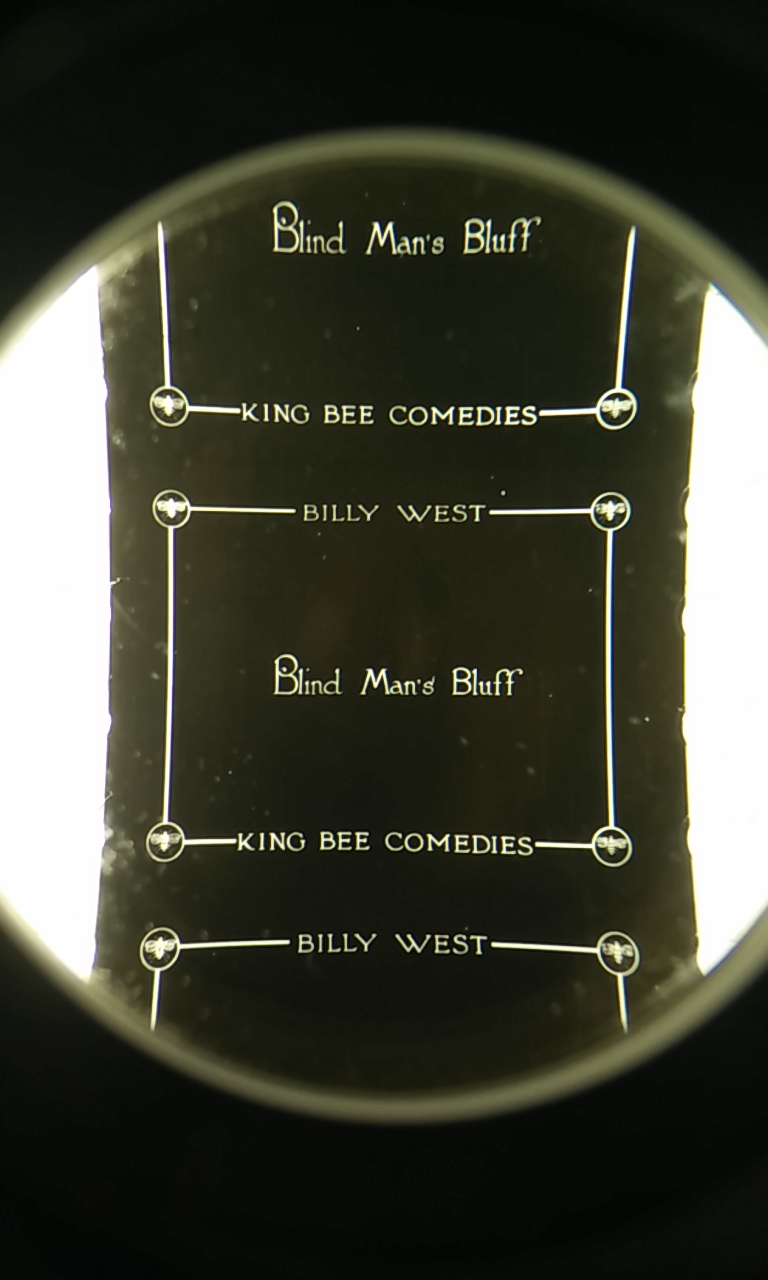
These pieces of Nitrate found at the Cube Cinema are a Billy West short called ‘Blind Mans Buff’. Billy West was a Charlie Chaplin  impersonator.

The title card also reads King Bee Comedies.

The film is in very good condition but has shrunk too far to pass safely through my printer now. If it is to be scanned it will need a sprocketless machine like the one at Nu-Light.

I’ve got no photos on here but when I checked the edge codes last they dated 1947.

IMG_20160509_112144IMG_20160509_110409


Bauer P6 studio

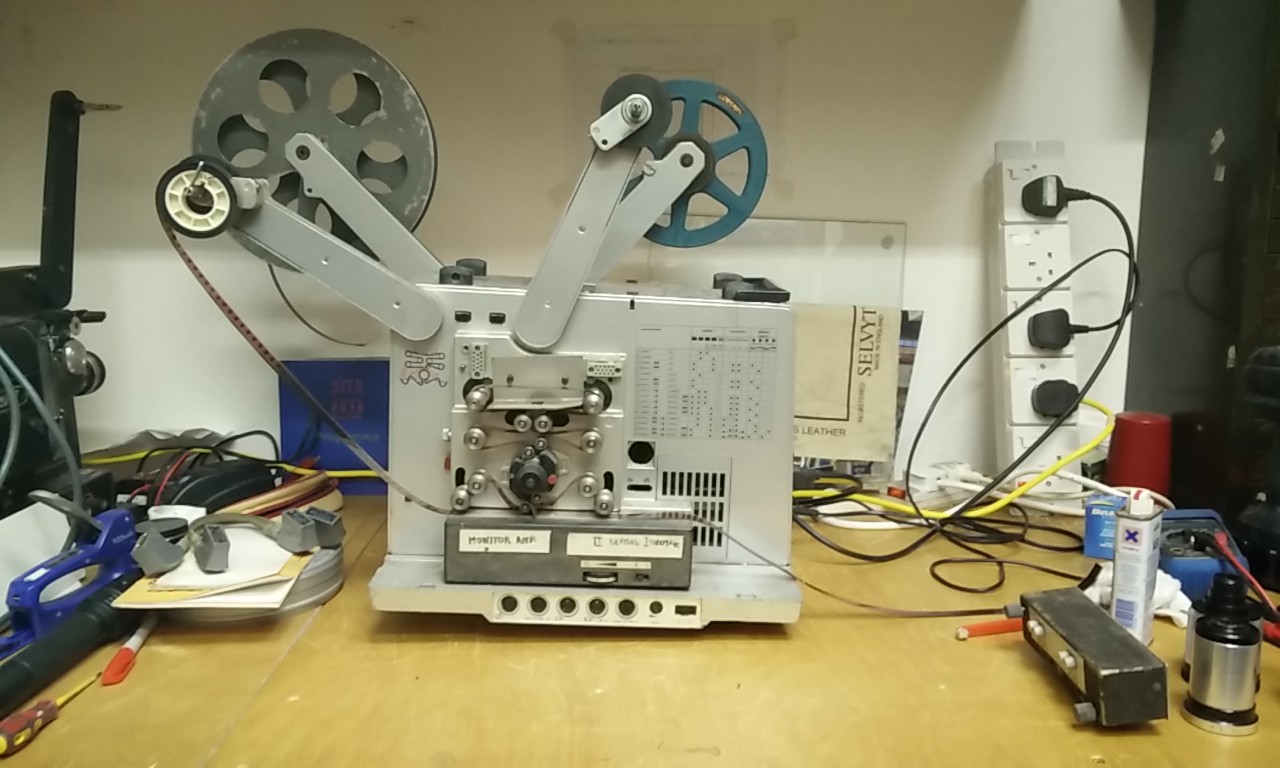
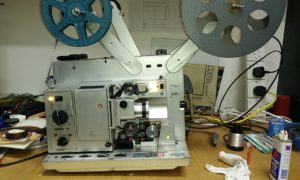
Cleaning up and checking this old machine for a potential exciting assignment.

IMG_20160509_140702IMG_20160509_154346

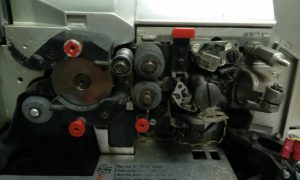
This projector plays magnetic sound from 16mm as well as optical. As shown below its also a SEPMAG and COMMAG projector and the magnetic band is laced up on this ear side.

IMG_20160509_150627

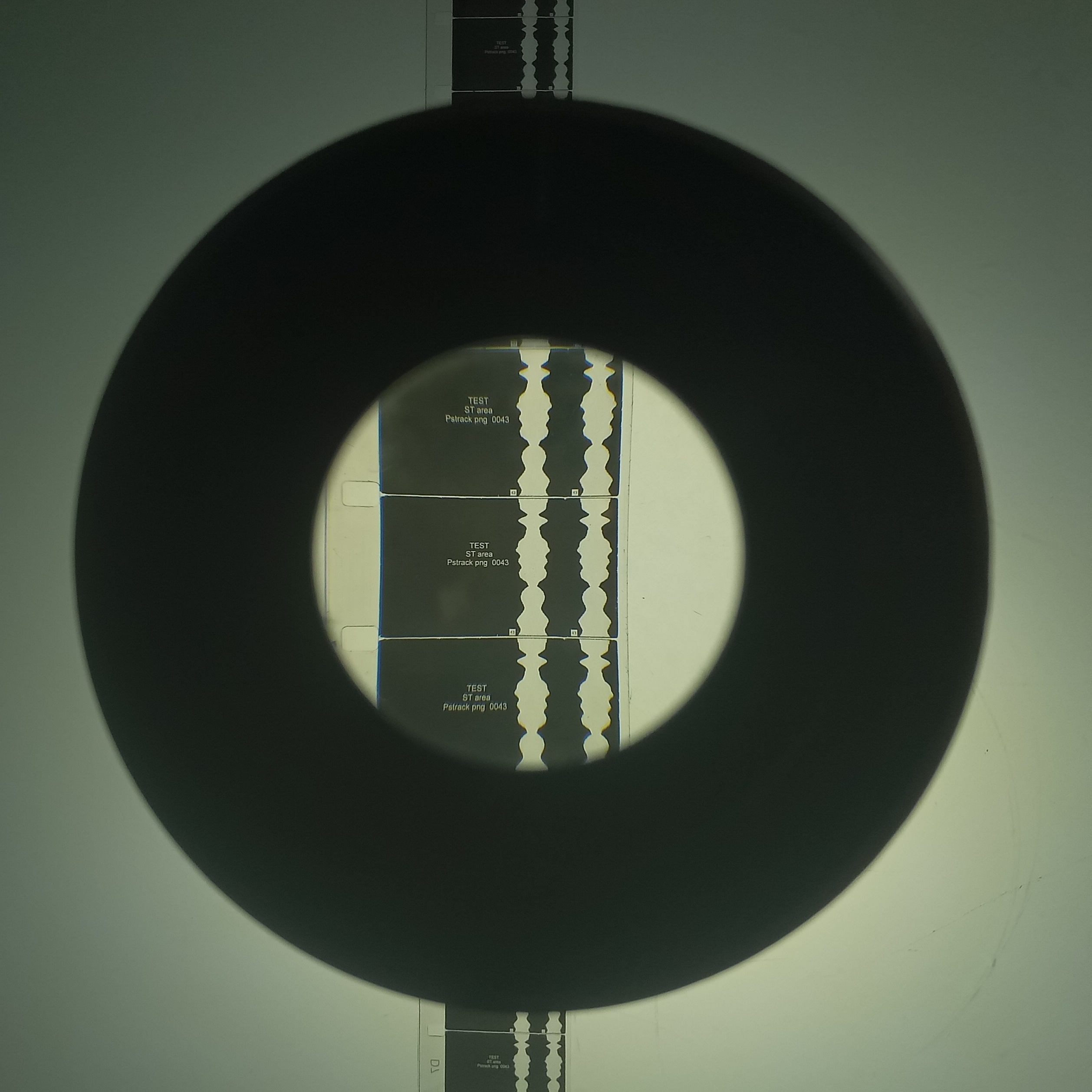
IMG_20160509_154456This image shows something I always liked. This is the view down the optical light ‘lens’. It narrows and focuses the beam to a tiny slit. Cleaning and correct alignment of this can vastly improve your sound playback of optical tracks.
cube archive framework

CUBE ARCHIVE

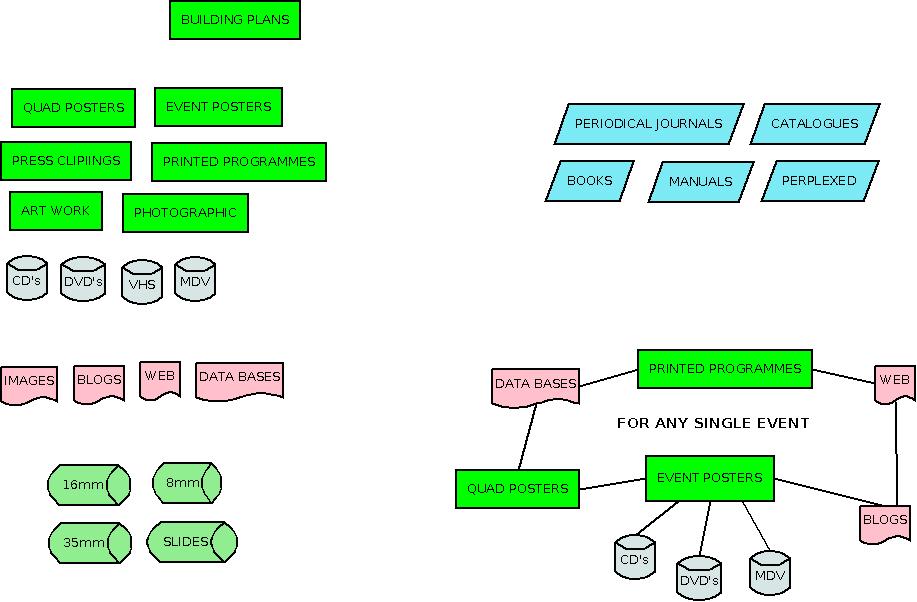
This is a framework for developing an ARCHIVE at the Cube Cinema.

This diagram shows different classes of unique ‘objects’ that all connect to the Cube, represent or document it or are just part of its hosted collection.

Green oblongs are paper/print based objects. Programmes, posters, flyers, etc.

Blue Trapezoids are bound books and periodicals, magazines and books.

Pale blue drums are media carrying recordings in different mediums; video, audio, etc .

Pink sheets are Data based web blogs, photos, websites.

Pale green drums are analogue film materials, 16mm, 35mm etc.

For any one single ‘event’ there may exist multiple objects.

The next task is to develop a cataloging system or find a BIN big enough to throw it all into :)