Heres brief description of the OX2 camera rig that I’ve been using and setting up.
Its basically an OXBERRY animation stand (rostrum camera) camera that has been monted on a geared head (MOY 12). The lens mount is a machined Nikon F mount and the motor is a closed loop stepper motor. This camera has no viewfinder, but as you will see, you dont really need one. As it is an Oxberry AN type camera it takes all the same gates/shuttles as the Oxberry printer.
It follows then that as it is pin registered it only shoots at single frame speed.
But is extremely steady. It all sits on some big/heavy Vintern studio legs.
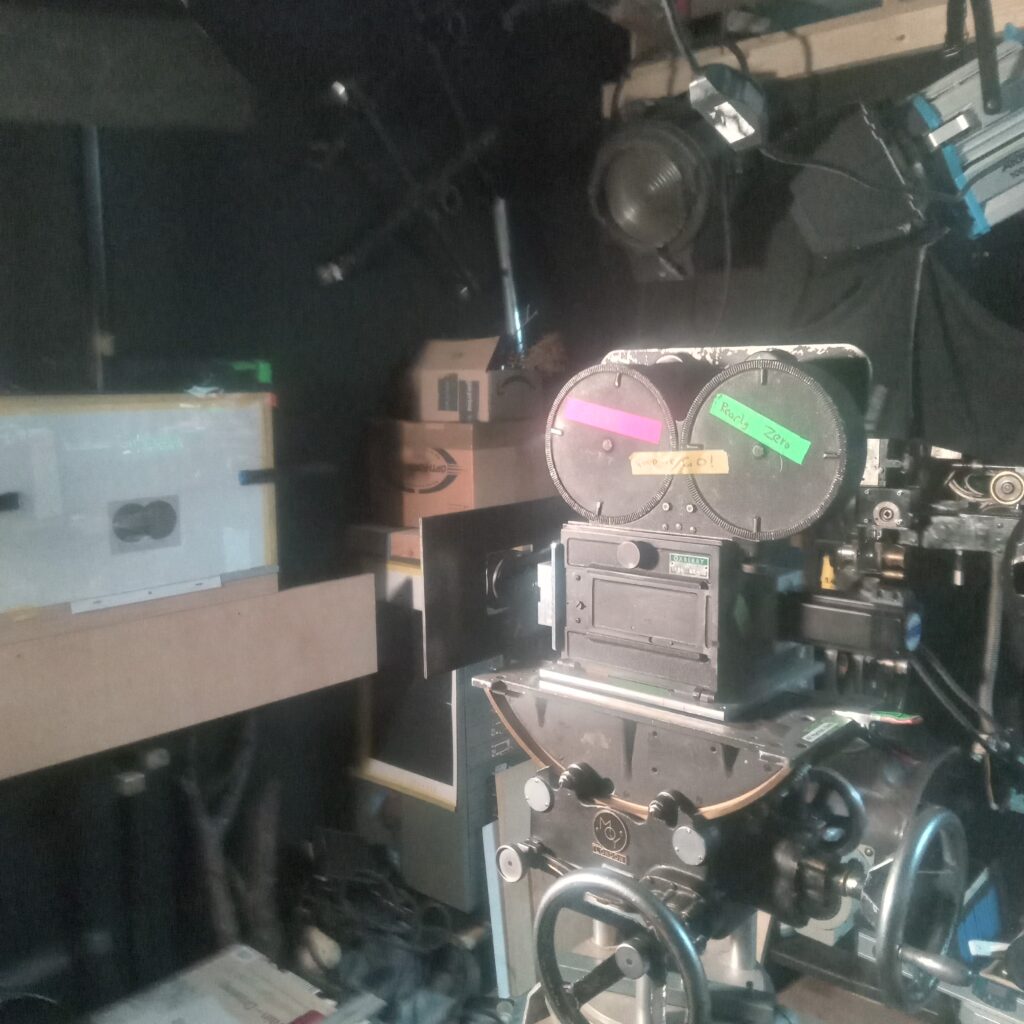
The purpose in mounting it this way, like a vertical rostrum, is because I want to shoot 3D objects with it as well as flat artwork.
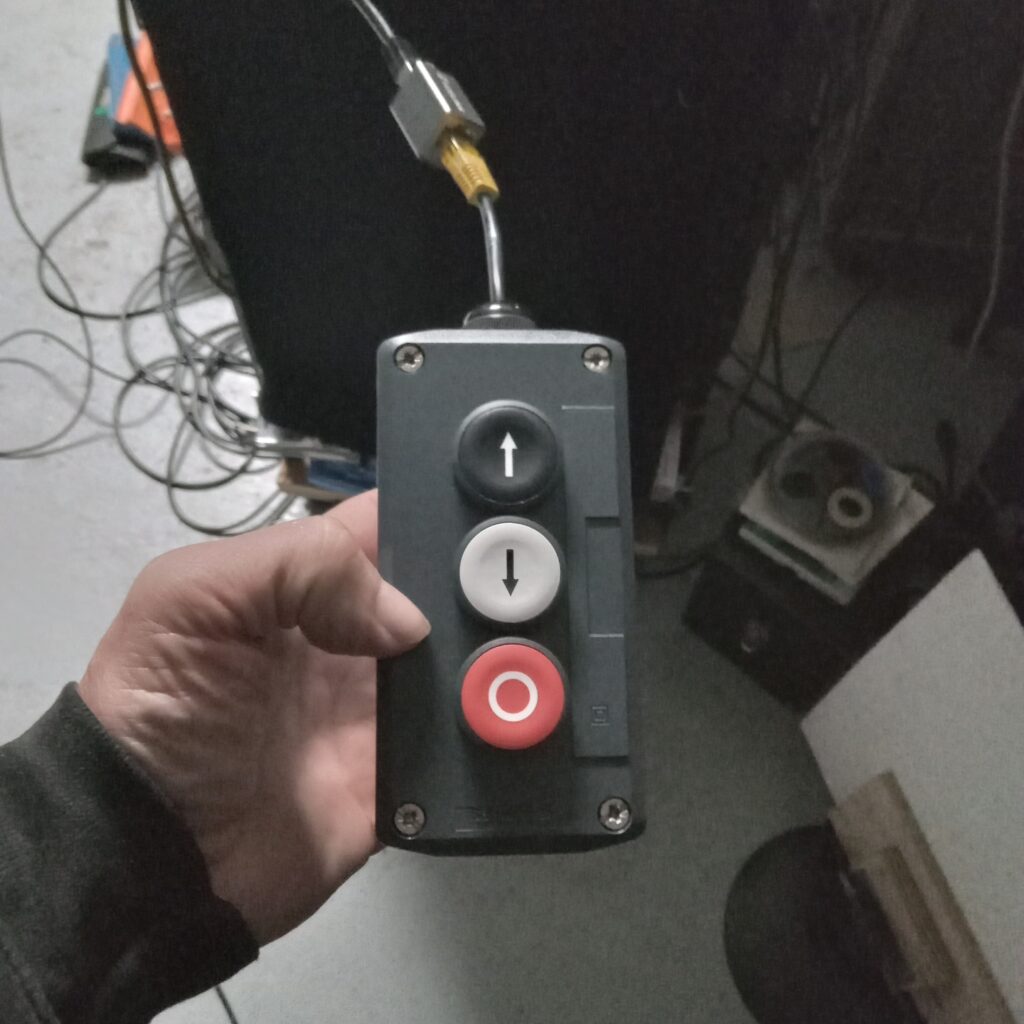
The motor is controlled by an arduino and thus the camera exposure functions are controlled. I use the serial monitor function in the arduino IDE with PC connceted via USB. There is a big push button control next to the camera. I have managed to get many functions programmed in including:
format select (16 and 35 have different footage metrics).
Frame counters and footage counters, master and local.
Forwards or Reverse modes.
‘BULB’ setting for long programmed exposures.
H mode, or open shutter function so rotoscoping (see more on rotoscoping below) is possible.
Programmable button so you can assign say 6 to the button and each single press fires of 6 frames.
Manual frame runs so you can enter 100 and the camera runs 100 frames.
etc
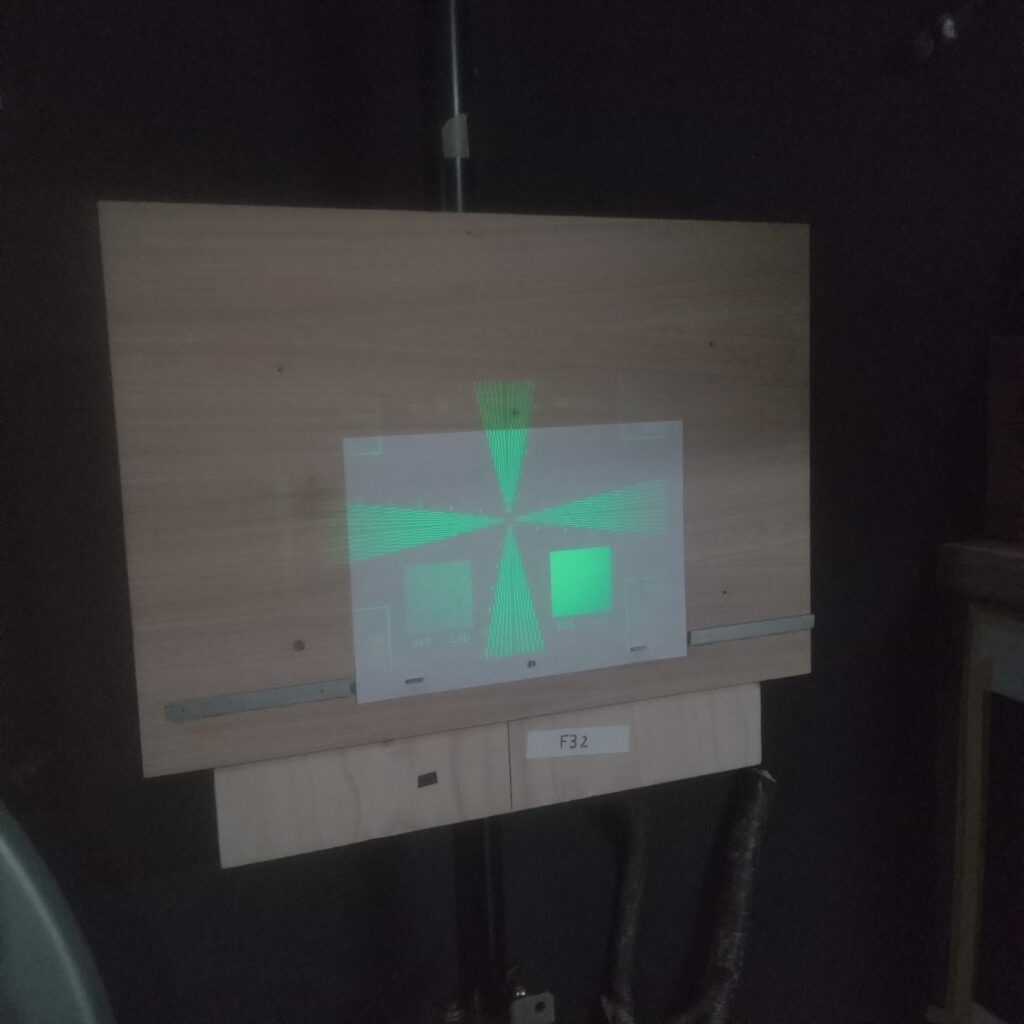
Rotoscoping is useful in determining your shooting area or field of view. You load a segment of film in the gate with backing plate removed, place a lamp inside the camera, position another optical part and the ‘voila’ the camera is now a projector!! This lets you make extremely accurate choices on the position of art work that you are shooting. I shoot a lot of stuff to 2302/3302 and 3378. You are effectively making prints if you shoot to 302 stock, white paper is jet black, and your lines are punchy clear (there is no white in black and white? Discuss!). Its technically a negative but if you are employing graphical forms then it doesnt matter. I have shot 14×10″ photographs onto 5222 making high quality negs for printing elsewhere. A wedge test is employed again to ascertain best exposure. I set light levels on art work to 10,000 LUX or something not too hot (I use Halogen lights) then shoot 10 or so frames in each F number with a 3 frames separation.