Cinema Metrics and the role of the Cinema Building in Narrative development

I am presenting at the Ghent Early Cinema Conference and will be showing my idea that Cinema design, the building itself may of played  a part in the adoption of narrative forms of cinema films, or those forms that were more story and duration based and required suspension of disbelief to read and enjoy.

I will do this by sketching out first how cinema and theatre related through the agency of the actual building and how some early cinema buildings were really theatres.

Then, after some examples of early cinemas that started to do away with ‘distractions’ like a stage, pros arch, fly loft, wings, apron, lighting, etc I will  show how as the cinema space became more simplified this in effect took place in parrallel  to narrative forms becoming more central and dominant in exhibition.

Is this a chicken and egg problem. How can it be shown that the audiences physical behaviour during narrative required a particualr set of environmental forms that may or may not have been in place during the transition period? And if they were not in place how can we see their effect in building design and towards which ends?

I will be looking at a selection of early plans in terms of the period they were submitted and what was common in Cinemas at the time, then I will be examining particular design features like projection throw, rake angle, seat angle, relation to stage and wings,and how the screen gets presented to the audience.

Of course we know that early Cinemas took their architectual cues from Theatre. BUT, and this is decisive, theatre is an entirely different technical environment that has very specific environmental forms and these differ radically from what simple, Cinema proper, buildings became.


As an informing idea for another project I am going to start to collect cinema metric data.
I am narrowing this down to the following:

Compass bearing of projections : Angle of rake :

Thats it!

I could add Throw (film gates to screen) in M/mm, number of seats. To allow venues with multiple screens each screen could be numbered.

So an example might be;

105° : 5° : 20M : 350

This example is made up.

This doesn’t seem to tell us much. But when we have a data set including many different places you should be able to start seeing patterns.
Shutter effects

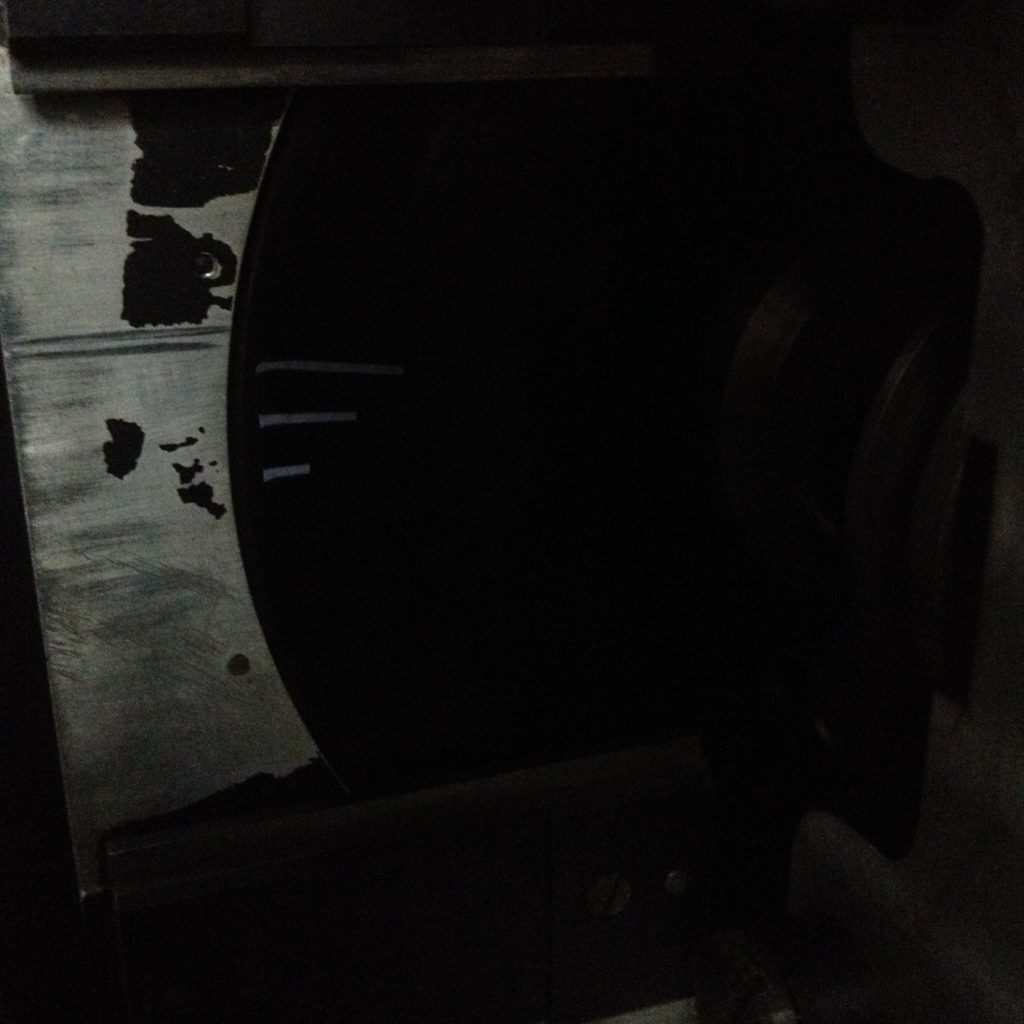
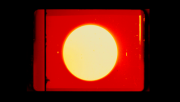
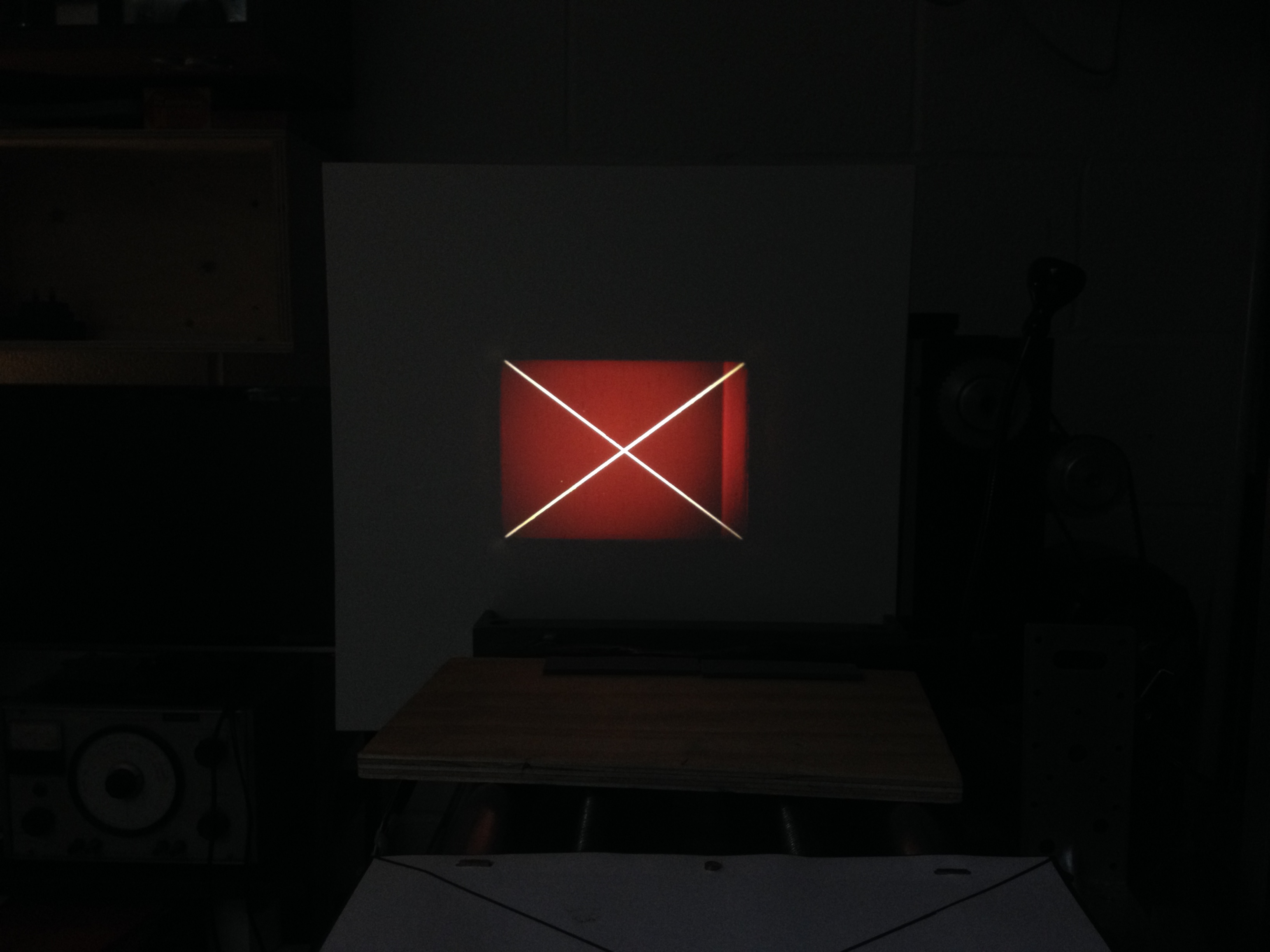
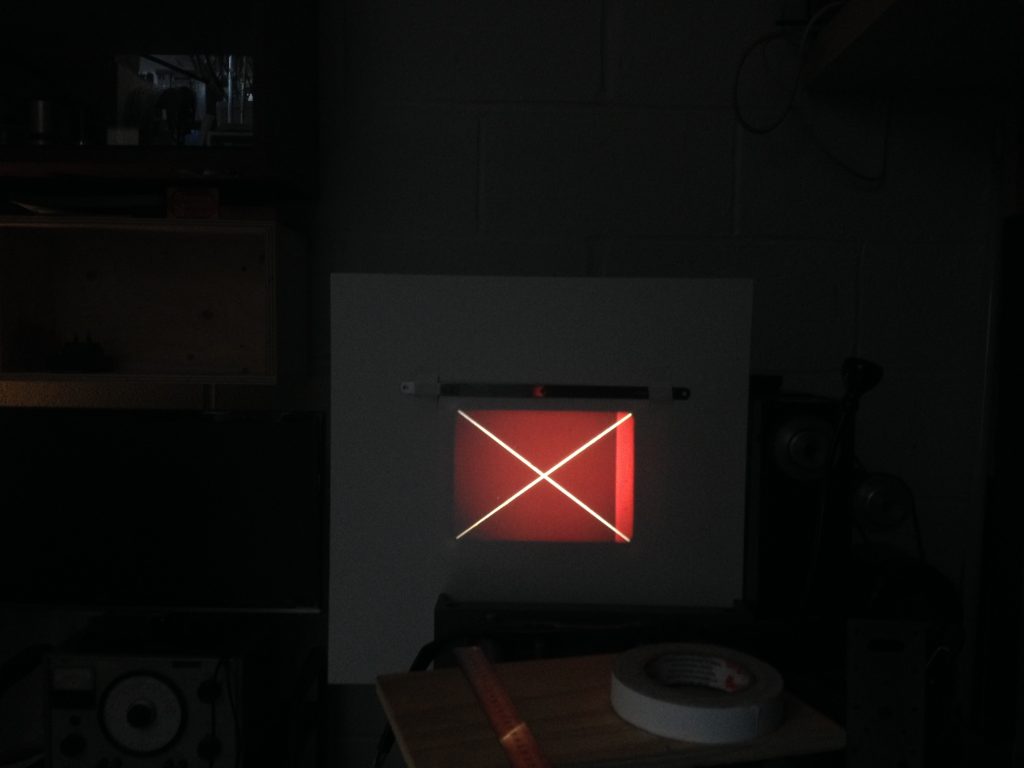
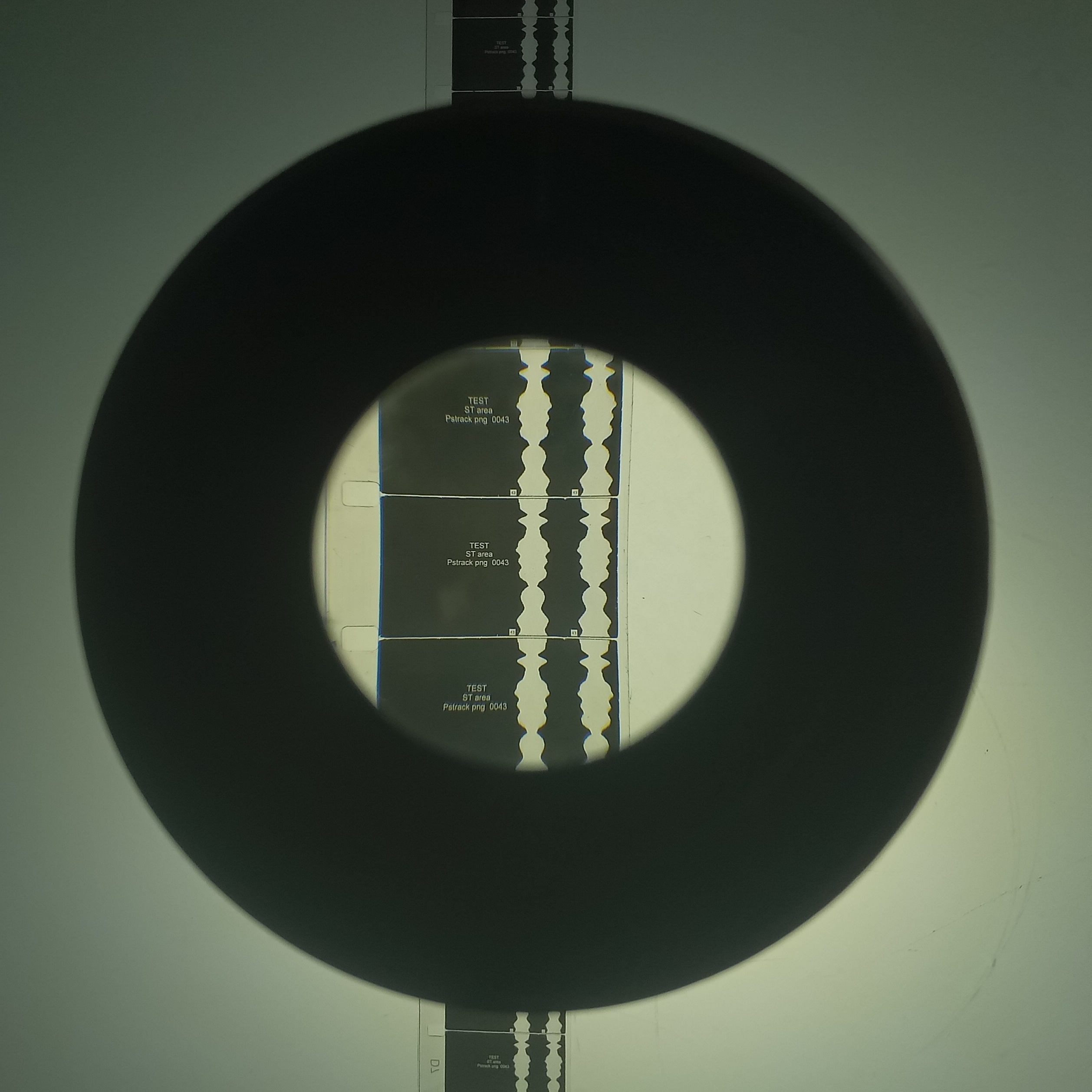
Heres 2 photos taken during a shutter test where the blade has been almost closed over and a very tiny slit is all that lets any light through.

This would produce a shutter speed too fast for effective exposures (in convnetional use anyways). The LED light source illuminating the paper on the other side of the gate flickers and this produces the strobed scans of the slit as a photo is taken with an iphone4.


Lens mounting solutions

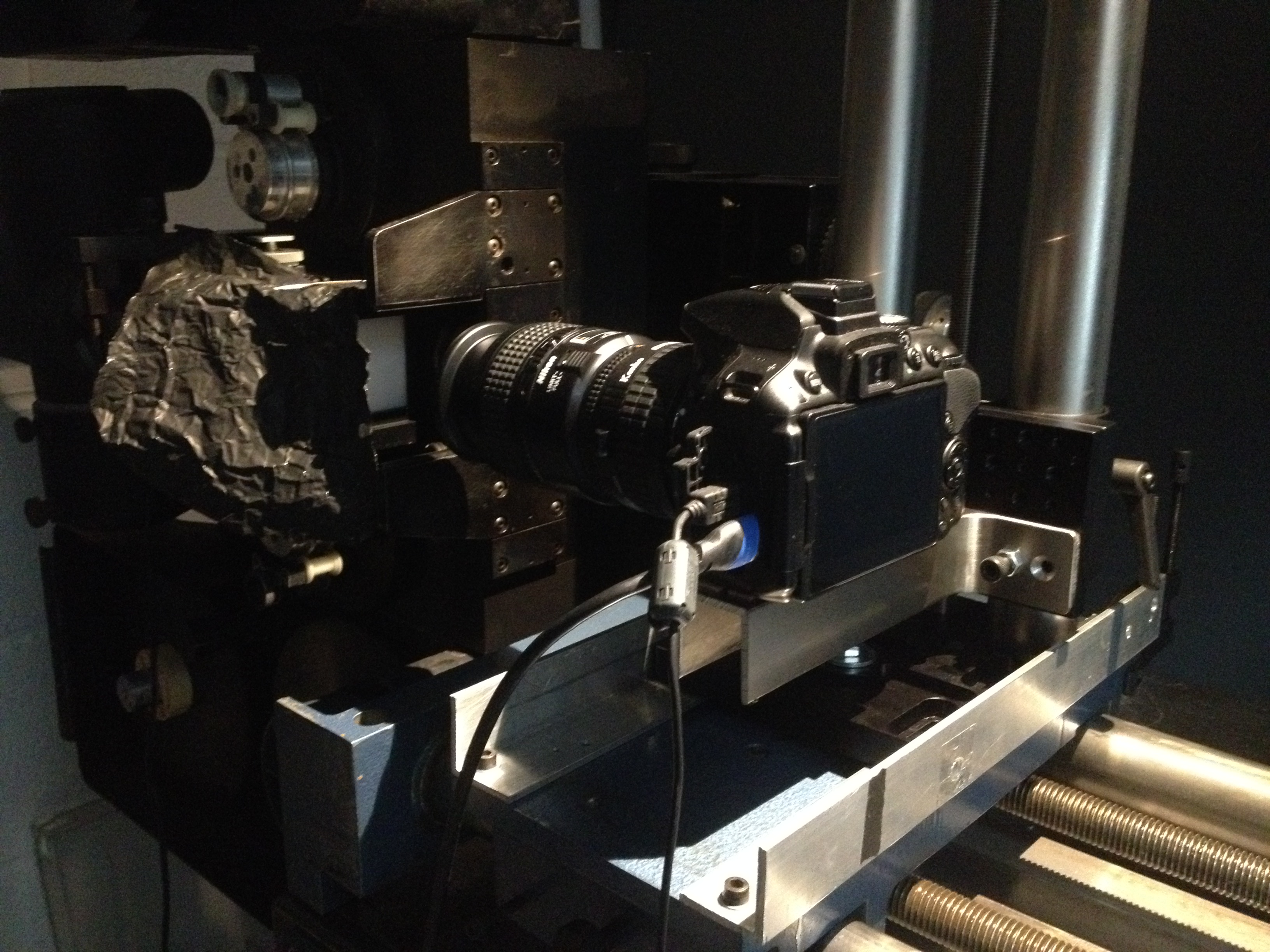
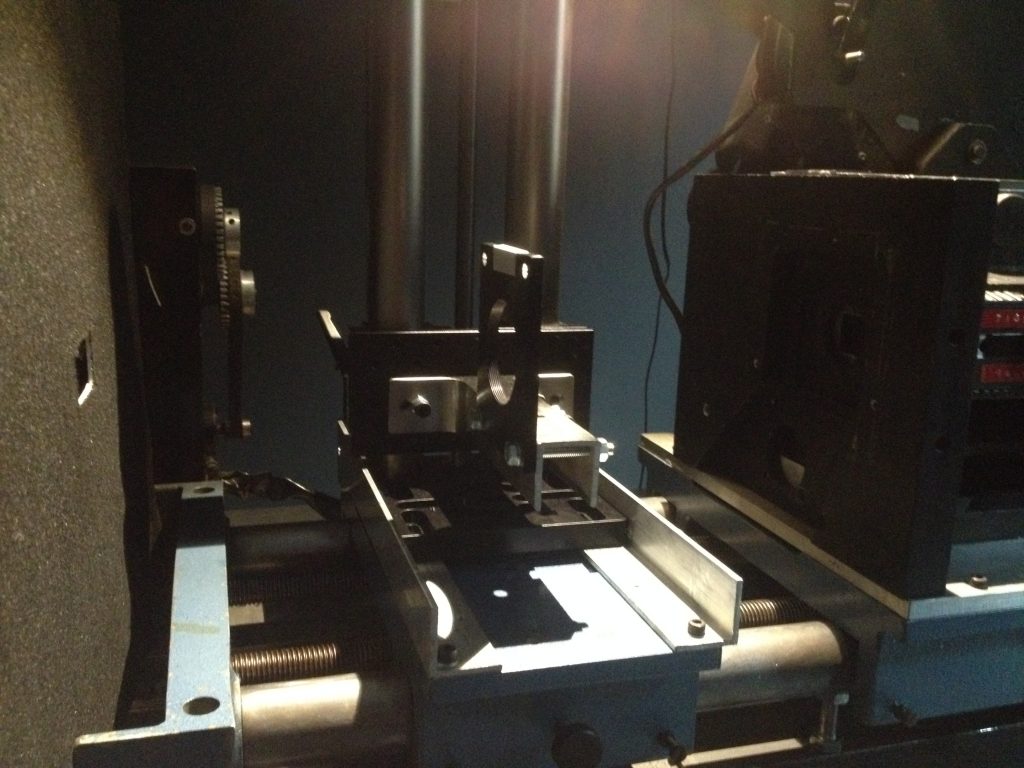
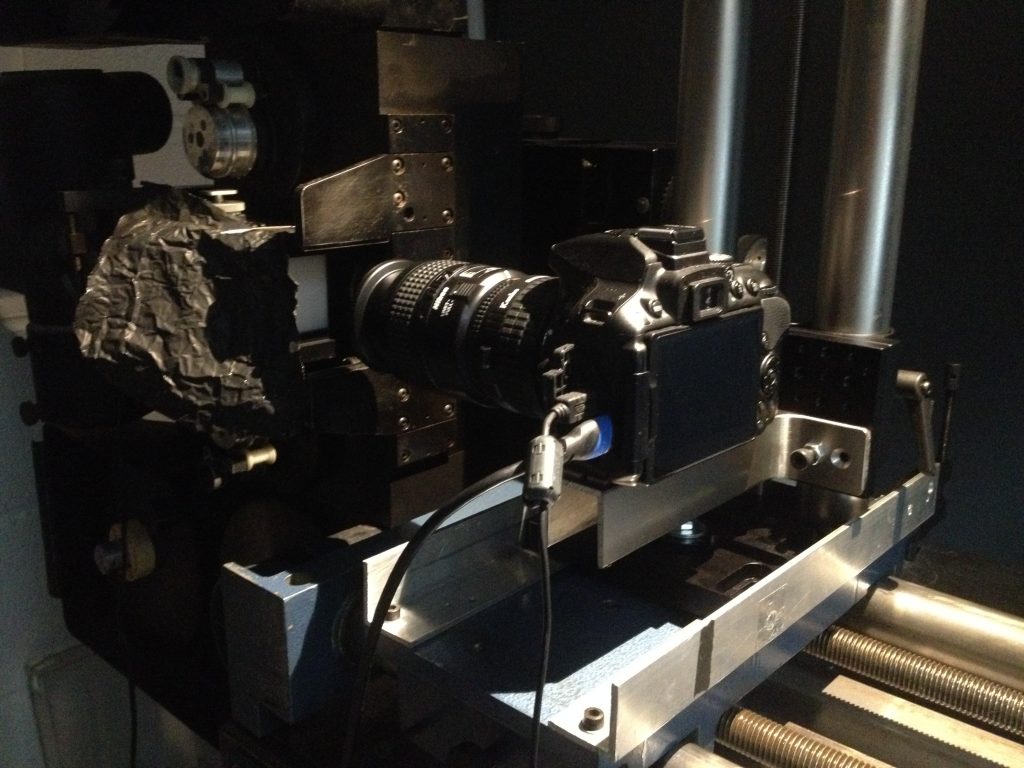
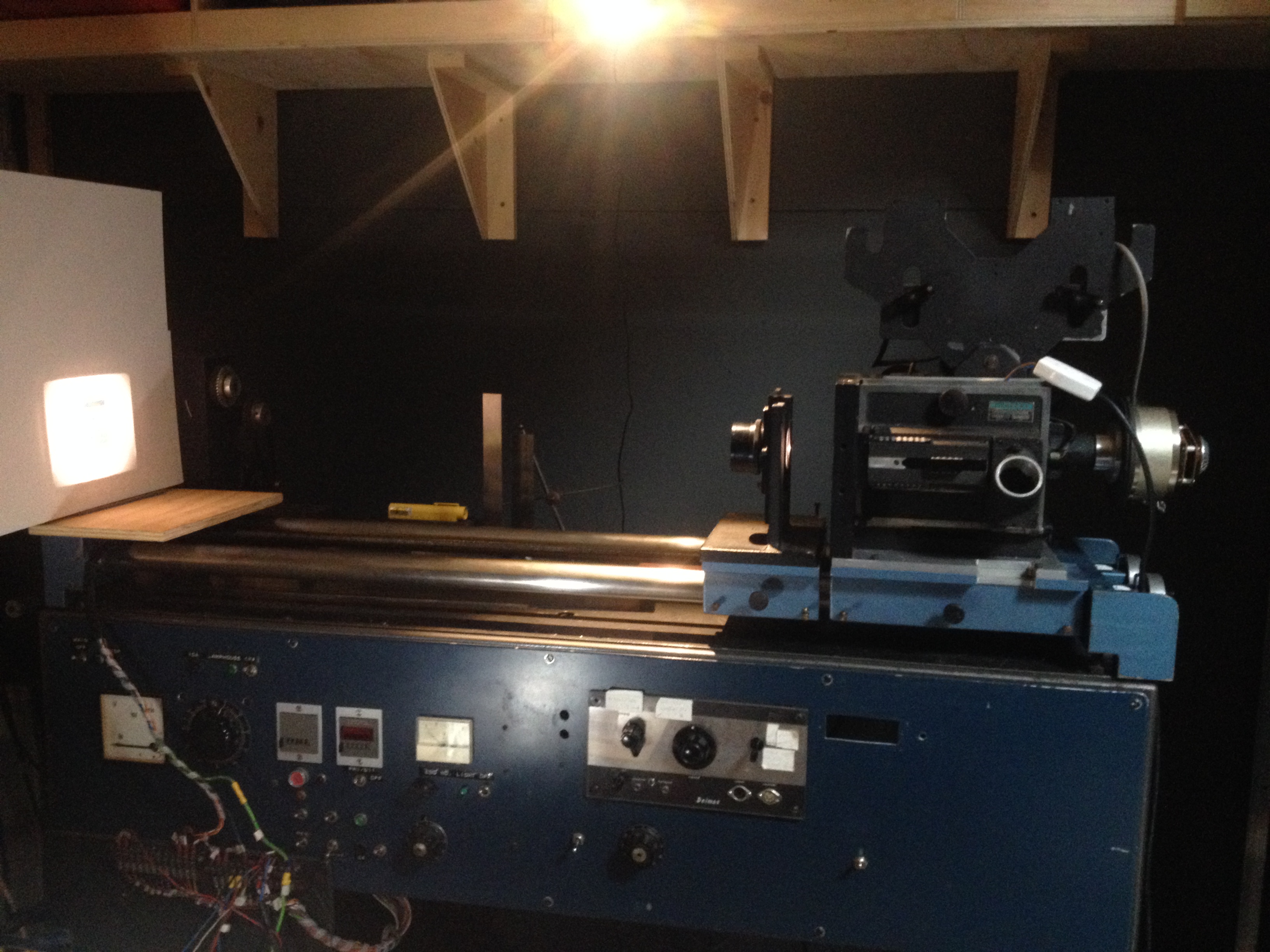
Using a linear stage from Thorlabs and some basic metalwork I can now accurately position a digital camera or just the lens to line up with the camera.

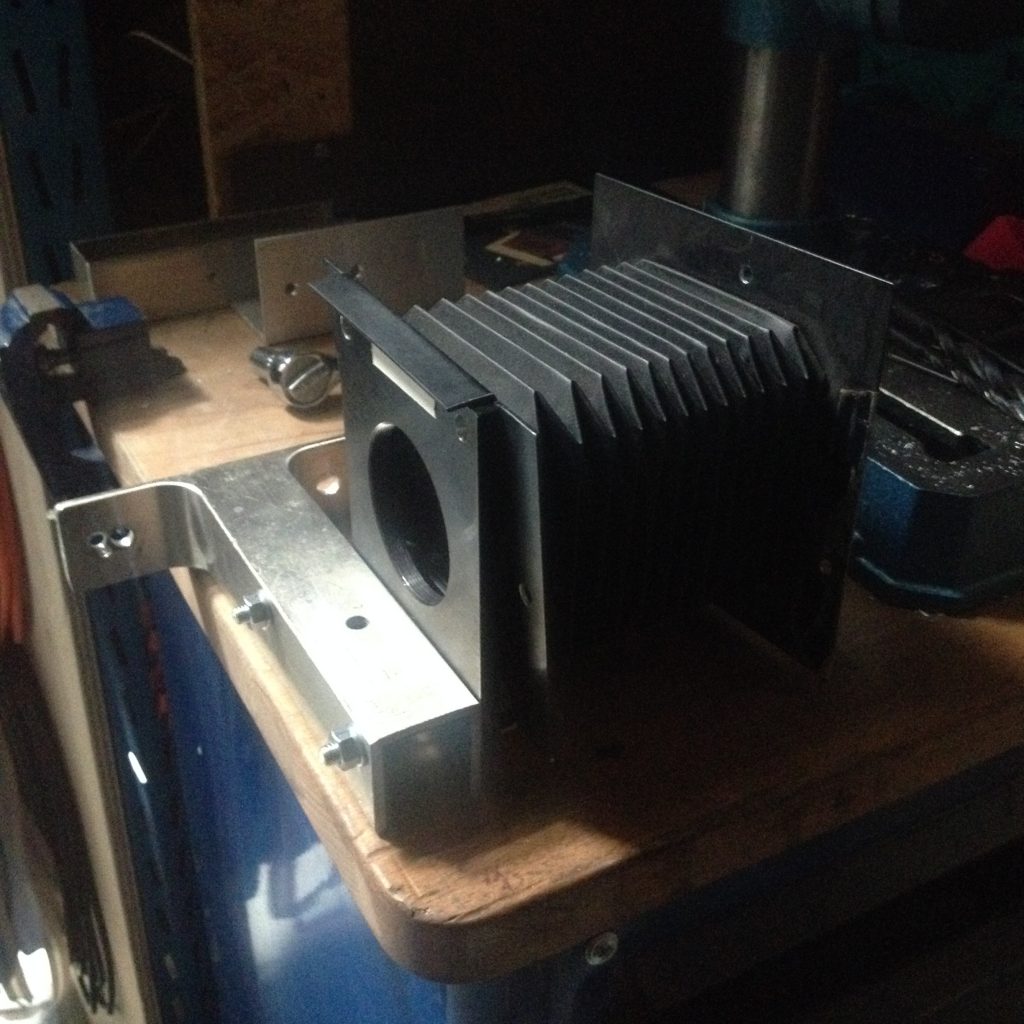
A bit of tweaking to get the relay lens bellows to fit. All that needs doing now is take up motor electrics, then I’m ready to try some film to film tests.

During tests very annoyingly the Nikon remote release socket stopped working and the camera needs to go off for repair. Having digital preview is useful for predicting problems for later film>film work and for digitising friends work  BUT my whole artistic project is about using a |film > film > projector| workflow so the more I gear up for that the better. Digitising becomes another distraction. You end up fucking around in editors, compiling and rendering things. The quick spectacle of seeing video clips (ok I’ve posted a few) starts to take over.

The creative potential of unexplored techniques like ‘shadow’ printing (my invented process that dodges and burns during contact printing) can never be moved along if Im always scanning and playing with video.

I did some light level tests also. The LED array Ive been using for some scans is WAY dimmer than the halogen 11ov lamp. Although its whiter and cleaner it may well not work for film.

 Is there such a thing as a digital contact print? ie a scanning process that does not ‘image’ via a lens but instead lays the film upon the sensor?

Also been looking at telecentric lenses for the Oxberry. These lenses offer a very accurate profile and were the types of lenses used in ILMs quad printer and the printers that Richard Edlund built at Boss the Zoom Aerial Printer and the Super Printer, both 70mm.

test scans

Quick test scan off the printer of acid treated and burnt through short length of film. ST should be on right of course. 16mm


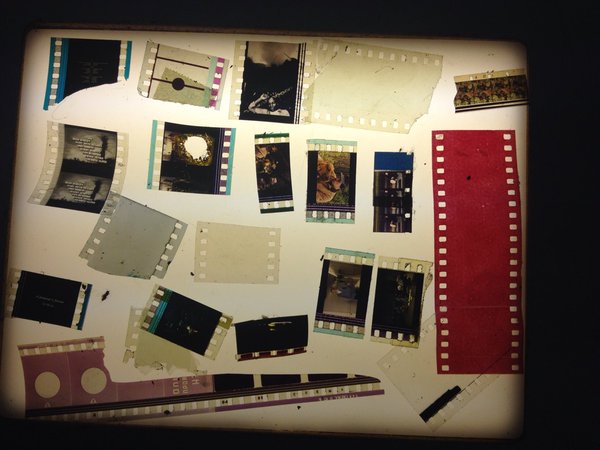
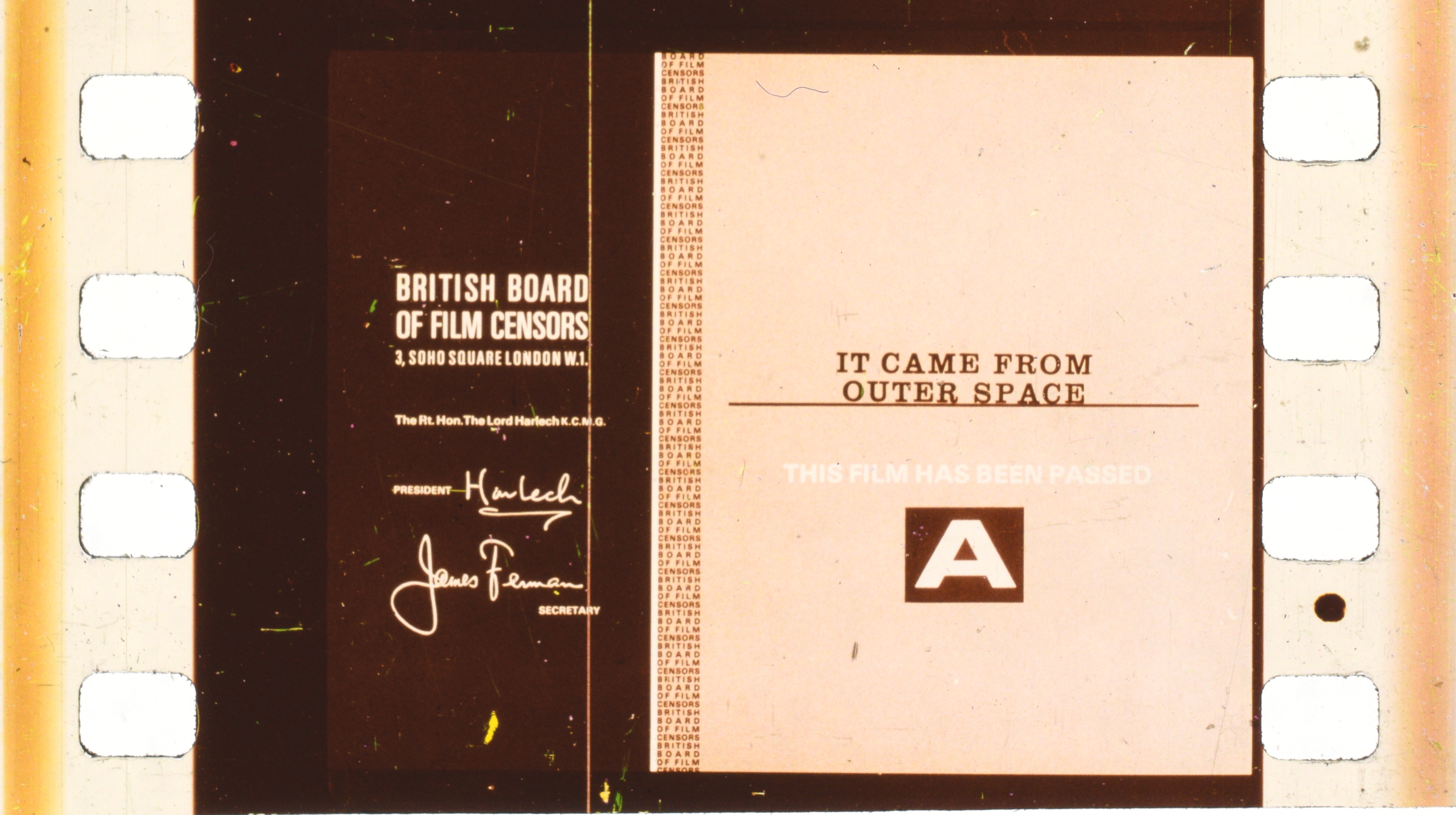
Lab leader I found. 35mm, sent to Matt Soar for possible inclusion in his project lost leaders


And my favourite, a video clip of film passing through the gate.

And another clip I like thats shows the fascinating transport and arrest of frame by frame machines.

Geometry and orientation

OK. Its basic stuff, but there are exact and meaningful orientations of film strips in printers for obvious reasons. But you can get in a muddle thinking about whats right, what ‘looks’ right and what you think should be right.

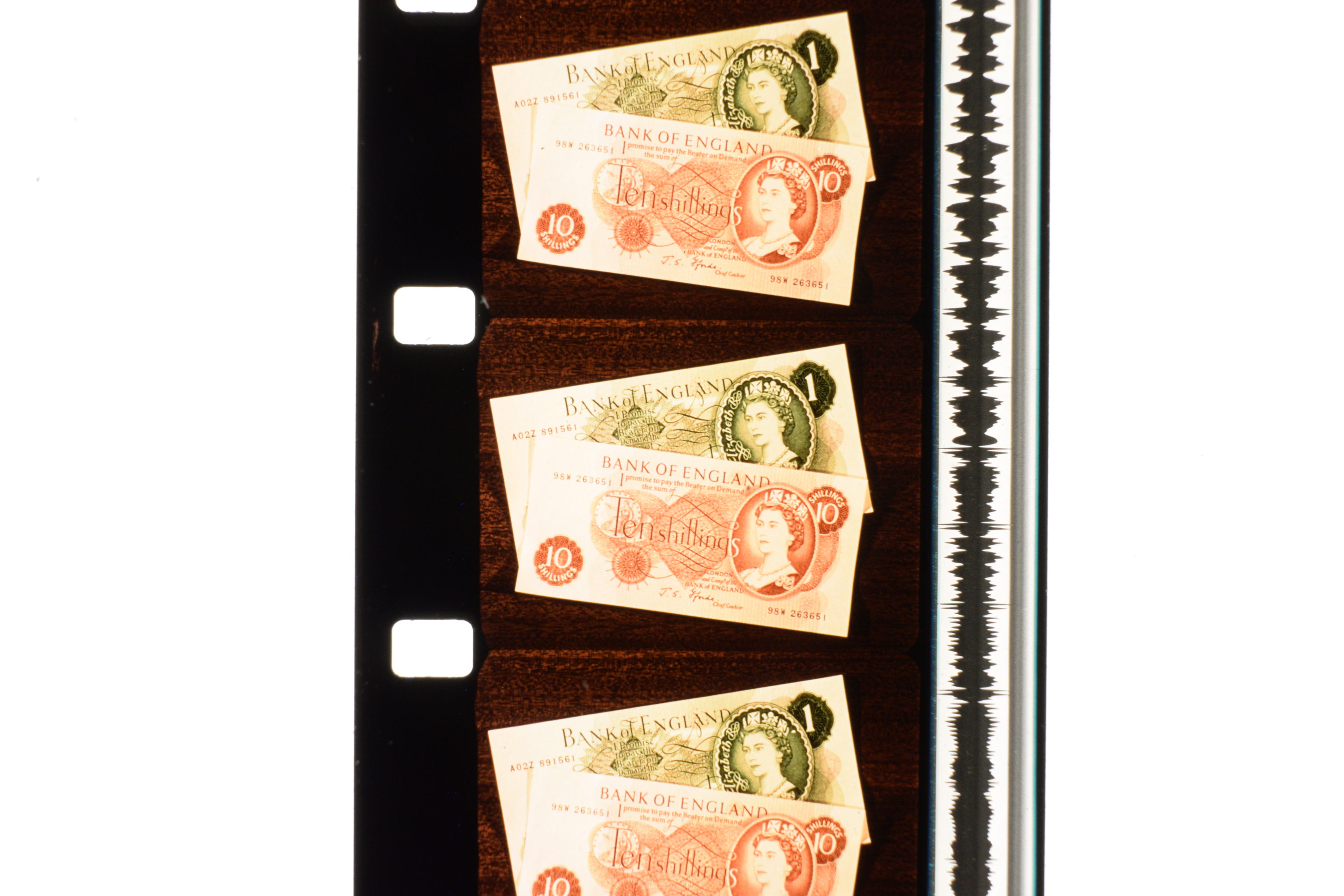
This video shows a 16mm sequence in the printer gate, seen as by the video camera. It clearly shows an image that we know is the ‘Right’ way up but is flipped Left>Right. The VA optical sound track is to the left AND we should know that this soundtrack actually appears on the right in projection. The sprockets on the printer are on the right so we  know that if this image was copied it would flip L>R  and  Up>Down and would be wrong in projection because to go from any image to projection we turn it 180 degrees.

This sequence shows an upside down image in the gate, with soundtrack also on left. The reason this is slightly annoying for digitisation is because when set up for for film to film copying the bench lens would do the job of correcting the image, turning it 180 degrees. But a video camera (I guess the image is turned 180 degress on the sensor) corrects the viewing image (screen, HDMI output, etc) for our convenience. So this last clip is correct, turning it 180 degrees makes it right.


Spectres visuals at Cube

I helped prepare and rig the flying screen at the Cube for Spectres the other day. Went really well. The perforated screen, if lighting conditions are right looks transparent at one moment and acts like a screen at another moment. Heres some video clips.


100mm lens rotoscope

Here is the camera as projector again. The 100mm lens produces an image (through 35mm gate) that fits well into the punched paper we were planning on using for the leader project. But to save paper, registration problems and building time/money we might now shoot off an ipad screen which fits perfectly the 190mm x 138mm image. The soundtrack width is 18mm.


This one shows the peg bar above the paper so we hang the sheet from it. Once we trace around this frame we have a very accurate measurement of the shooting area covered and thus the physical size of the artwork.

TO DO:

tests projecting widescreen frames, scope frames, academy frames and 1.66 frames, infact use a test loop. Need to ascertain the relation of oxberry full gate to all other formats.


cube archeology essay film

Starting this soon. Going to video off rostrum rig I’m designing for Andrew Manias clip collection.(no posts about that yet anywhere) and add talkover narration afterwards.

Slides

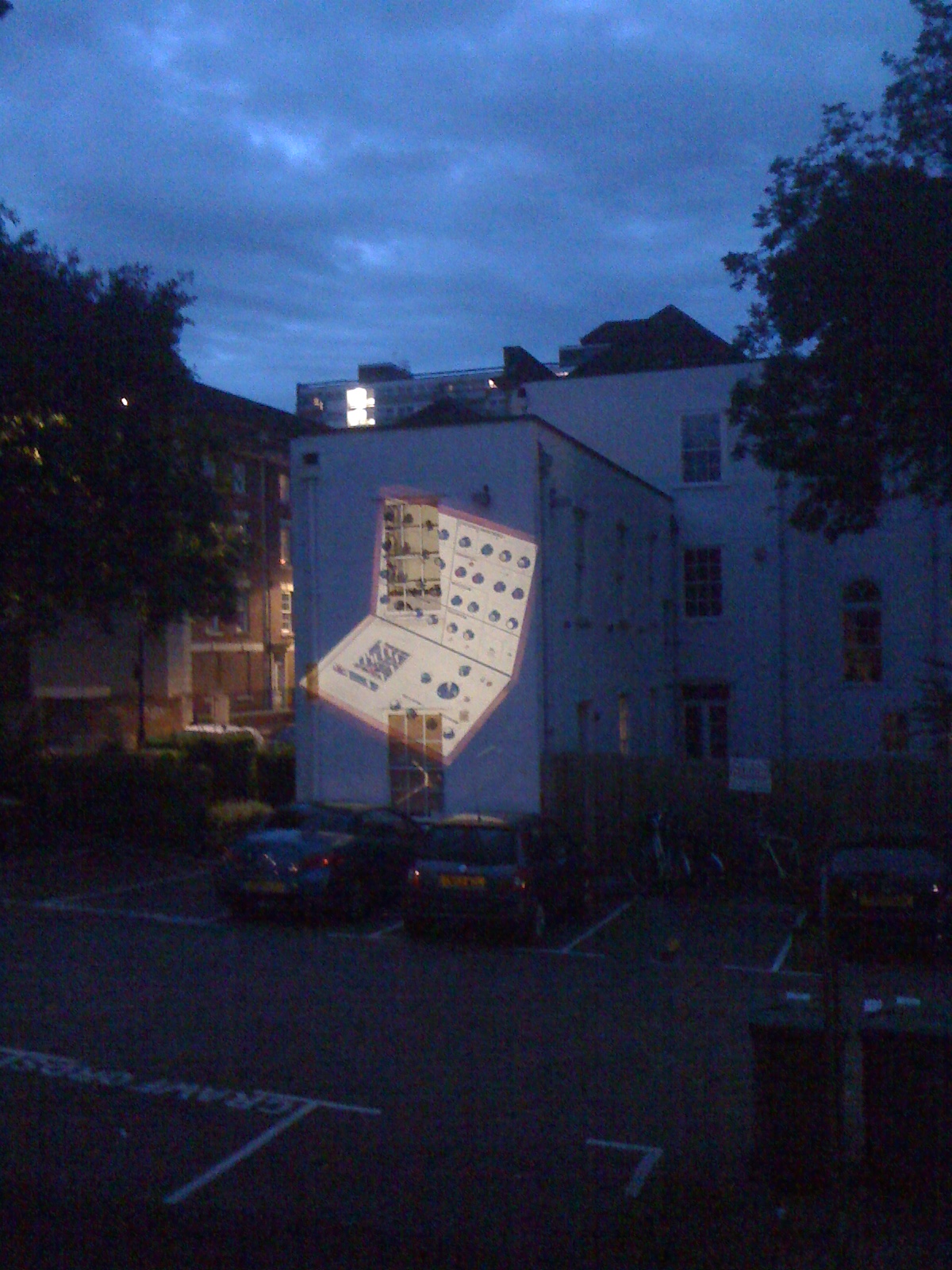
These are old photos of when as ‘Robert Fludd’ I projected some slides onto the wall of the flats overlooking the Cube Cinema car park when people were leaving after the evening movie.

speed of time

I don’t even know if anyone reads these posts. Perhaps really I make them for myself, to chart progress, and refer back to later on. Well, actually here I am now reading this for reference, so yes mate, uts quite useful to yourself to write up these things.

img_2543

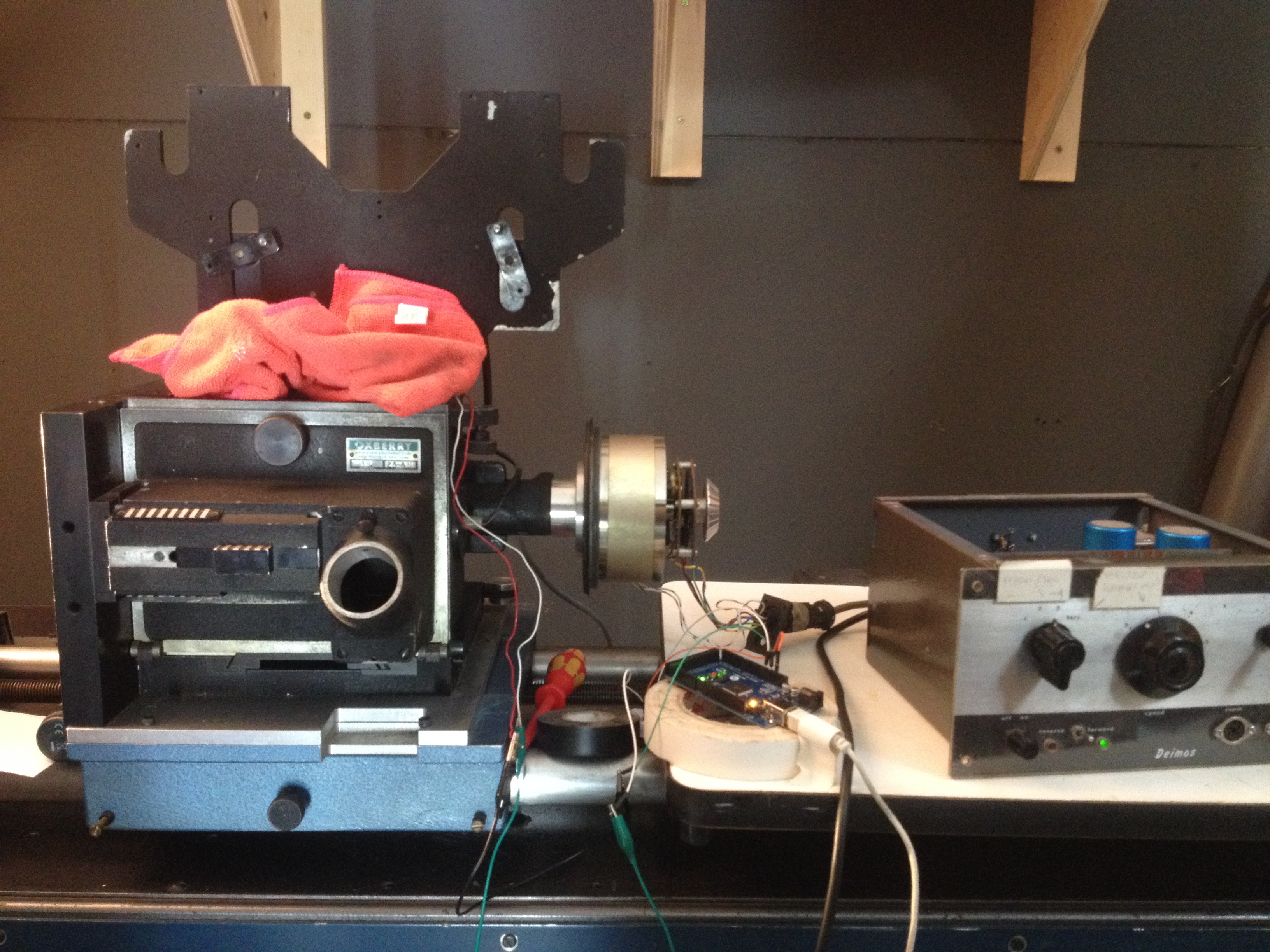
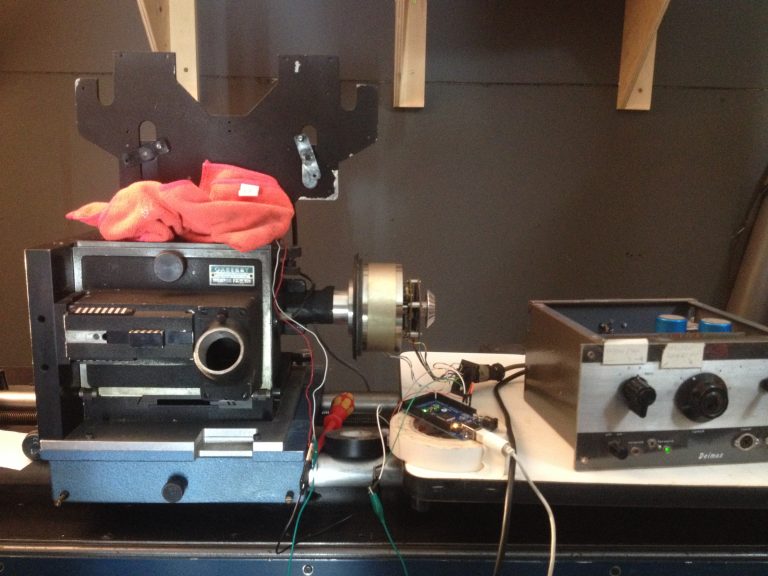
So with an light dependent resistor, micro-controller and signals into MAX I’m finally on way to measure shutter speeds.

With current set-up that needs tweaking and improving we’re getting the following initial results.

Deimos controller speed setting:

  1.  shutter fully open                         640 milliseconds
  2.  shutter fully open                         340 milliseconds
  3.  shutter fully open                         240 milliseconds


Heres normal shutter speeds in fractions then millisecond figures we are looking for.

/th second                     milliseconds

1/1000                             1

1/500                               2

1/250                               4

1/125                                8

1/60                                 16

1/30                                 32

1/15                                   66

1/8                                     125

1/4                                     250

1/2                                      500


Once the shutter gets closed (it will eventually close over completely) we should see faster and faster speeds. Presently the measuring resolution isnt good enough the accurately determine these speeds.